
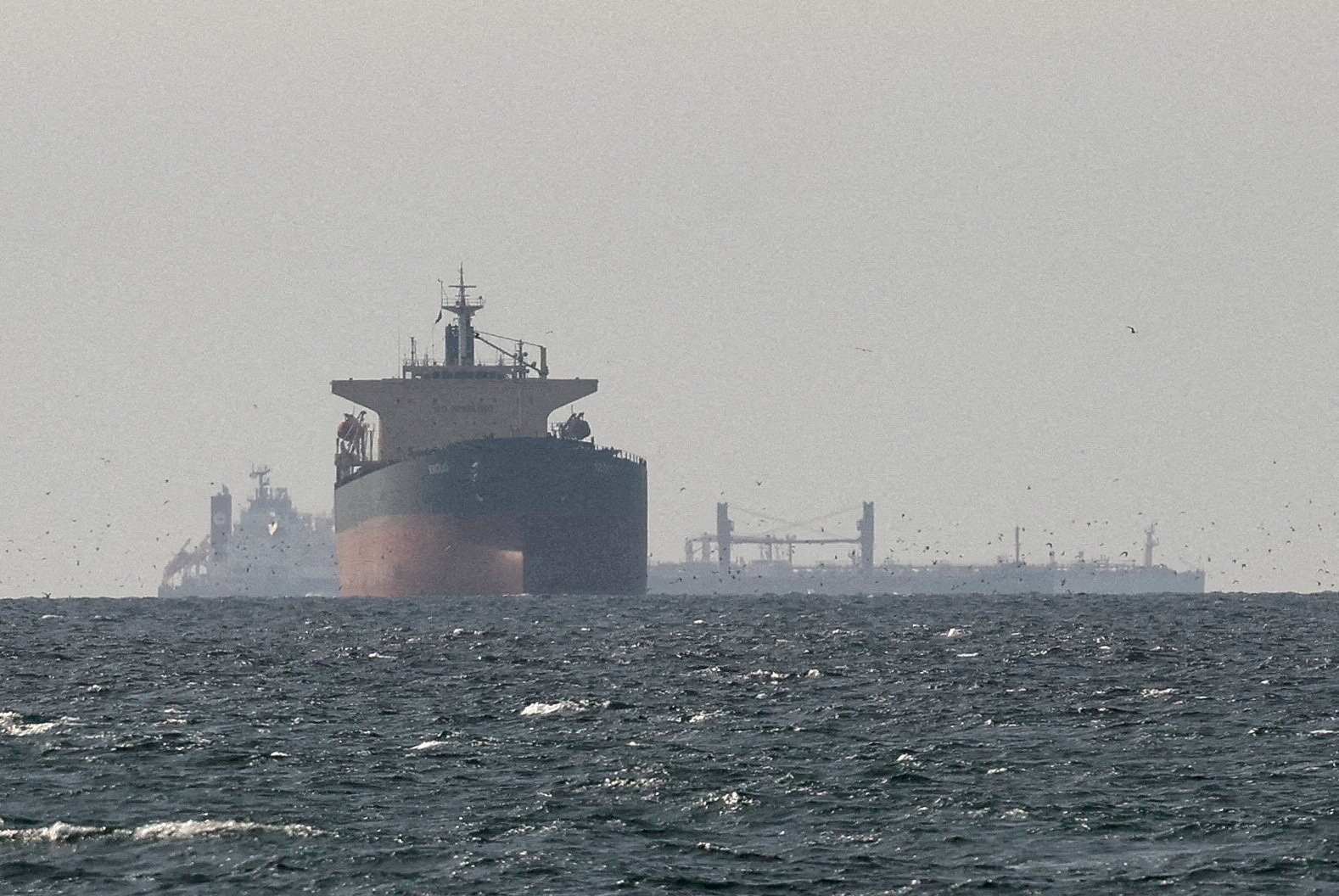
NATO Secretary General Mark Rutte has told European governments that U.S. President Donald Trump wants concrete commitments within days to help secure the Strait of Hormuz, diplomats said on Thursday, as the alliance faces U.S. threats to leave.
Rutte, known in Europe as a “Trump whisperer”, is working to defuse a crisis after Trump said he was considering withdrawing from the 32-member transatlantic alliance, arguing that European allies have relied on U.S. security guarantees while providing inadequate support for the U.S.-Israeli bombing campaign in Iran.
Three diplomats told Reuters that Rutte, who met with the U.S. president at the White House on Wednesday, conveyed Trump’s demands to European countries.
European leaders are now under pressure to show they are quickly making tangible plans to help secure the Strait of Hormuz, which is a vital oil transit point that Iran has effectively blocked during the conflict.
Speaking in Washington a day after meeting Trump, Rutte said that some alliance members were initially “a bit slow” to provide assistance to the U.S. in Iran and “a bit surprised” but that now there is a “massive amount” of support including basing and logistics.
“Nearly without exception, allies are doing everything the United States is asking. They have heard and are responding to President Trump’s requests,” Rutte said in a speech hosted by the Ronald Reagan Institute.
Multiple European allies have said they’re willing to help in the Strait of Hormuz but only once there is a durable cessation of hostilities and an agreement with Iran that their ships will not be attacked.
NATO spokesperson Allison Hart said on Thursday: “The secretary general is in contact with allies about his discussions in Washington” and “it’s clear that the United States expects concrete commitments and action to ensure freedom of navigation in the Strait of Hormuz”.
The tensions over the Iran war follow a series of challenges for the alliance, including Trump’s stepped-up threats in January to take Greenland from Denmark.
On Thursday, Greenland’s Prime Minister Jens-Frederik Nielsen called on NATO allies to stand together to defend international law as he pushed back against Trump’s latest comments about the Arctic island.
In his speech, Rutte said the alliance is undergoing a shift but growing stronger.
“Allies recognise, and I recognise, we are in a period of profound change in the transatlantic alliance. Europe is assuming a greater and fairer share of the task of providing for its conventional defence,” Rutte said.
STRAIT OF HORMUZ IN FOCUS
Although Trump said on Tuesday the attacks on Iran would be paused under a two-week ceasefire, the fallout from the conflict has continued to strain ties within NATO.
“We note the frustration in Washington, but they did not consult allies either before or after starting this war,” said one of the diplomats.
“NATO as such would not play a role in the war against Iran, but allies want to be helpful in seeking longer-term solutions for Hormuz. With negotiations ongoing with Iran, this could be helpful,” the diplomat said.
Trump posted on Truth Social after meeting Rutte on Wednesday in capitalized letters that “NATO wasn’t there when we needed them, and they won’t be there if we need them again.”
A senior European official said, “The NATO community is more worried right now than confident,” and “the meeting did not take the worry away”.
EARLY PLANNING UNDER WAY BUT QUESTIONS REMAIN
Britain is leading a group of around 40 countries seeking to come up with a military and diplomatic plan to reopen and safeguard Hormuz but there is little indication it will yield any near-term breakthrough.
French President Emmanuel Macron said on Wednesday about 15 countries were planning to facilitate the resumption of traffic through the strait.
Asked about the British initiative and whether NATO could play a role, Rutte said, “If NATO can help, obviously NATO is there”, noting however that alliance decisions require all allies to agree.
France’s Foreign Minister Jean-Noel Barrot said on Thursday that Hormuz would be unable to fully reopen until there was a lasting agreement between the U.S. and Iran, while Italy and Britain said Iran’s position that it could impose a toll to cross the strait was unacceptable.
“We are willing to make the right noises and even the right actions down the line,” said another European diplomat. “But ultimately the problem is not to please the U.S. but to have the right conditions in place,” the diplomat added.





Click here to change your cookie preferences