
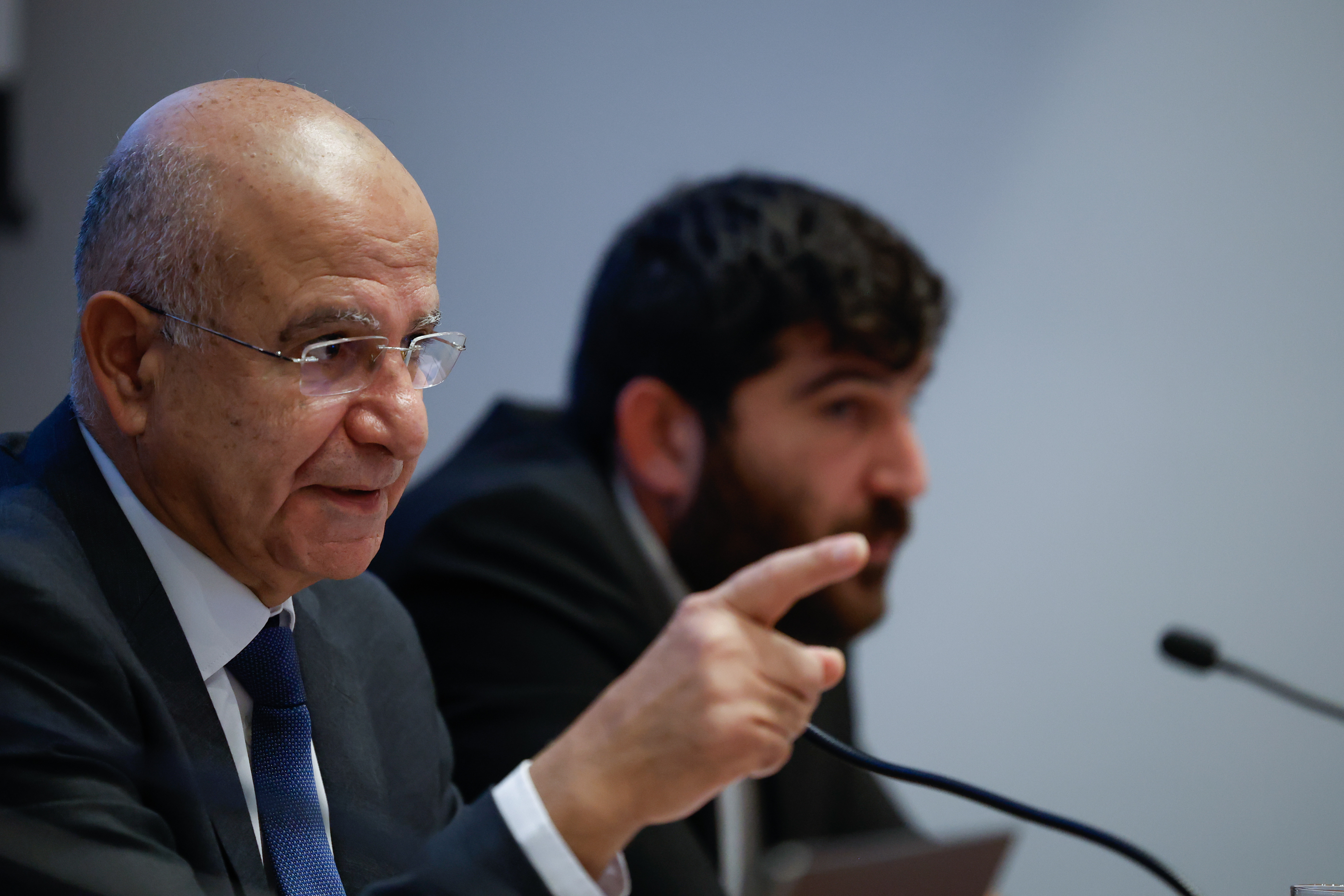
A record number of candidates are expected to stand in next month’s parliamentary elections, interior ministry permanent secretary Elikkos Elia said on Friday.
He told the Cyprus News Agency that five years ago, a total of 651 candidates stood for election, of whom 160 were women.
“I estimate that this year we will have more candidates,” he said, though he did say that he wishes “we would have more women”.
He said the number of candidates will be clear on May 6, when nominations are formally submitted, with “28 or 29” parties currently registered and able to submit lists of candidates.
On this matter, he did say that it is not necessarily a given that every party will participate in the election.
Asked how the integrity of the forthcoming elections will be ensured, he said that “representatives of the parties and candidates will remain witnesses to the process, both during voting hours and during the counting process”.
He was then asked why tin ballot boxes are preferred to transparent plastic boxes, as are commonplace elsewhere in the world.
“The tin ensures the secrecy of the vote. We cannot place the ballots in an envelope, because based on our legislation, we have an obligation to ensure that the number of ballots placed in the ballot box equals the number of people who voted,” he said.
He then added that if they used transparent plastic boxes instead, “the secrecy of the vote would be violated”.
“For this reason, we continue to use tin,” he said, before adding that the tin ballot boxes are “solid and resistant to any impacts”.
He also called on political parties and candidates to set out their cases in a “mild tone” during the campaign.
“We must all maintain and strengthen the resilience of our democracy, with the aim of contributing to people’s wellbeing,” he said.
To this end, he said that he is “confident” that the election process will be “conducted smoothly”.
A total of 56 seats will be up for election on May 24, including that of Dipa’s George Penintaex, who became an MP in December after Marinos Mousiouttas vacated his seat to become labour minister.
Of those 56 seats, 19 will belong to MPs from the Nicosia district, 12 to MPs from the Limassol district, 11 to MPs from the Famagusta district, six to MPs from the Larnaca district, five to MPs from the Paphos district, and three to MPs from the Kyrenia district.
The Paphos district gained an extra seat ahead of May’s election due to the growth in its voting population, with that gain coming at the Nicosia district’s expense.
The Republic of Cyprus’ constitution initially foresaw a parliament with 50 voting members, of whom 35 would be Greek Cypriots and 15 would be Turkish Cypriots, as well as non-voting observers belonging to the Armenian, Latin, and Maronite communities.
Following the breakdown of constitutional order and the outbreak of intercommunal violence in 1963, the Turkish Cypriots were unable to return to their seats in parliament, leaving just 35 voting members.
That figure was raised to 56 Greek Cypriots ahead of the 1985 parliamentary elections after the constitution was altered using the doctrine of necessity. The amendment foresees 24 Turkish Cypriots also being elected, but with the Cyprus problem remaining unsolved, this has not yet happened.





Click here to change your cookie preferences