
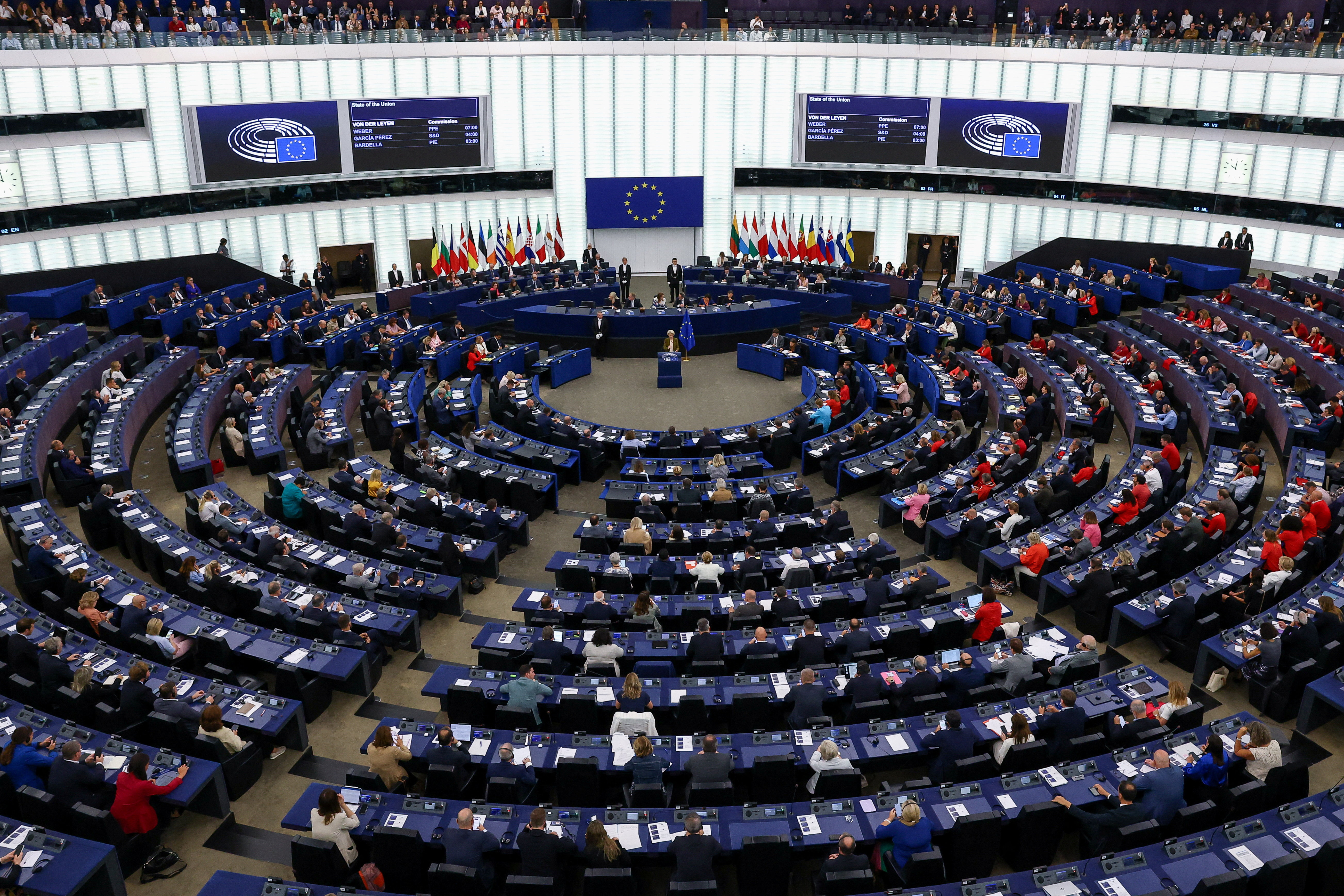
The European Parliament has in its latest annual report called on Turkey to “give the Turkish Cypriot community the necessary space” to chart its own political course.
The report was seen by the Cyprus Mail on Wednesday, and was the same day approved by the European Parliament’s foreign affairs committee (Afet), with 44 votes in its favour, 10 against and 17 abstentions.
After the vote, the rapporteur, Spain’s Nacho Sanchez Amor, said that “although we see no reason to resume the accession process, given the deterioration in democratic standards and the increasing repression of the opposition and critical voices, there is a window of opportunity to make progress on the rest of the bilateral sectoral agenda”.
“Closer cooperation on foreign policy is essential to achieving further progress on security and defence.”
Regarding Cyprus, the report said that Turkey must allow the Turkish Cypriots the space to act within their role as a “legitimate community of the island”, highlighting the fact that Turkish Cypriot political participation is fundamental to the constitution of the Republic of Cyprus.
In this vein, it also urged the European Commission to “step up its efforts to engage with the Turkish Cypriot community” so as to facilitate a resolution to the Cyprus problem.
It also called on all those involved to “demonstrate a more courageous approach” over their efforts in relation to the Cyprus problem, and stressed what it described as “the need for the EU body of law to be implemented across the island” after the Cyprus problem is resolved.
It also said it “remains concerned by restrictions on freedom of expression and media freedom” in northern Cyprus, where the ruling coalition is attempting to pass through the legislature an anti-disinformation bill which many have criticised as overly vague in its language and thus open to abuse by those wishing to suppress journalism.
On the matter of the Cyprus problem at large, the report said it “welcomes the steps taken” by United Nations Secretary-General Antonio Guterres towards resuming settlement talks, and called on the European Commission to appoint a replacement for its now former envoy for the Cyprus problem Johannes Hahn, who resigned last month.
It added that the election of pro-federation candidate Tufan Erhurman as Turkish Cypriot leader last October “has contributed to renewed hope for creating a conducive environment for the resumption of settlement negotiations”.
Regarding Turkey’s role on the Cyprus problem, the report said that the country must “respect the status of the buffer zone and the mandate of the UN peacekeeping force in Cyprus (Unficyp)”, while also “ceasing and reversing” what it described as “unilateral actions and violations” in and around the buffer zone.
It also called on Turkey to “refrain from any further such actions and provocations, including harassment and intimidation of farmers”, after farmers in the buffer zone village of Mammari, near Nicosia, claimed they were attacked by Turkish soldiers in December. Turkey and the Turkish Cypriots deny this.
Additionally, it made reference to other areas of heightened tension in and around the buffer zone, calling on Turkey, as well as the Republic of Cyprus, the United Kingdom, and the UN, to “implement concrete measures” to demilitarise the area as best as possible,
It then called on Turkey to facilitate the “full implementation of the Pyla understanding”, which was reached in 2023regarding the construction of a road connecting the buffer zone village of Pyla to the nearby Turkish Cypriot village of Arsos, as well as residential properties and a solar farm.
The mutual understanding’s implementation has remained frozen since 2023 due to disagreements between the island’s two sides regarding the demarcation of the buffer zone. Pyla has returned to the fore this week with tensions between the island’s two sides and the UN in the village’s vicinity.
Returning to broader terms regarding the Cyprus problem, the report said it “calls on Turkey to withdraw its troops from Cyprus and refrain from any unilateral action which would entrench the permanent division from the island”, while also deploring “action altering” the island’s “demographic balance”.
It therefore said it “strongly condemns Turkey’s attempts to upgrade the status of the secessionist entity in occupied Cyprus”, making reference in this regard to the Turkish Cypriots’ status as observers of the Organisation of Turkic States.
Additionally, it said it “condemns the ongoing efforts by Turkey to ‘open’ and settle Varosha by people other than” those who lived in the seaside Famagusta suburb prior to 1974, and that it “deplores any effort to turn Varosha into a dark tourism attraction”.
This, it said, “sensationalises tragedy” and “insults the dignity and rights of [its] lawful inhabitants”.





Click here to change your cookie preferences