
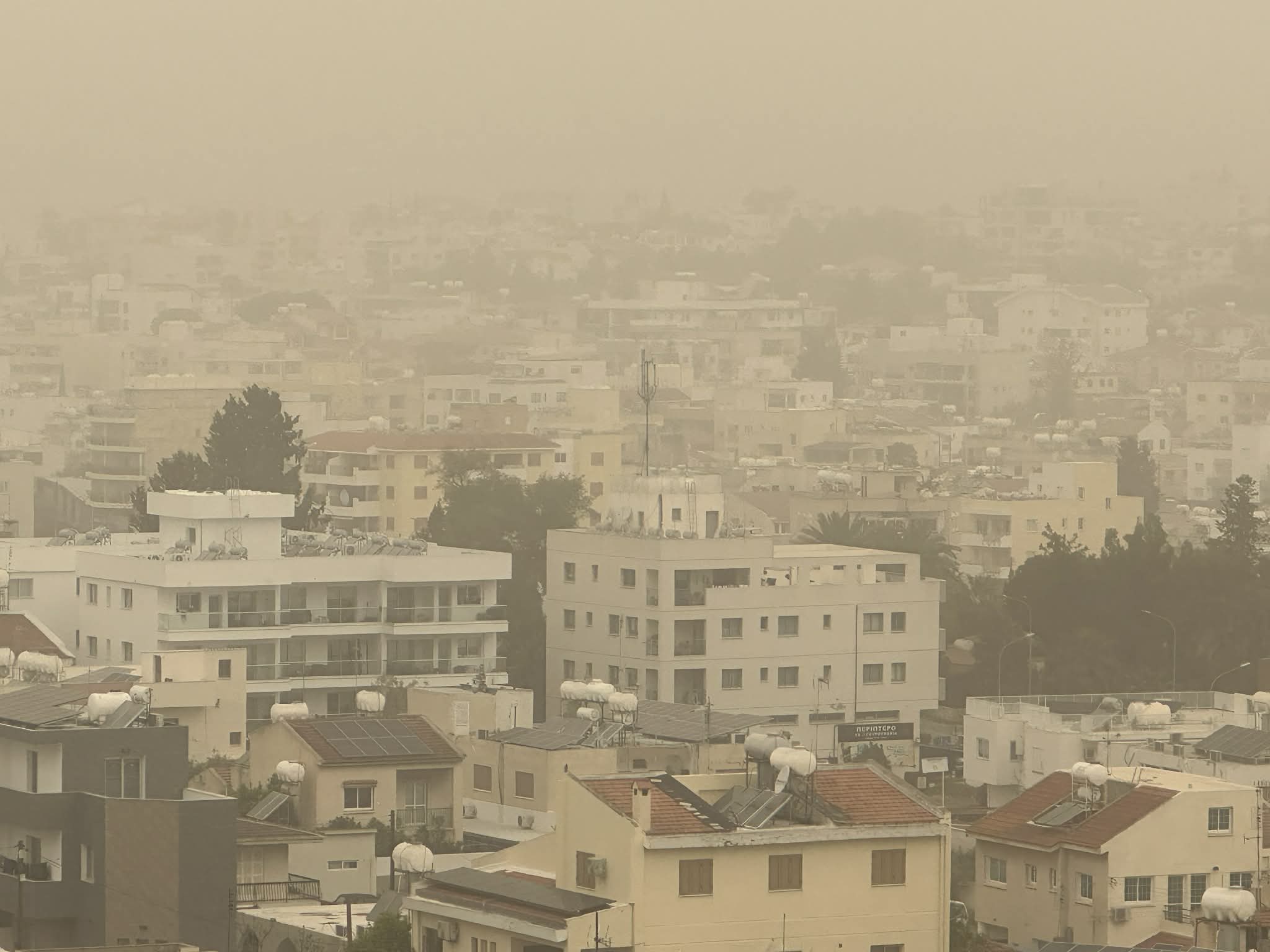
Dust pollution in Cyprus is a public health hazard requiring legislative action, according to pulmonologist Dr Haris Armeftis, who warned that rising concentrations are increasingly affecting both vulnerable groups and the wider population.
Speaking to the Cyprus News Agency on Friday, Armeftis explained that “the perception that dust is an innocent phenomenon is incorrect, because dust microparticles are toxic and harmful to the human body”.
He said the issue has intensified in recent years due to the effects of climate change, leading to more frequent episodes of high dust concentrations across the Levant.
The dust contains PM10 and PM2.5 microparticles, with the latter described as the most harmful due to their ability to penetrate deep into the respiratory system and reach the alveoli, with some particles entering the bloodstream.
Armeftis said these particles “cause oxidative stress, inflammation and aggravate cardiovascular and respiratory diseases”.
He said those most at risk include patients with chronic pulmonary diseases, asthma and heart conditions, while healthy individuals may also experience symptoms such as irritation, coughing, nasal discharge and infections.
Armeftis said there are also long-term risks, stating that microparticles are considered carcinogenic and contribute to lung cancer and other diseases.
He added that the particles can carry additional harmful substances, including metals, viruses and bacteria, increasing the likelihood of infections.
Citing scientific data, he said studies in Cyprus show that every increase of 10 micrograms per cubic metre of particulate matter is linked to a rise of about 1 per cent in hospital admissions for all causes and 1.2 per cent for cardiovascular conditions.
He also referred to research in Greece showing that on days with elevated dust levels, emergency visits for asthma rise by close to 40 per cent and for chronic obstructive pulmonary disease by nearly 60 per cent.
He said that when concentrations exceed 300 micrograms per cubic metre, conditions become dangerous for the entire population.
“People are at risk of losing their lives during those days or being hospitalised with serious complications from various diseases,” he stressed.
In such cases, he said guidance aligned with the World Health Organisation recommendations should be followed, including the suspension of outdoor work and limiting exposure by remaining indoors.
Armeftis said that on days with increased dust, the public should avoid unnecessary travel and outdoor activity, while patients should adhere strictly to prescribed treatments.
He added that only high protection masks are effective, stating “surgical masks don’t do anything” and describing their use as “an illusion” of protection under high dust conditions.
He said the pulmonary society considers current measures insufficient and is preparing to submit proposals to parliament.
“A law must be enacted in Cyprus,” he said, adding that “with recommendations alone, we are not achieving what is expected”.
He said the aim is to introduce binding measures for periods of dangerous dust levels, similar to those applied during heatwaves.





Click here to change your cookie preferences