
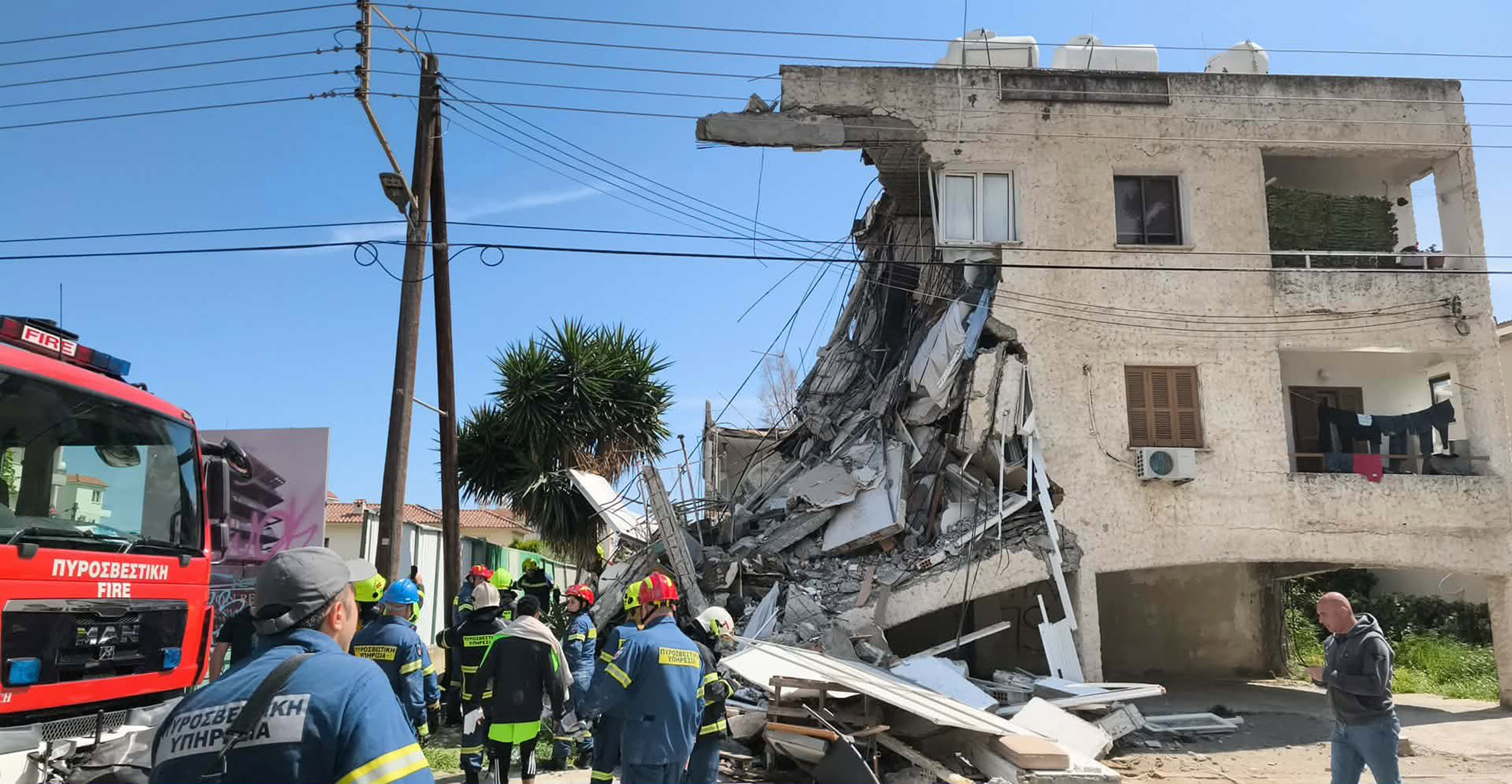
A residential building in the Yermasoyia area of Limassol is scheduled to be evacuated due to security concerns, local media reported on Friday.
According to Phileleftheros, the apartment complex in question is part of 780 buildings in Limassol that have been deemed dangerous by the Limassol district government (EOA), with 80 reportedly on the verge of collapse.
Phileleftheros writes that tenants were informed at the end of the week that they must leave the premises by Monday.
Deputy mayor of Yermasoyia Christos Papamichael described the building as “the most dangerous building in Yermasoyia, where we have had balcony falls in the past.”
He said the owner has not responded to repeated warnings from municipal authorities.
“He had stated that he was not going to repair it unless a building permit was issued for the modifications he is requesting and which, according to information, concern the construction of an additional floor in the specific building,” Papamichael said.
He added that police and other services had previously attended the building after it was found that illegal migrants were living there.
The Limassol EOA sent a letter to the owners of one of the dangerous apartment buildings in Limassol, giving them until Monday to evacuate the building, otherwise the authorities will proceed with sealing it off.
Authorities said enforcement remains subject to legal procedure. Limassol EOA president Yiannis Tsouloftas stated that “the evacuation of buildings deemed dangerous can only be carried out after obtaining a relevant court order,” adding that reports of immediate removals “do not correspond to reality.”
He confirmed that a letter had been issued requesting evacuation by Monday but said that if this is not followed “we will have to follow the legal procedure to issue a court order.”
The case follows the collapse of a residential building in Yermasoyia last Saturday, which left two people dead and three injured.
Civil Defence spokesperson Panagiotis Liasidis said nine displaced residents are being accommodated in a hotel at the state’s expense “until a solution for their accommodation is found.”
Investigations into the collapse are ongoing, with authorities seeking to identify one of the victims through DNA and fingerprint testing.
According to available information, the individual had booked accommodation in the building shortly before the incident.
The interior ministry has moved to accelerate the public disclosure of unsafe structures as authorities examine preventive measures.
Across Limassol, initial estimates indicate around 780 dangerous buildings, with approximately half located in the urban area.
About 80 are considered to pose an immediate risk of collapse. Officials said a list is being prepared for publication.
Similar concerns have been recorded in other district, for in Nicosia, 268 buildings have been deemed unsafe, four requiring immediate evacuation, with costs exceeding €2 million.
In Paphos, 226 buildings have been identified as dangerous, including 71 within municipal boundaries.
“Of the 71, 10 to 12 are in a more dangerous condition, 109 are in the communities and 46 in the municipality of Polis Chrysochous,” said district head Charalambos Pittokopitis.
In a joint statement issued on Friday by the district EOAs, which assumed responsibility for dangerous buildings in April 2025, they cited structural constraints in enforcement.
“Experience from the implementation of this specific competence has shown that, in certain cases, the existing legislative and administrative framework does not allow for immediate and rapid measures,” they said.
They that evacuation of residential buildings is “particularly time consuming and difficult” due to the requirement for a court order.
They also pointed to delays in staffing and funding. “The required positions were finally approved with a significant delay, in July 2025,” the organisations said, adding that they had taken on the responsibility “without an approved organisational structure and without a budget.”
They described the situation as one where “a particularly critical responsibility was not accompanied from the outset by all the necessary means.”
Authorities said responsibility for maintenance rests with property owners but acknowledged practical constraints.
“The primary responsibility for the maintenance and safety of buildings lies with the owners,” the organisations said, while underlining cases where owners lack the financial means to act.
They added that the framework governing dangerous buildings remains fragmented, with administrative and legal responsibilities divided across different bodies.
According to Tsouloftas, Limassol has been affected by “uncontrolled building development after the Turkish Invasion of 1974, often with the use of cheap materials,” while Nicosia faces pressures from abandoned structures near the Green Line.
In some cases, additional risks have been identified through unauthorised internal modifications and structural alterations.
Amathus mayor, Kyriakos Xydias said that where residents do not comply with evacuation requests “they will have to proceed with a request to the court for an order,” adding that “it will take time for this to happen.”
Authorities have not confirmed how many buildings may face immediate enforcement measures pending legal proceedings.
District EOAs said they “intend to proceed with a rapid inspection, to publish all dangerous buildings, as well as to post warning signs,” the statement affirmed.






Click here to change your cookie preferences