
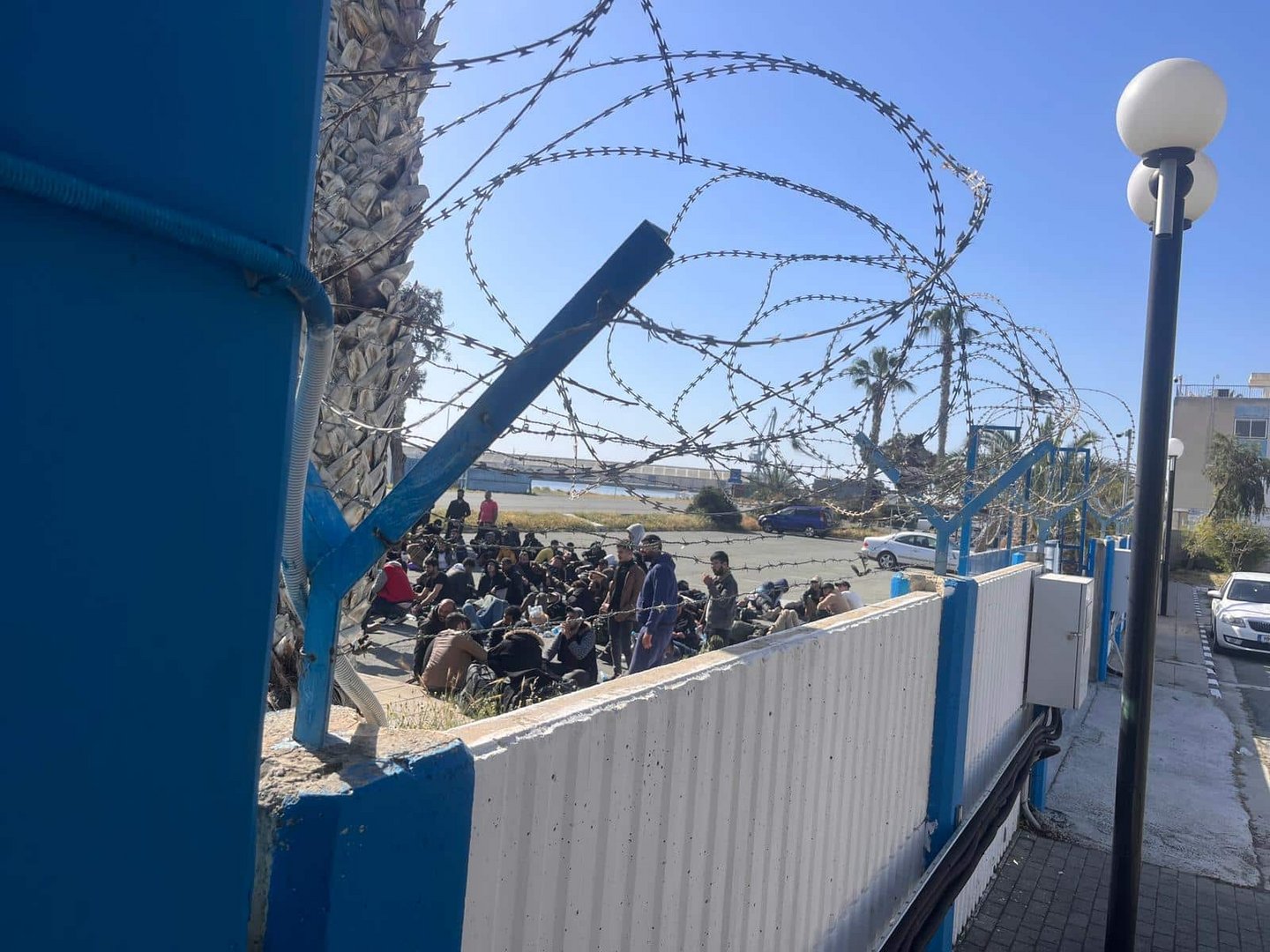
President Nikos Christodoulides on Tuesday hailed a deal struck between the institutions of the European Union over a new law which will allow the bloc’s member states to establish “return hubs” in third countries for irregular migrants.
“Last night, the Cyprus presidency, together with the European Parliament and Commission, delivered a deal for a new returns regulation which complements the pact for migration and allows for faster and more effective return of migrants with no right to stay in the EU,” he wrote in a post on social media.
He added that the new law will provide for a “more autonomous union” and a “more secure union”.
The most notable part of the new legislation is that EU member states will now be empowered to establish “return hubs” in third countries for irregular migrants.
“Such return hubs could serve either as the final destination or as transfer centres facilitating onward return to the country of origin or another third country,” the Council of the EU explained.
It also pointed out that agreements for the establishment of “return hubs” can only be arranged with “a third country that respects international human rights standards and principles of international law, including the principle of non-refoulement”.
Additionally, it said, “unaccompanied minors are excluded from such agreements or arrangements”.
The establishment of “return hubs” is reminiscent of the United Kingdom’s attempts between 2022 and 2024 to deport irregular migrants to Rwanda.
While legislation was passed in the UK to allow for such deportation flights to go ahead, and flights to Rwanda were even arranged, the scheme faced various legal challenges both domestically and at the European Court of Human Rights over questions regarding Rwanda’s human rights record.
In April 2024, the British government, at the time led by Rishi Sunak, attempted to circumvent those rulings by passing primary legislation which declared Rwanda to be safe notwithstanding court verdicts.
However, two and a half months later, Sunak’s Conservative Party lost a general election, and his government’s successor, the Labour Party led by Sir Keir Starmer, cancelled the plan.
In addition to the establishment of “return hubs”, the new law will enhance cooperation between the bloc’s member states on the matter of migrant returns and introduce sanctions on irregular migrants who do not “cooperate” with national authorities.
The Council of the EU wrote that it will establish “strict obligations for persons who have no right to stay in the EU”, with those obligations including “the requirement to leave the member state concerned and to cooperate with national authorities”.
Should those impacted by the new law not cooperate, it said, there are now “consequences”, including “reduced benefits and allowances granted” and “refusal to grant incentives to promote voluntary return”.
“Where national law allows, member states may also impose criminal sanctions, including imprisonment,” it said.
It also foresees the establishment of a “European return order”, which will effectively facilitate mutual recognition of migrant returns, and thus prevent irregular migrants from attempting to migrate to a second or a third member state after being ordered to leave their first.
This mutual recognition will initially remain voluntary between member states, though the council indicated that this may change in the future.
Additionally, the new law will grant member states exceptions to some regulations regarding expulsions of people deemed security risks.
Member states will now, for example, be empowered to issue entry bans exceeding the present maximum limit of 10 years, and even issue indefinite bans, for some individuals.
Late on Monday, night, journalist Gerardo Fortuna captured a photograph of Cypriot Migration Deputy Minister Nicholas Ioannides at the centre of a huddle negotiating the final provisions of the deal in his capacity as the responsible minister of the member state which holds the Council of the EU’s rotating presidency.
After the deal was finalised, he said that the new law “will speed up the return process and increase returns of persons who have no legal right to stay in the EU”.
“Migration is a top priority for the Cyprus presidency, and today’s landmark agreement strengthens the credibility of the EU’s migration policy and the EU pact on migration and asylum, always in compliance with human rights,” he said.
He added that “the swift conclusion of this file within a tight timeframe reflects the commitment of the institutions to establish a set of EU rules on effective returns as part of a holistic migration system”.
To enter force, the new law will have to be approved by both the Council of the EU and the European Parliament.





Click here to change your cookie preferences