
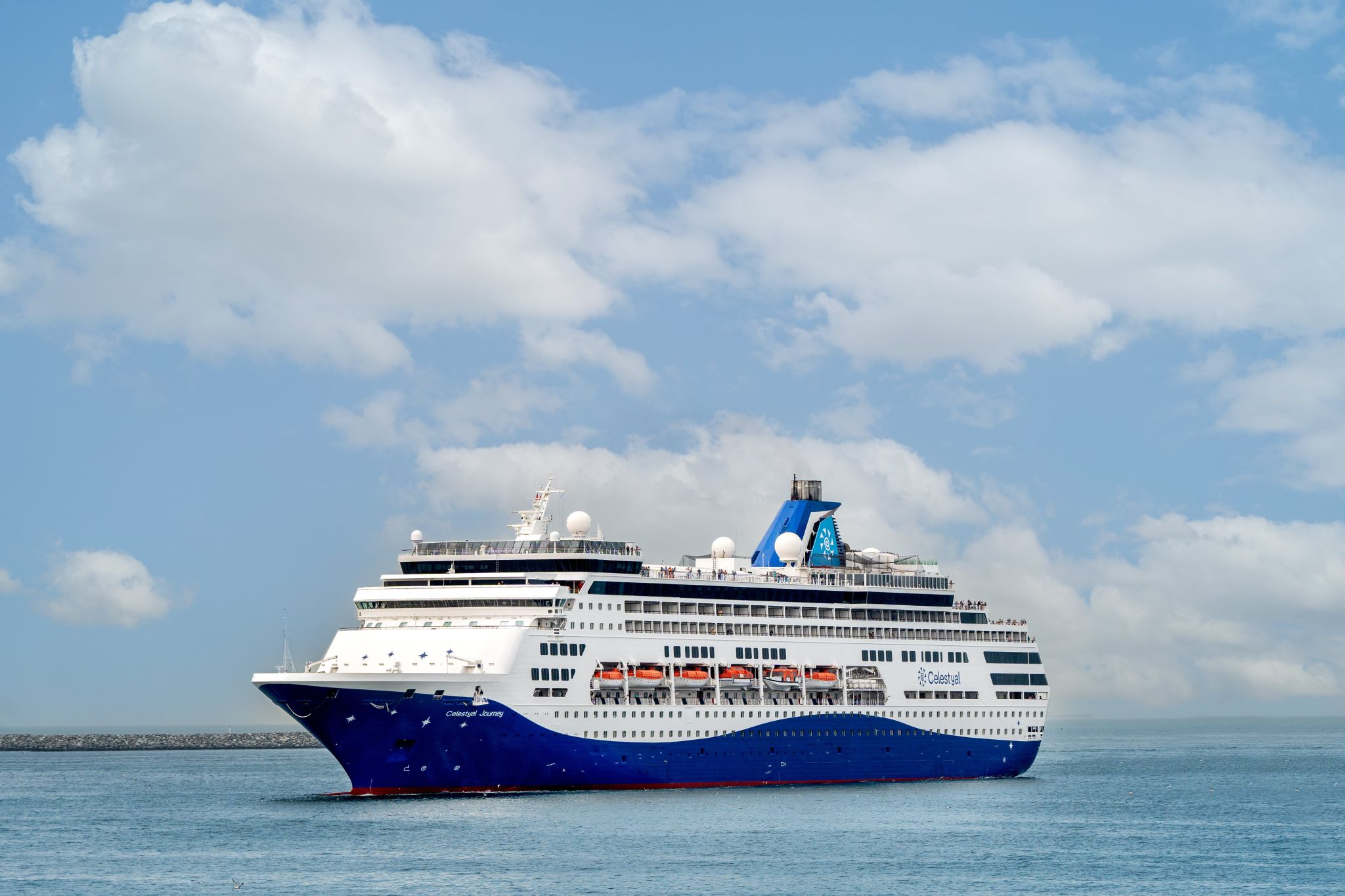
Five cruise ships stranded in Gulf ports since the outbreak of the Iran conflict have now cleared the Strait of Hormuz, taking advantage of a brief reopening of the waterway before Tehran reimposed tighter controls, according to industry reports, cruise media and Reuters reporting on the wider shipping situation.
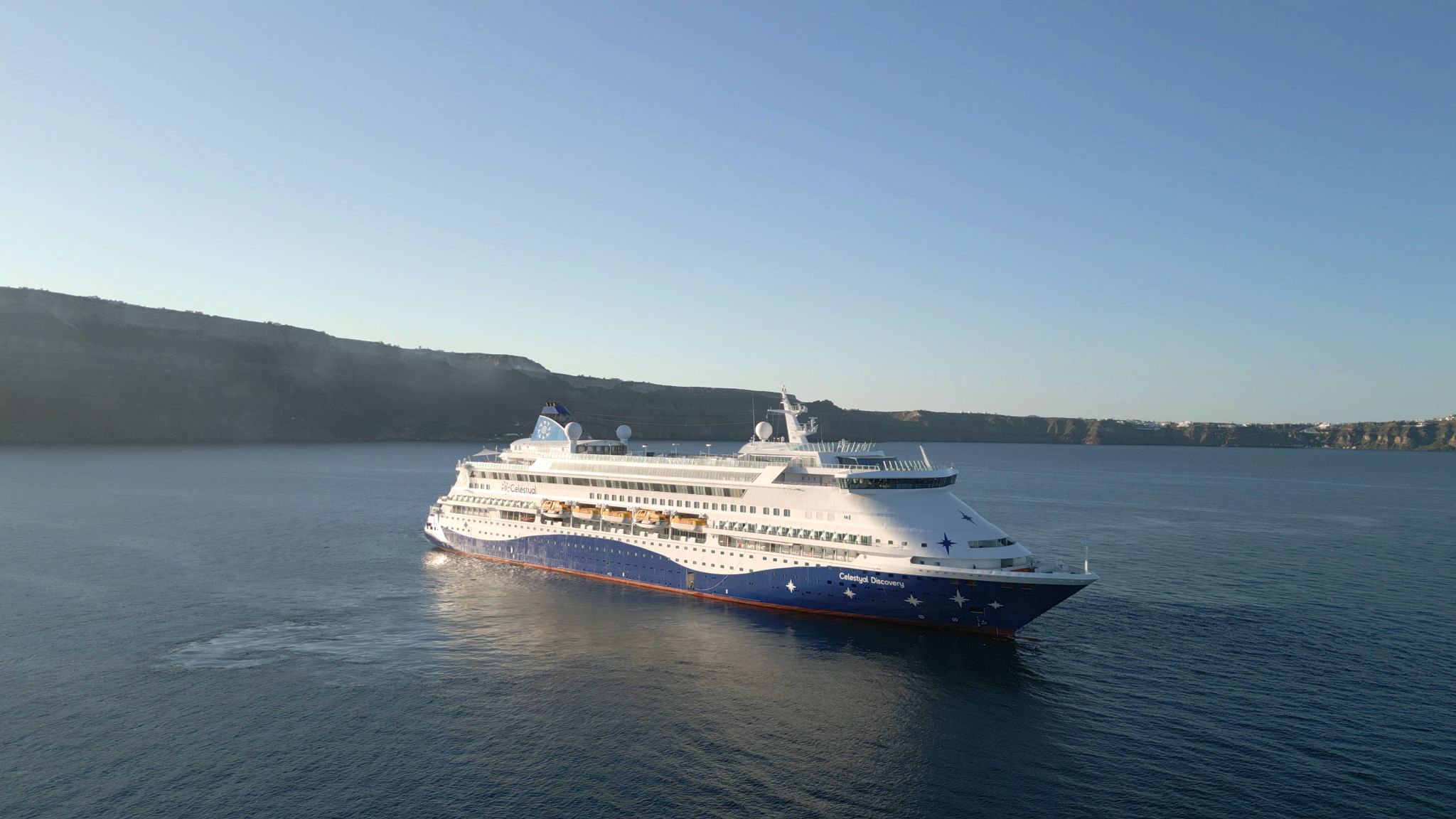
The Greek-owned Celestyal Discovery was the first to make the passage, leaving Dubai on Friday and sailing close to the Omani side of the strait. Its transit came after weeks of disruption that left multiple cruise vessels unable to reposition from the Gulf to the Mediterranean for their summer programmes.
Celestyal said it was “pleased to confirm the successful and safe transit” of both Celestyal Discovery and Celestyal Journey through the Strait of Hormuz, describing the move as “a significant operational milestone” during a period of heightened regional tension.
The company said Celestyal Discovery, under the command of Captain Nikos Vasileiou, became the first cruise ship to leave the Arabian Gulf on April 17, following what it described as a “carefully coordinated voyage plan” developed with regional authorities and maritime security teams.
According to the company, that first crossing helped establish a safe route through the strait for other cruise operators.
It added that Celestyal Journey, led by Captain Angelos Vassilakos, made the same passage on April 18, heading a wider convoy of cruise ships departing the region through the same corridor.
The move was followed by MSC Euribia, and TUI Cruises’ Mein Schiff 4 and Mein Schiff 5, all of which were reported to have passed through the strait by Saturday.
MSC said Euribia had departed Dubai, had “safely transited the strait” and was heading to Northern Europe, while TUI said its two ships had also made the crossing safely after coordination with the relevant authorities.
Celestyal said safety remained its “absolute priority throughout the operation”, adding that both captains, along with onboard and shoreside teams, had shown “outstanding leadership, expertise and calm command” in navigating difficult conditions.
The company also said it recognised the support of regional authorities and partners, whose cooperation, it said, enabled “a coordinated and responsible approach for the wider cruise industry”.
The crossings came during a narrow window after Iran said on April 17 that the Strait of Hormuz was open to commercial traffic during the ceasefire period. Reuters reported, however, that shipowners remained cautious and sought further clarification before resuming normal transit, with tracking data showing some vessels initially turning back.
That caution appears to have been justified. By the weekend, Iran had again tightened control over the waterway, according to industry reports, underlining the continuing fragility of traffic through one of the world’s most important maritime chokepoints.
For cruise operators, the successful passages marked an important step in restoring deployment plans after weeks of cancellations.
Celestyal had already said on March 30 that it was cancelling all April departures because it had been unable to reposition Celestyal Discovery and Celestyal Journey back to the Mediterranean.
Following the successful transits, Celestyal said both ships were now repositioning to the Mediterranean, where they would begin the summer season as planned.
The company added that “all future sailings currently on sale will operate as scheduled”, offering passengers and travel partners “confidence and continuity” as it shifts back to its Mediterranean deployment.
Since the weekend, meanwhile, the situation deteriorated further. Reuters reported that as of Monday, April 20, the fragile ceasefire was now on the brink of collapse, following the US seizure of an Iranian cargo ship that attempted to bypass the blockade.
In response, Iran has vowed to retaliate against what it terms “armed piracy” and has officially rejected a second round of peace negotiations, warning that regional security cannot be guaranteed while its oil exports remain restricted.


Click here to change your cookie preferences