
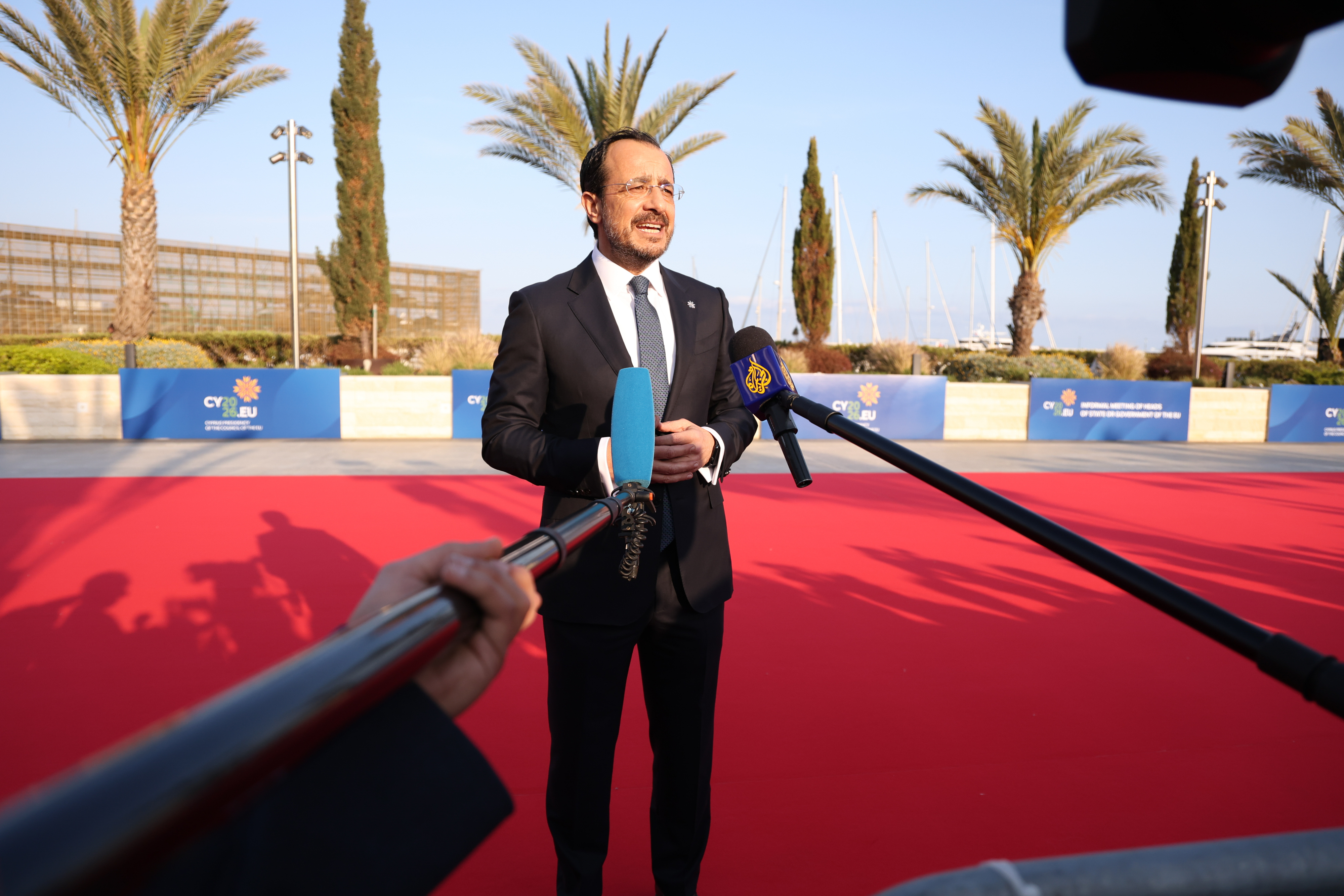
The informal European Council held in Cyprus on Thursday and Friday has strengthened the country’s international standing and reinforced its role in shaping European policy priorities, President Nikos Christodoulides said on Saturday.
He expressed satisfaction with both the organisation and substance of the summit, saying that the outcome contributed to positioning Cyprus as an active participant in addressing regional and European challenges.
He said the event also demonstrated the country’s capacity to host high-level diplomatic engagement at a critical time for the European Union and its neighbouring regions.
He admitted that although informal councils do not adopt formal decisions, discussions focused on key strategic areas aligned with Cyprus’ priorities during its assumption of the EU council presidency.
These included defence and security, energy policy and the future of the single market.
Referring to defence cooperation, Christodoulides highlighted discussions on the EU’s mutual assistance clause under Article 42.7, describing it as an important element of collective security planning.
He said the issue is being developed further through practical frameworks aimed at clarifying how member states would respond in the event of a threat.
On energy, he said leaders examined both immediate and planned future measures, including steps towards a more integrated European energy system.
He also referred to the signing of an agreement with the European Commission and the European Parliament on the single market, linking it to competitiveness and economic resilience within the Union.
Christodoulides described the meeting as having a “strong imprint on the future of the EU”, adding that it contributed to advancing discussions on core policy objectives.
He said engagement with regional partners formed a significant part of the agenda, allowing for exchanges on issues affecting the Levant and Middle East.
The organisation of the summit had been positively received by other European leaders, he said, adding that the outcome enhanced Cyprus’ international profile.
“It strengthens the footprint of our country and strengthens the international status of the Republic of Cyprus”.
Responding to remarks by French President Emmanuel Macron regarding Article 42.7 earlier today in Greece in which he affirmed that should the Hellenic state’s sovereignty “ever be in question, France will be there”, Christodoulides said recent developments had demonstrated that the clause has practical relevance.
He said that even without its formal activation, Cyprus received immediate support from several EU member states after a drone hit the British Base in Akrotiri during heightened tension in the region.
He added that the experience in Cyprus is now being used as a reference point for developing a structured response mechanism at European level.
Christodoulides said Cyprus will continue to act as “an interlocutor between the European Union and its neighbouring regions”.





Click here to change your cookie preferences