
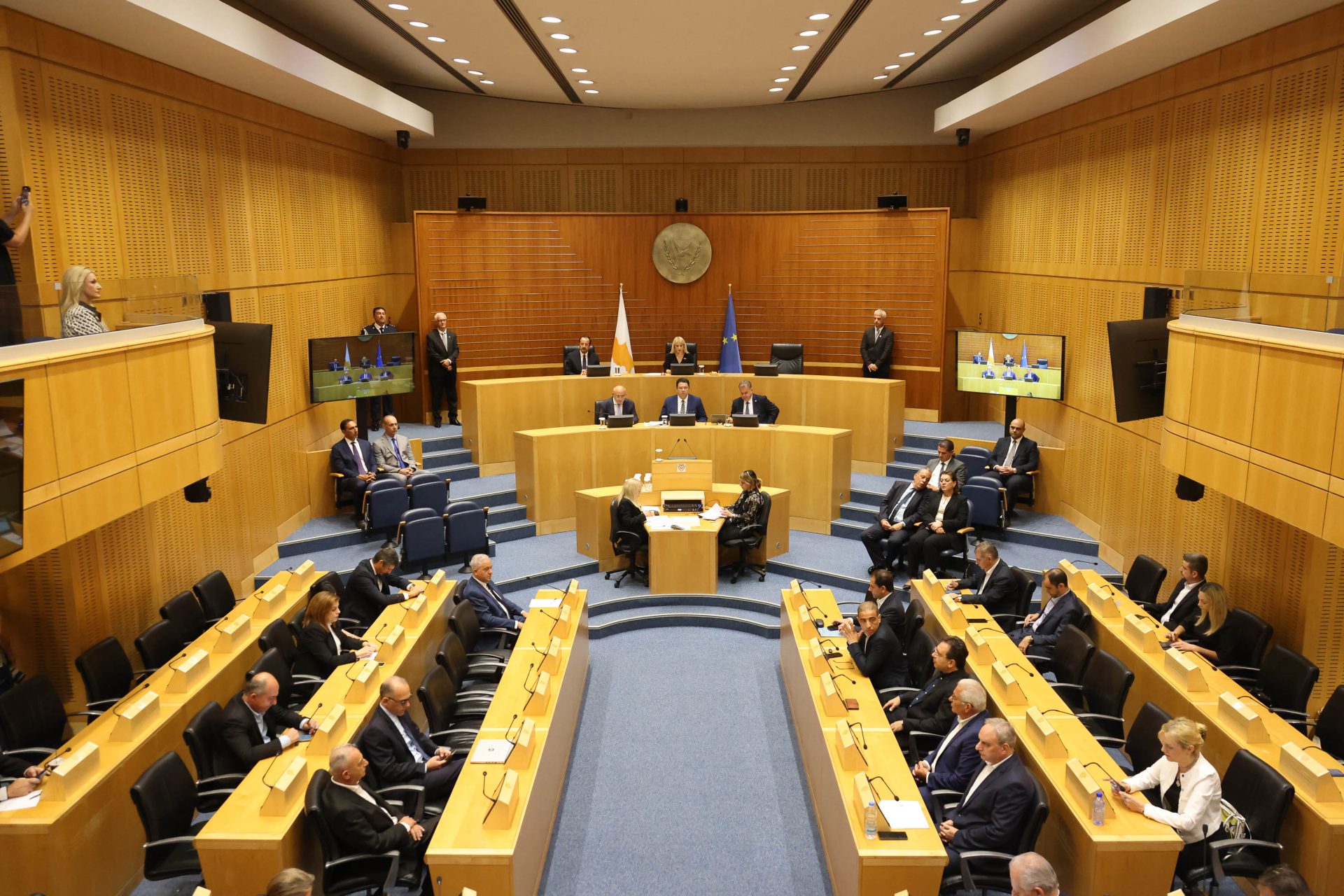
The House approved new refugee legislation on Thursday, establishing a revised legal framework for asylum procedures in line with the EU migration pact, with the law set to take force on June 12.
The bill was passed with 35 votes in favour and 14 abstentions, introducing structural changes to how applications for international protection are processed, alongside provisions aimed at accelerating procedures, strengthening oversight and expanding safeguards for vulnerable groups.
In its statement issued following the legislation’s approval, the deputy migration ministry said the law “incorporates the new European framework for immigration and asylum into the Cypriot legal order” and creates “a more functional, reliable and resilient system”.
Under the new framework, a screening process at the borders will be introduced, with applications examined within designated reception centres.
Authorities will also be able to prioritise certain cases and apply accelerated procedures under defined conditions.
Digital communication with applicants will be formalised, including the use of email, while interviews will involve mandatory audio recording.
The legislation establishes the human rights commission as an independent monitoring mechanism for fundamental rights during border procedures.
It also introduces free legal guidance at the administrative stage and legal representation during appeals.
Provisions are included to regulate reception conditions, family reunification and the protection of minors and other vulnerable individuals, while addressing what officials described as legislative gaps concerning family unity in cases formed after an applicant’s arrival.
The law further allows asylum applicants access to the labour market within six months.
The ministry said the legislation “introduces faster asylum procedures, shorter timelines, stricter border controls, as well as enhanced provisions for minors and vulnerable persons”, adding that it provides the legal basis for Cyprus to access “solidarity mechanisms, technical assistance and tools” under the EU framework.
During the parliamentary debate, Interior committee chairman Aristos Damianou said the legislation incorporates the European pact through “binding regulations and directives”, while expressing reservations over protection standards.
He said, “the levels of protection it provides are lower than international law” and argued that “European solidarity is not substantially strengthened”.
Independent MP Alexandra Attalides said procedural acceleration “cannot replace legality nor cancel the humanitarian dimension”, adding that Cyprus “must operate on the basis of law and respect for people and not fear”.
Ecologists’ leader Stavros Papadouris criticised the legislative process, stating parliament was asked to examine “an extensive and complex legislative text in just two sessions”.
Dipa MP George Penintaex said the bill “modernises and streamlines asylum procedures”, adding that it strengthens “the protection of the rights of applicants, especially vulnerable groups”.
Diko MP Panikos Leonidou described the law as “one of the most important reforms of recent years in the field of immigration and asylum”, linking it to the need for “a ready and functional system” as a frontline state.
Akel MP Marina Nikolaou said the framework “does not substantially solve the problem”, citing concerns over unequal burden-sharing among EU member states.
Disy MP Nikos Sykas said the legislation forms part of a broader strategy to improve migration management, adding that it contributes to “shaping an effective national framework and simplifying procedures”.
Amendments were adopted during the session, including a provision requiring consultation with local authorities for new housing areas, while other proposals, including one on publishing NGO funding data, were rejected.
The passage of the legislation is linked to €190 million in EU funding for migration management and is intended to support a more coordinated and comprehensive system.
The ministry said it would continue preparations “with seriousness and dedication” for full implementation, aiming to ensure the system “safeguards the interests of the Republic of Cyprus and serves the principles and values of the European Union”.





Click here to change your cookie preferences