
Impact of two recent elections on the EU
In the past couple of weeks, we have witnessed the results in two European elections that will change the way the EU will be moving forward. In Hungary, the 16-year rule of Victor Orban has come to an end in a closely watched contest. The result was met with a collective sigh of relief in European capitals, which had long been frustrated by Orban’s obstruction of a unified EU stance on key issues – most notably Ukraine.
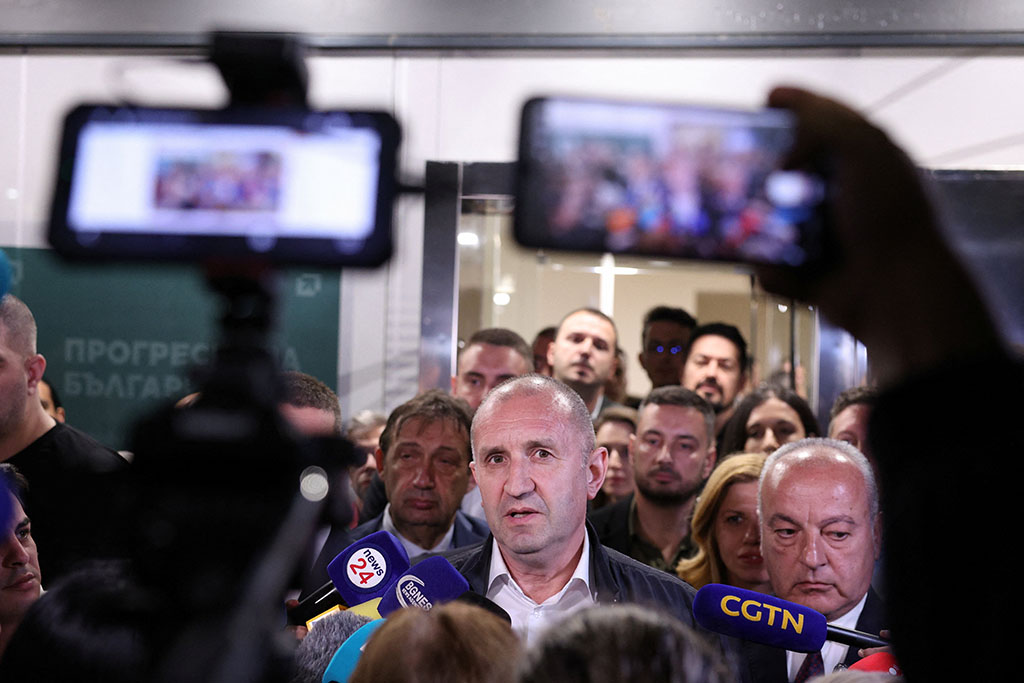
Yet the celebration of Orban’s defeat, often (and perhaps prematurely) interpreted as a broader rejection of the far right – or what he termed “illiberal democracy”– was tempered by the election of Rumen Radev as Bulgaria’s new prime minister.
Radev is not aligned with the far right, but is perceived as more sympathetic to Vladimir Putin and has raised concerns over the EU approach to Russia. That said, he specifically ruled out using a veto on the EU’s policy on Ukraine, something that Orban exercised repeatedly, and has emphasised that “Bulgaria would make every effort to continue on its European path”.
Bulgaria, the EU’s poorest state has been struggling to stabilise its government after eight snap elections since 2021.
If the EU was quick to react jubilantly to Orban’s departure, the Bulgarian election was a sobering reminder that even though the EU can pose as a model to the rest of the world, it still has a lot of issues that need fixing.
While the Hungarian and Bulgarian elections differ in many respects, they also share important underlying themes – ones that offer lessons for improving governance within the union.
One key difference is on geopolitics and the stance towards Russia. Orban’s Hungary was arguably one of the most prominent supporters of Vladimir Putin. His failure to get reelected was – to a degree – a reflection of Hungarians not agreeing with that policy. Even though Radev is not a fervent admirer of Putin he still argued that a more positive EU engagement with Moscow is necessary.
Orban’s downfall may also have been influenced by his close association with Donald Trump. The visit by Vice-President JD Vance in Hungary, just a few days before the election, extolling the virtues of Victor Orban, and promoting his model to the rest of Europe, was like giving Orban the kiss of death, sealing his fate. Radev, on the other hand, kept a low profile on US-Bulgaria relations and we will have to wait and see how Bulgaria tackles the temperamental US president.
What unites both elections, however, is more telling: widespread public frustration with entrenched leadership and poor governance. Outgoing Bulgarian Prime Minister Boyko Borissov was in charge for nine years, whereas Orbán governed Hungary for 16 years. In both cases, corruption emerged as a central problem with people wanting and demanding change.
The fact that the public managed to bring about peaceful change is a triumph for the EU project and is one of the key benefits that membership in the EU brings to its members, something that goes often underappreciated.
For despite efforts, particularly by Orban, to exert control over the media and electoral process, the EU framework prevented him from following the examples of other autocrats, like Putin in Russia or Erdogan in Turkey where the elimination of the opposition is a part of their playbook.
EU membership, in this sense, acted as a democratic backstop – ensuring that peaceful change can take place, perhaps the defining strength of democratic systems.
The EU, however, needs to be more proactive. Corruption is something that needs to be prevented from taking place, not just ensuring that there are methods to remove those that exercise it, important as it may be.
Public frustration with corruption is widespread. Here in Cyprus, we have been in the middle of another corruption scandal, one that we are unlikely to come out of unless an independent public prosecutor is assigned the task to find out what is true and what is not. Our institutions, once again, have failed to instill the confidence that they can manage the process, something that makes the appointment of an independent prosecutor necessary.
Unfortunately, dealing with corruption has become such a popular theme that it is in danger of being hijacked by people wanting to exploit the popular anger for their own benefit.
Even President Trump has enlisted it, as part of his push to oust the independent Federal Reserve governor Jerome Powell. Trump’s claim that Powell is corrupt in handling the revamping of the Federal Reserve building is an obvious smokescreen to the real reason he wants Powell out. That is, not agreeing to Trump’s demand to lower US interest rates.
This underscores the importance of independent institutions, as well as the selection process in appointing the right people to lead them, in a well governed society. Here in Cyprus, we need to re-evaluate the way our institutions work as well as the appointment process. There are models worth studying. Sweden in particular has a dualistic public administration system where administrative departments are autonomous, with the “ministerial rule” prohibiting the influence of government in administrative decisions.
Yet it has been over two years since a committee of experts was appointed to investigate the separation of powers of the attorney-general and we are still apparently not any closer to achieving that supposedly common goal.
Politicians and public officials should remember that their aim should be to serve the public at large, not pursue their own agendas. Too often, this principle is obscured by lofty rhetoric that places the “country” above the “people”. Who can forget JF Kennedy’s famous comment in 1961: “And so, my fellow Americans: ask not what your country can do for you–ask what you can do for your country.”
While inspiring, such rhetoric is misleading. For what is the good of the country if not the collective well-being of its people.
Yet JFK’s message still resonates today with the new Hungarian Prime Minister Peter Magyar jubilantly saying: “Today, we won because Hungarians didn’t ask what their homeland could do for them, they asked what they could do for their homeland.” I hope he realises his mistake soon enough. For if there was one clear message that both the peoples of Hungary and Bulgaria have sent, was that they were fed up with the years where their homeland kept on getting from them and that they expected something in return. Someone must care for the people.





Click here to change your cookie preferences