
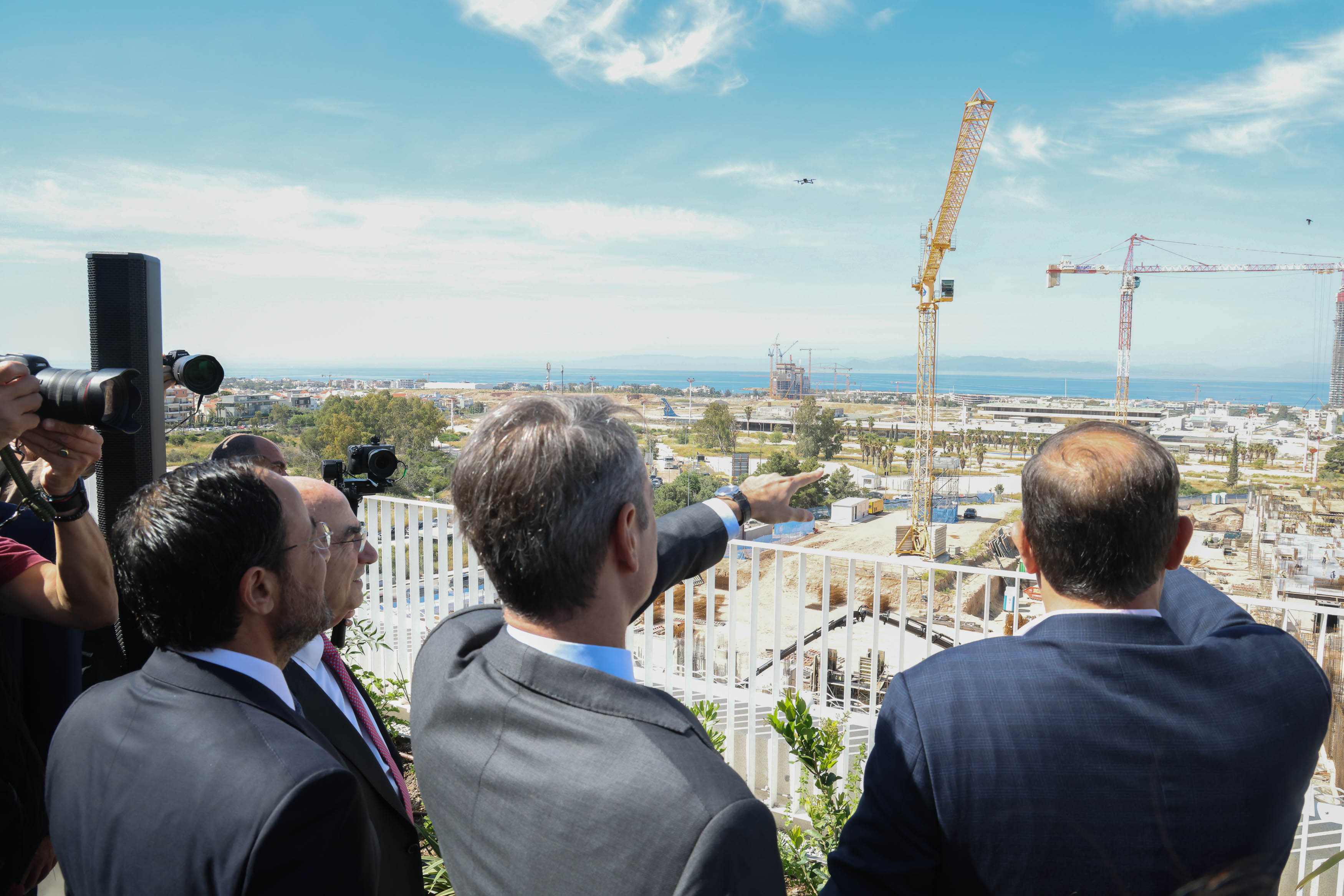
Greek Prime Minister Kyriakos Mitsotakis on Thursday said that the opening of a campus of Cyprus’ University of Nicosia in Athens can help to transform his country into a global education hub, as he and President Nikos Christodoulides opened the university’s new campus.
He used the opportunity to praise his own government’s decision to legalise the operation of private universities in Greece, saying that his government had “decided to take [a] big step”.
“We always had in mind modern units of extremely high standards, with excellent infrastructure, with care for students, with studies linked to the labour market, with an eye turned not to the present, but to the future, and to the universal changes which artificial intelligence is already bringing, not only to education, but to our lives,” he said.
He added that the arrival of foreign private university campuses in Greece has given “many more opportunities to young people who wish to study and either do not want or do not have the means to go abroad”.
Additionally, he said, it will transform Greece into a “regional, and – why not? – let us think more ambitiously, a global education centre, with foreign students who will be able to come and study here, initially from the Balkans, from Europe, from the Middle East, but tomorrow from India, from the United States, from the far East, from Africa”.
To this end, he said he hopes to amend article 16 of Greece’s constitution – which guarantees education free of charge – and said that such a change will constitute “the absolute institutional constitution of such initiatives in our homeland”.
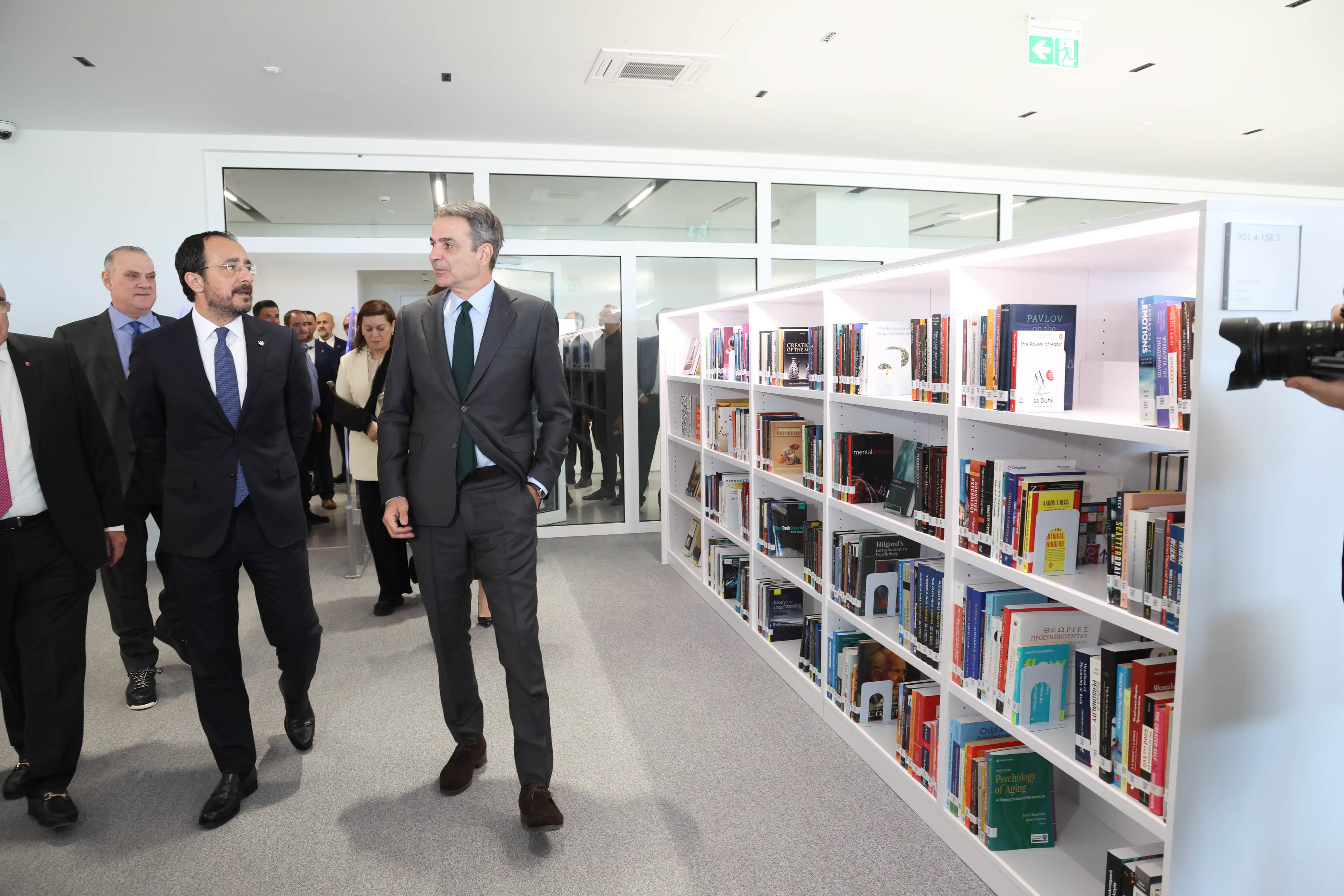
“We are an exception in Europe in terms of the strict constitutional restrictions we place on the provision of higher education services,” he said, before saying that the “time has come” to “consider article 16 as subject to revision, so that there is no longer any institutional question mark over the operation of such institutions in our homeland”.
Christodoulides, meanwhile, stressed the strengths of Cyprus’ education sector, saying that it is “one of the most important in the Cypriot economy, with enormous prospects”, and that his government is “investing even more in education and training”.
He also expressed pride in the University of Nicosia, which he said “now has approximately 14,000 students from 100 different countries”.
“Today, it is here, and rest assured that very soon, it will be in other European capitals, and we are by its side. We support this effort,” he said.
He added that his government is “working together with our universities, private and public, so as to attract even more students”, and that the import of students to Cyprus is “subject to one basic condition”, which he said is “quality education”.
“We do not just want foreign students. We want quality students,” he said, adding that the University of Nicosia is “a key supporter in this effort”.
Additionally, he pointed out that his own government has passed a law to allow foreign universities to open campuses in Cyprus, with the Kapodistrian University of Athens having opened a campus in Nicosia in February.
“We are happy to have the University of Athens. We are in discussions with many other universities from Greece, and also from abroad, and all of this further strengthens the fraternal ties between Cyprus and Greece, between Greece and Cyprus,” he said.




Click here to change your cookie preferences