
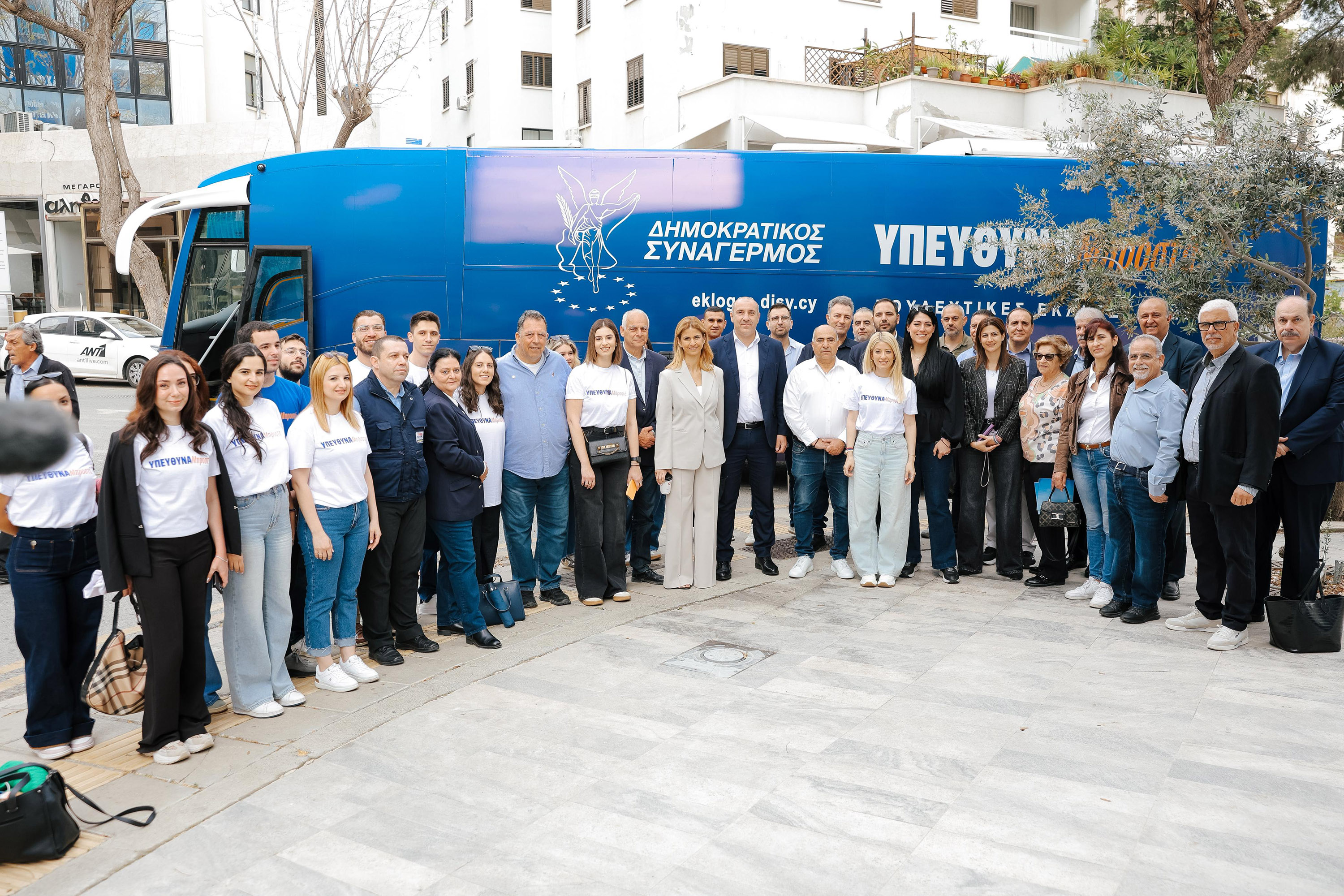
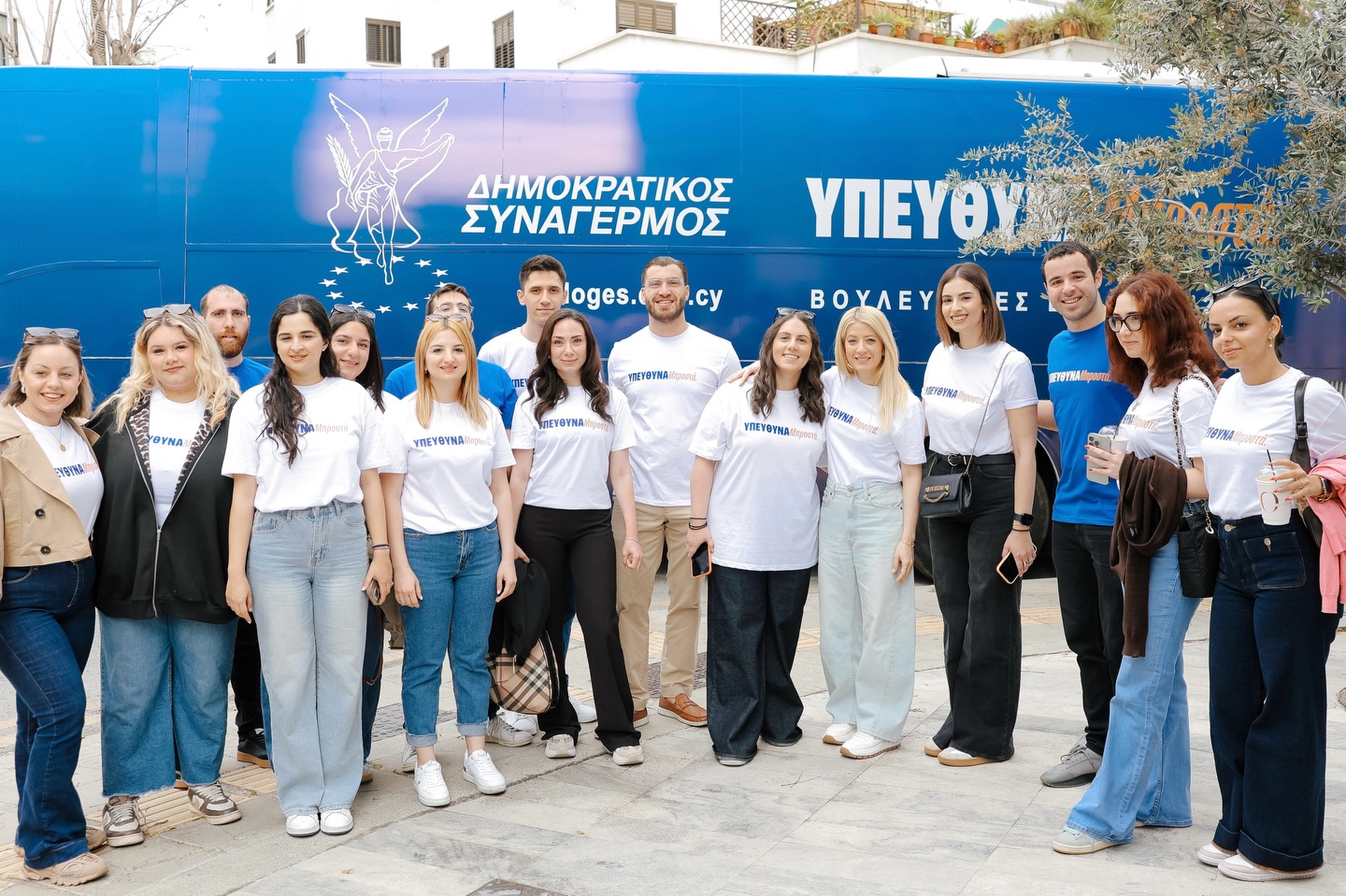
Disy on Saturday unveiled its campaign battle bus for the forthcoming parliamentary election, with the bus and the party’s leader Annita Demetriou setting off on a tour of the island from the party’s headquarters on Nicosia’s Pindarou Street.
Demetriou, dressed in a party-branded t-shirt printed with the words “forward, responsibly”, said that while on the bus tour, she and the party wish to “listen to society, speak with the people, and convey the message of victory everywhere”.
She added that “the stakes of the elections are particularly important”.
“Politics starts with the people and must return to the people. We have formed our positions, we have a strong team, and we are sure that people will stand by us in this great effort,” she said.
The bus’ first stop was Paralimni, with further stops in Larnaca and Paphos expected in the near future.
According to polling, Disy finds itself neck-and-neck with Akel in the battle for first place in the election, having been the largest party at every parliamentary election since 2006.
However, both parties look set to lose votes and seats compared to last time around, with new parties, such as social media influencer Fidias Panayiotou’s Direct Democracy Cyprus, and former auditor-general Odysseas Michaelides’ Alma, expected to perform well on May 24.
A total of 56 seats will be up for election later this month, of which 19 will belong to MPs from the Nicosia district, 12 to MPs from the Limassol district, 11 to MPs from the Famagusta district, six to MPs from the Larnaca district, five to MPs from the Paphos district, and three to MPs from the Kyrenia district.
The Paphos district gained an extra seat ahead of May’s election due to the growth in its voting population, with that gain coming at the Nicosia district’s expense.
The Republic of Cyprus’ constitution initially foresaw a parliament with 50 voting members, of whom 35 would be Greek Cypriots and 15 would be Turkish Cypriots, as well as non-voting observers belonging to the Armenian, Latin, and Maronite communities.
Following the breakdown of constitutional order and the outbreak of intercommunal violence in 1963, the Turkish Cypriots were unable to return to their seats in parliament, leaving just 35 voting members.
That figure was raised to 56 Greek Cypriots ahead of the 1985 parliamentary elections after the constitution was altered using the doctrine of necessity. The amendment foresees 24 Turkish Cypriots also being elected, but with the Cyprus problem remaining unsolved, this has not yet happened.




Click here to change your cookie preferences