
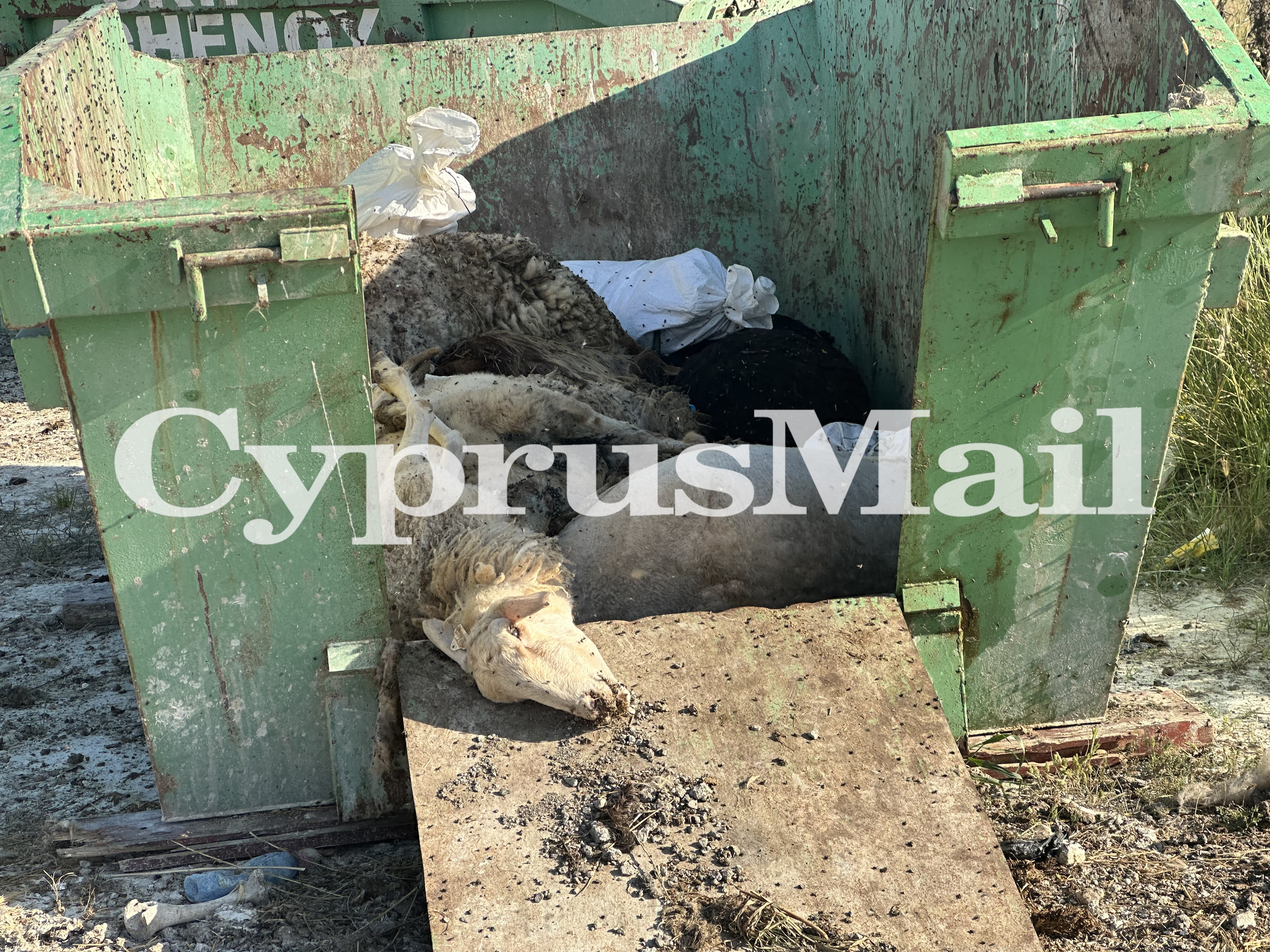
The Veterinary Services on Tuesday rejected claims that animals culled due to foot and mouth disease (FMD) were improperly discarded in Athienou, following concerns raised in a recent Cyprus Mail report.
“Under no circumstances” are animals from infected farms disposed of in an uncontrolled manner or outside designated and licensed burial sites, it said.
The department stressed that the handling of carcasses is carried out strictly in line with biosecurity protocols and relevant EU and national regulations, under the supervision of competent authorities.
The response comes after reports that dead sheep were seen left in skips in the Athienou industrial area.
According to the Veterinary Services carcasses from livestock areas in Aradippou, Troulloi, Athienou and Ormidia are “temporarily gathered at designated points outside farming zones before being collected by a contractor”, under an existing contract for the collection and management of dead animals.
This arrangement, it said, was introduced “at the request of organised groups of farmers in affected areas”, with the aim of reducing the risk of disease spread by avoiding the entry of collection vehicles into livestock units.
They added that the selection of these collection points was made in consultation between farmers and local authorities, without direct involvement from Veterinary Services.
Addressing visual material circulating publicly, the agriculture ministry said that “isolated images do not necessarily reflect the full process”.
It said the management of carcasses, including collection, transport and final disposal, follows approved procedures, including sanitary burial in properly prepared sites, the use of approved disinfectants and strict access control measures.
Earlier, head of the cattle farmers’ association, Giorgos Parpas had told the Cyprus Mail that “culled animals were placed in skips at designated points before being collected for incineration”, adding that under normal conditions “animals should remain in skips for no more than one to two hours” before collection but delays may extend into the following day, leaving the culled animals exposed.
Meanwhile, sheep farmers’ association head Sotiris Kadis said the situation had improved compared to earlier stages of the outbreak, when carcasses were reportedly left outside farms, though he agreed that further improvements are needed in the process.
The Veterinary Services said they remain in constant coordination with all stakeholders to ensure consistent implementation of measures and limit the spread of the disease.
They also stressed that “strict adherence to biosecurity measures by all involved is essential to protecting livestock, public health and the agricultural economy”.




Click here to change your cookie preferences