

Farmers will once again block the Rizoelia roundabout, which sits at the intersection of the motorway connecting Larnaca and Nicosia, and the motorway connecting Larnaca and Ayia Napa, on Friday, in protest at the government’s handling of the ongoing outbreak of foot and mouth disease, the newly established “voice of livestock breeders” organisation said on Tuesday night.
The group’s protest will begin at 11am on Friday, with organisation spokesman Neophytos Neophytou saying that “we are sure that everyone will see something very big and correct which the whole world will understand”.
He was asked whether it will be ensured that people will not be inconvenienced by the protest, given that the Rizoelia roundabout effectively acts as the chokepoint for all road traffic between Larnaca airport and Nicosia and all road traffic to and from Ayia Napa and Paralimni.
“All members and the whole world understands, respects, and appreciates every other person who moves around Cyprus. We did not want and do not want anyone to be inconvenienced, and everyone should be sure that the protest is not just for us. It is not just for livestock farming. It is for everyone,” he replied.
He added that “everyone must understand that livestock farming is one of the biggest pillars of Cyprus’ economy”.
The group’s main source of dissatisfaction appears to be the fact that if one animal on a farm is found to have foot and mouth disease, every animal on the farm must be killed.
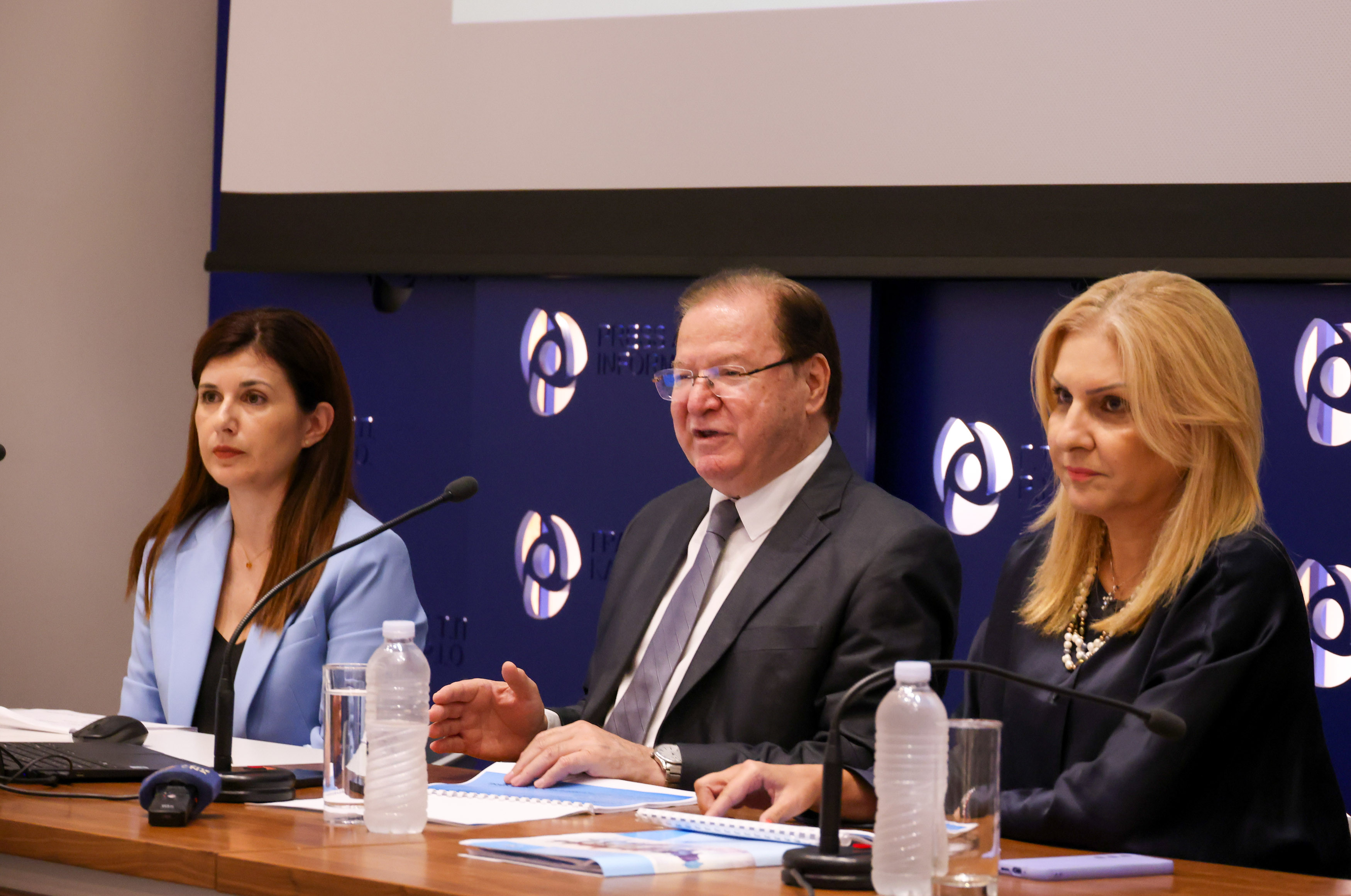
However, veterinary association chairman Demetris Epaminondas had earlier in the day explained that European Union law on the matter does not allow for any other solution, and that non-adherence to the EU’s laws could see Cyprus run the risk of being unable to export halloumi to the rest of the bloc.
“If EU legislation is not implemented, then there is a risk that the export of halloumi from Cyprus will be banned”.
He also dismissed claims made by “voice of livestock breeders” representative Stella Petrou, who said that there may be “alternative European protocols” which could allow Cyprus to avoid culling infected animals.
To this end, he said that “European legislation regarding the treatment of the disease is unified,” and made it clear that no such “alternative protocols” exist.
“Europe has chosen the extreme strategy of eradicating the problem. This leaves no room for any differentiation in the measures taken in any of the member states,” he said.
Asked whether some animals may test positive for foot and mouth disease if they possess antibodies as a result of having been vaccinated against the disease, he said that “it is possible to differentiate vaccine antibodies from antibodies which have developed due to natural infection”.
More than 30,000 animals have already been culled, with Epaminondas having said previously that there is “no less painful alternative” to culling when attempting to stem the spread of the disease.
He also stressed that vaccinations of animals cannot replace culling as a method of preventing the disease’s spread, as the vaccine’s aim is “to limit the transmissibility of the disease”.
“Even a vaccinated animal, if it is found to test positive, must be culled,” he said, before going on to say that animals can remain infectious for four to six months.
He added that allowing infected animals to live also entails the “risk that the virus will be transmitted further either by air, or by machinery, or in any other way which would affect other units”.
“That is why these extreme measures are being taken,” he said.




Click here to change your cookie preferences