
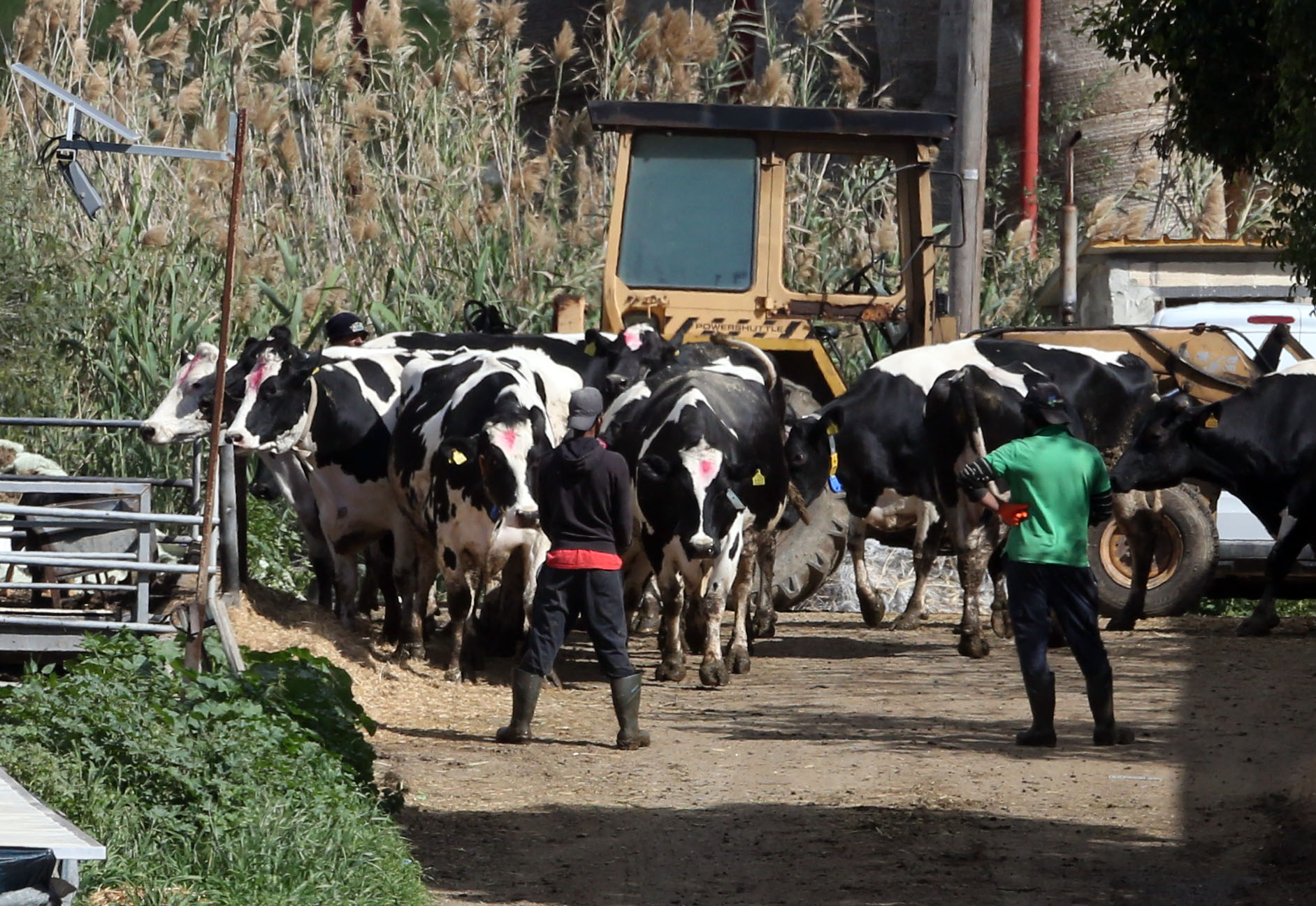
There is “no less painful alternative” to killing animals in livestock units which have had recorded cases of foot and mouth disease, veterinary association chairman Demetris Epaminondas said on Monday.
“The killing of all animals in such cases is imposed by European legislation and there is no less painful alternative,” he told the Cyprus News Agency, saying that European Union law on the matter is “particularly strict”.
He also stressed that vaccinations of animals cannot replace culling as a method of preventing the disease’s spread, as the vaccine’s aim is “to limit the transmissibility of the disease”.
“Even a vaccinated animal, if it is found to test positive, must be culled,” he said, before going on to say that animals can remain infectious for four to six months.
He added that allowing infected animals to live also entails the “risk that the virus will be transmitted further either by air, or by machinery, or in any other way which would affect other units”.
“That is why these extreme measures are being taken,” he said.
Later, he said that Cyprus finds itself “in a peculiar situation due to the concentration of large animal populations in small geographical areas”, while also pointing out that the Green Line, which separates the island’s two sides, “cannot be 100 per cent controlled”.
He also urged the public to be “understanding and calm” regarding veterinarians tasked with undertaking the culling.
“None of our colleagues want to participate in this thing called euthanasia. We did not study to kill animals, we studied to treat animals,” he said, before stressing that veterinarians “are not the enemies of livestock farmers”.
“On the contrary, we have been mobilised from the very beginning, with vaccinations and implementation of legislation, trying to limit the disease,” he said.
As such, he said, “it would be good not to target us”.





Click here to change your cookie preferences