
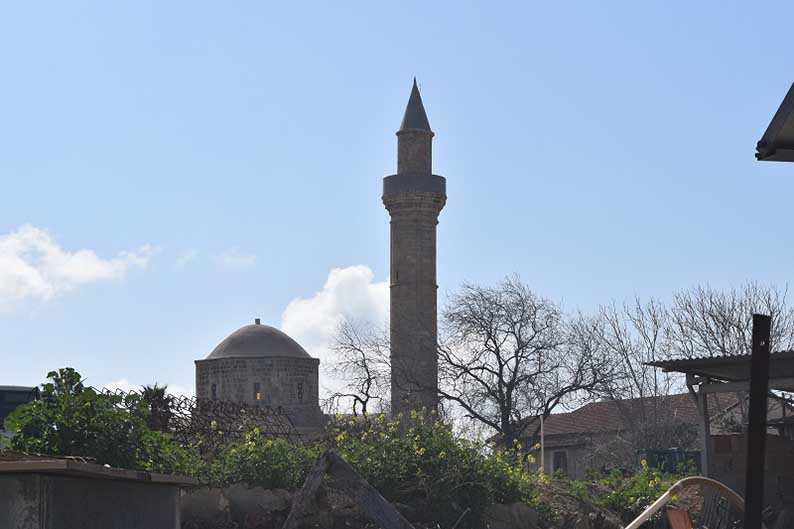
Kemal Ataturk Street in Paphos’ Moutallos neighbourhood will be renamed “Nikos Kapetanidis Street” after the town’s council voted to approve the change, Disy councillor Nina Gkaraklidou said on Thursday.
She told the Cyprus Mail that a proposal she had put before the council had been approved by a majority of councillors, and that as such, the street will be renamed in due course.
Earlier, she had written in a post on social media that the fact that the street was named after the Republic of Turkey’s founding president Mustafa Kemal Ataturk “creates and provokes a painful emotional reflection” among Moutallos’ current residents, most of whom are Greek Cypriots who were displaced from the north in 1974 and their descendants.
“Street names are not simply practical markings, but reflect our values, roots, history and choices,” she said, adding that she had chosen to propose the renaming of the street “with the awareness of the burden and responsibility towards the truth and future generations”.
Prior to 1974, Moutallos had historically been the town of Paphos’ Turkish Cypriot community, and the names of the streets in the neighbourhood reflect that fact, often being named after Turkish and Turkish Cypriot historic figures, such as poet Namik Kemal, late Turkish president Ismet Inonu and the Republic of Cyprus’ first vice president Dr Fazil Kucuk.
However, since then, with the neighbourhood becoming the home of displaced Greek Cypriots, and the wider Paphos area experiencing an influx of Pontic Greeks following the disintegration of the Soviet Union in 1991, moves have been made to rename some streets bearing names deemed offensive by those communities.
Talat Pasha Street was renamed as Justice Street in 2021, with Paphos’ Pontic Greek and Armenian communities pointing out that the late Ottoman grand vizier had been convicted and sentenced to death for organising massacres of Greeks and Armenians during his stint as grand vizier and, earlier, interior minister.
While Talat Pasha was sentenced in absentia and thus escaped execution, having escaped to Berlin with the Ottoman Empire facing defeat in the first world war, he was later shot dead during organised assassinations carried out by the Armenian revolutionary federation.
Distaste at Mustafa Kemal Ataturk among Pontic Greeks is sourced from the Greco-Turkish war, during which both sides committed sundry atrocities against one another, including massacres, torturing and the burning of towns and villages.
Amid those atrocities, Nikos Kapetanidis, a journalist from the Black Sea city of Rize who published a newspaper in Trabzon, was convicted and sentenced to death during the Amasya trials, which were carried out by the Turkish national movement, which at a national level was led by Kemal, in 1921 in the eponymous Black Sea town.
Kapetanidis was one of hundreds to be sentenced to death in Amasya, convicted of agitating for a Greek-led breakaway of the Black Sea region.





Click here to change your cookie preferences