
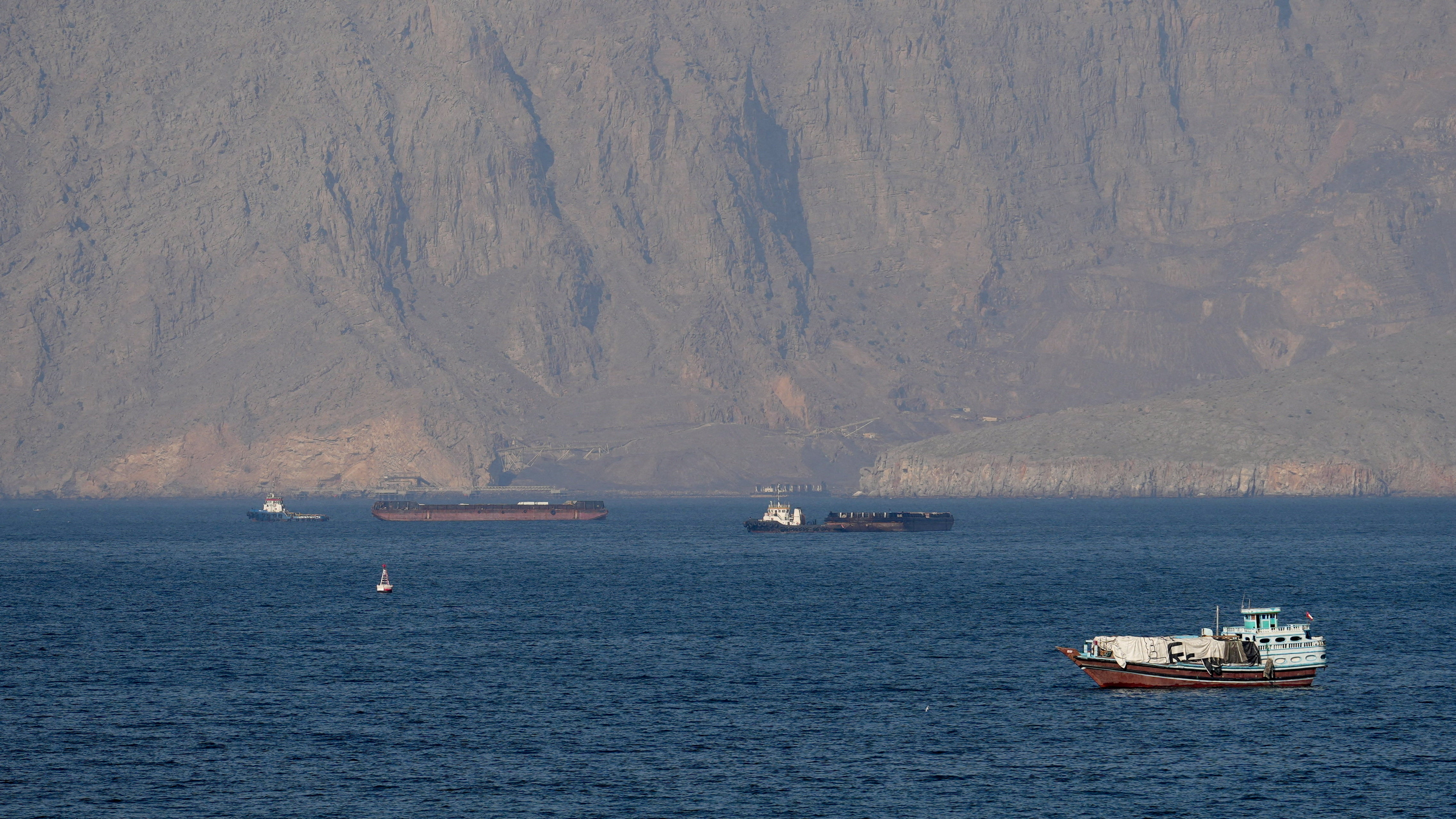
Celestyal’s safe extraction of two cruise ships from the Persian Gulf was carried out through a carefully staged operation that began with the removal of passengers, continued with the management of crews under pressure and ended with the passage of the vessels through the Strait of Hormuz, company executives said in an interview published by Newmoney.
Speaking to business stories, Celestyal CEO Chris Theophilides, Chief Operations Officer Captain George Koumbenas and Captain Vasilis Gazikas, director of the company’s maritime department, described how the company handled a crisis that found two of its ships in the region, one in Dubai and the other in Doha, with around 2,500 passengers and 1,000 crew members in total.
Theophilides said the crisis came suddenly, with a morning phone call confirming that war had broken out and that a sailing ban had been imposed. From that moment, he said, the company’s first priority was “to get the passengers safely out of an area that had suddenly fallen into war conditions”.
He said Celestyal immediately began “a marathon of negotiations and contacts with embassies, local authorities, agencies and all available channels that could help”, at a time when the facts were changing constantly and every decision had to be weighed carefully.
“We had to move quickly, but also with a full picture of the situation, because any wrong move would have consequences for people, operations and next steps,” Theophilides said.
Within about ten days, he said, the company managed to evacuate its passengers safely, an effort which was also recognised by the US Embassy in Qatar.
Once that first phase had been completed, Theophilides said the company moved to a second stage, focused on keeping Celestyal operational and creating the space needed for the decisions that would follow.
He said this was where Celestyal’s long-standing relationships of trust became important. The banks, he said, “reacted immediately and with understanding”, accepting the transfer of instalments to a later stage and giving the company more flexibility during a highly pressured period.
At the same time, he said, investors supported the company with fresh capital, while negotiations with insurers focused on securing the correct coverage for the return trip.
“The insurers’ decision to take on the risk was based on the way we had planned the project, the relationships that had been established over time, and in the adequacy of the crew that remained on the ships,” Theophilides said.
He added that this was the point at which the company’s speed of reaction and institutional credibility were tested, as the crisis moved from passenger evacuation to the longer and more demanding task of managing crews and operations.
Koumbenas said the next major issue was the crews and the daily operation of the ships in a situation with no clear end in sight. Once it became clear that a return to normality would take time, he said, the company decided to leave only the absolutely necessary core crews on board.
Some crew members returned to their home countries, others moved to hotels, while 67 people remained on the Celestyal Discovery and 78 on the Celestyal Journey.
Koumbenas said this was “the most demanding part on a human level”, because those who stayed on the ships were living with bombings and alarms, even during the night, for about three weeks.
“The priority there was to keep morale high, to have constant information and to make sure everyone knew what the plan was and what phase we were in,” he said.
He also said his own presence on the ships was important during that period, because it showed the crews that the company was present, watching the situation closely and moving through the crisis with them.
“The physical presence in those days had weight,” Koumbenas said.
He added that the experience showed that cruising now has to operate with “constant adaptability”, as companies can be forced to respond to geopolitical crises, wars, health developments and changes in market conditions at very short notice.
In those days, he said, Celestyal was in constant communication with embassies, ministries and services in Dubai, Abu Dhabi, Oman and Qatar, while also maintaining contact with other cruise companies and ships in the region.
Koumbenas said this part of the crisis was less visible from the outside but remained critical, because the situation was not only a security issue. It was also a test of whether the whole organisation could continue to operate coherently while everything around it was changing.
After the passenger and crew situation had stabilised, Gazikas said attention turned to the most difficult maritime stage: the release of the ships themselves.
He said planning for the extraction had started early, as the company believed the safest option would be for the ships to move along the coast of Oman, avoiding both the international transit channel and the sea corridor proposed by Iran.
“With this logic, we began to approach the Omani authorities to pass through their territorial waters,” Gazikas said.
At the same time, he said, other options were also being examined, while the company continued monitoring the area, assessing risks and revising its plans.
With the ceasefire, Gazikas said, the Iranian stance began to soften and a more manageable window appeared. Celestyal was also in close communication with Operation Shield, which brought the company into contact with the US Navy, where it submitted its intentions and the full details of the passage plan.
“The final decision was made on Friday, April 17th in the morning, with the announcement of the ceasefire in Lebanon,” he said.
He said this was preceded by the passage of two American destroyers through the Strait, as well as four Omani tankers along the same route, which strengthened the company’s belief that there were no mines and that the plan could be executed safely.
Gazikas said the Celestyal Discovery, under the command of Captain Nikos Vasiliou, was the first cruise ship to pass through the Strait of Hormuz on April 17.
The Celestyal Journey followed a day later, under the command of Captain Angelos Vasilakou, after the first operational test of the plan had already taken place. On April 18, he said, the Celestyal Journey was placed in charge of a convoy formed in the area with three other cruise ships.
“The route followed was exactly the same as that of the Celestyal Discovery,” Gazikas said.
He explained that the ships moved further south from the traffic separation zone, very close to the coast of Oman, following a sailing plan based on the movements of local commercial ships and four Omani-owned tankers.
Both ships, he said, started the passage with their AIS on. Initially, the declared destination was Khasab, inside the Persian Gulf. Once outside Khasab, the destination was changed to Muscat, outside the Strait of Hormuz.
During the passage of the Celestyal Discovery, Gazikas said there were repeated calls from the Iranian side. The response, he said, was that the ship was continuing its course “in accordance with international rules of safe navigation and harmless passage”.
At that stage, he said, the US Navy was around 100 nautical miles away, receiving reports on the progress of the passage.
Gazikas said the bridge operation involved continuous monitoring of navigation systems and traffic in the area, uninterrupted communications, confirmation of course, distances and position, and full coordination between the master, officers and ship-office teams.
He also said the plan had been explained in detail to the crews of both ships and that everyone had agreed before the passage was made.
“This consensus was important, because in such a passage, in addition to technical competence, the trust of the officers and crew in the plan is also required,” Gazikas concluded.


Click here to change your cookie preferences