
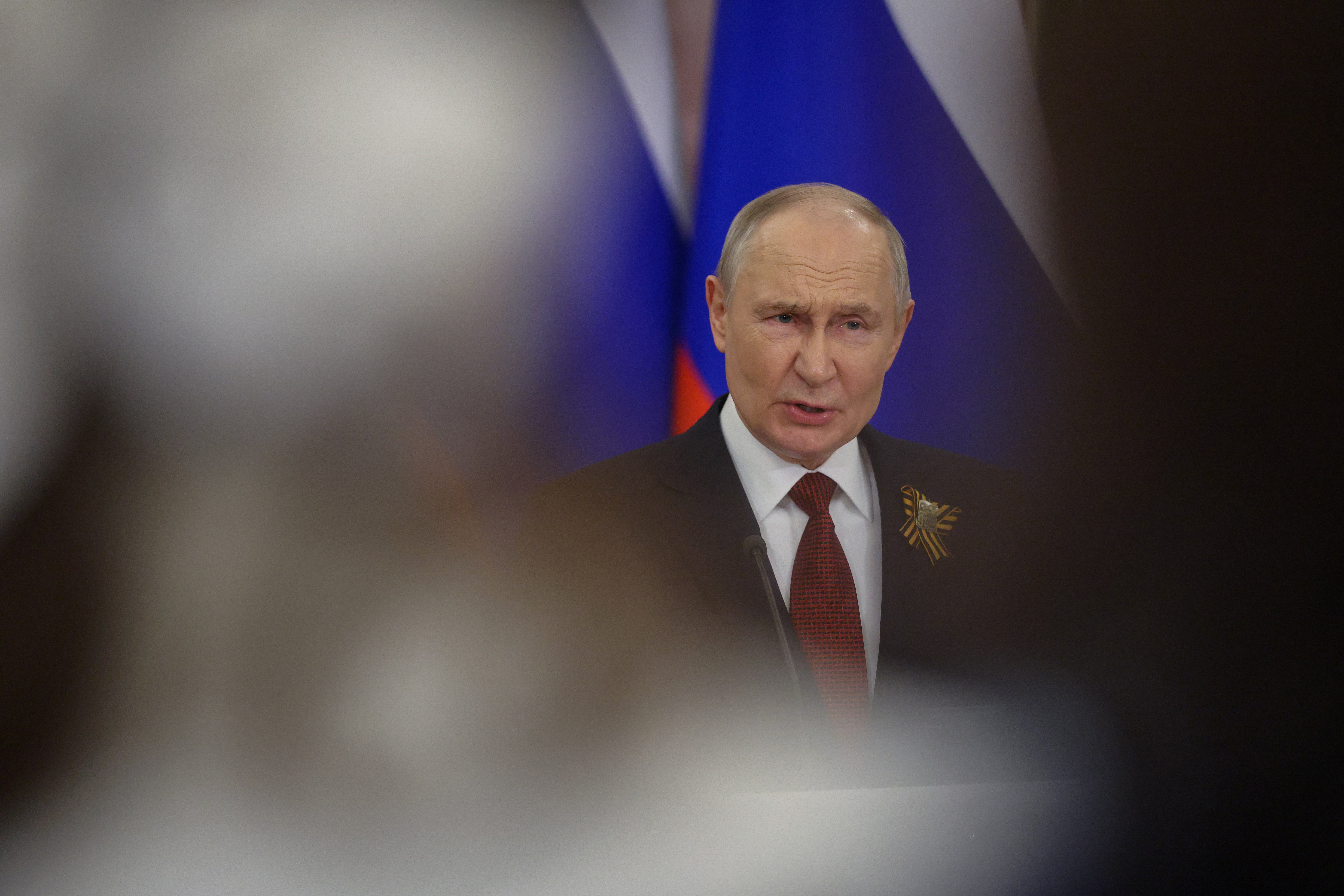
European governments on Monday rejected asuggestion by Russian President Vladimir Putin that former German chancellor Gerhard Schroeder could represent them in possible future talks with Moscow on the continent’s security.
Putin said on Saturday he believed the war in Ukraine was coming to an end and that he would be willing to negotiate new security arrangements for Europe, with Schroeder as his preferred partner.
But European Union foreign ministers, attending a meeting in Brussels, were sceptical that Russia was ready to end the war and negotiate sincerely on peace and security for Europe.
They dismissed any role for Schroeder, who has worked for Russian state companies and cultivated a close relationship with Putin.
“It’s clear why Putin wants him to be the person – so that actually … he would be sitting on both sides of the table,” EU foreign policy chief Kaja Kallas told reporters.
“If we give the right to Russia to appoint a negotiator on our behalf … that would not be very wise,” said Kallas, a former prime minister of Estonia, a Baltic state that was ruled by Moscow as part of the Soviet Union.
Asked later if she could personally take part in such talks, Kallas said: “When a politician doesn’t toot his own horn, the horn usually remains untooted. So I have to say I think I could see through the traps that Russia is presenting.”
She added that there was no sign Russia was ready to engage in good faith and that Europeans would first need to agree on what they wanted from any negotiations.
Germany’s Europe minister, Gunther Krichbaum, said Schroeder, who was chancellor from 1998 to 2005, did not have the credentials to be an “honest broker”.
“He is, and certainly has been, heavily influenced by Mr Putin,” Krichbaum said.
Ukrainian Foreign Minister Andrii Sybiha also rejected a role for Schroeder. But he said Europe could be involved in talks that would be “complementary” to U.S.-led negotiations to end the war.
Sybiha did not go into details on what this might involve, beyond saying it could focus on “resolving concrete problems”.
EU HAS SHUNNED RUSSIA SINCE UKRAINE INVASION
The EU has pursued a policy of isolating Russia since Moscow’s 2022 invasion of Ukraine. It has imposed sanctions and had few high-level political and diplomatic contacts with Russia.
But with U.S.-led talks to end the conflict making little progress as Washington focuses on the war in Iran, some European officials have urged the EU to consider direct discussions with Moscow, possibly led by a special envoy.
European Council President Antonio Costa said last week he was talking to other EU leaders “to organise ourselves and to identify what we need” to talk to Russia when “the right moment” comes.
Kallas and several ministers said the EU should first increase pressure on Russia before contemplating discussions or picking a representative.
“It’s not about choosing someone,” said Lithuanian Foreign Minister Kestutis Budrys. “We should get to the basics and the basics is to get our tools ready to pressure Russia.”
Austrian Foreign Minister Beate Meinl-Reisinger said it was time for the EU to become more actively involved in talks with Russia and nominate a negotiating team.
“But we will decide that – Russia won’t decide it,” she said.





Click here to change your cookie preferences