
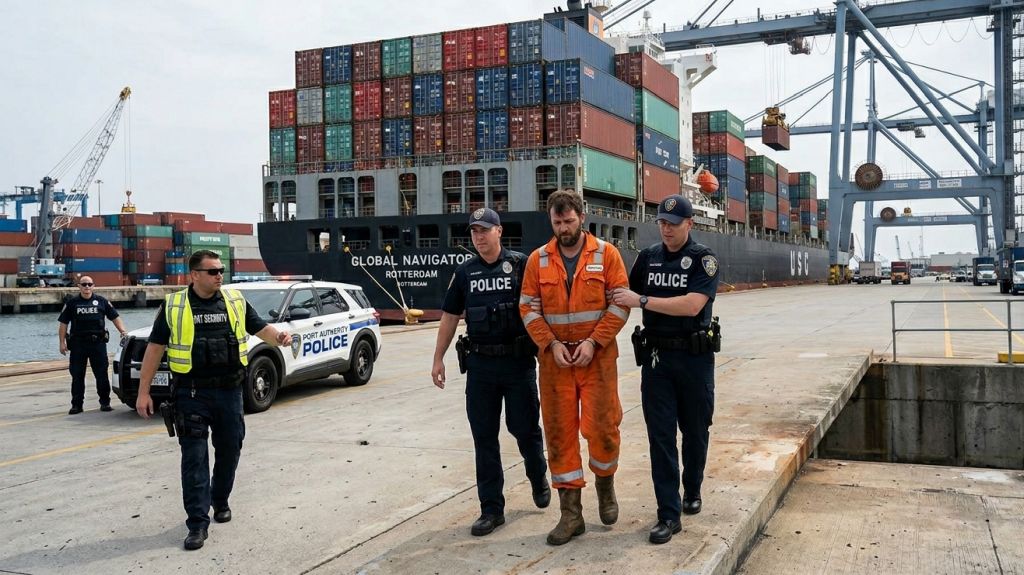
The International Maritime Organisation’s (IMO) Legal Committee is reviewing a key update on the fair treatment of seafarers, as shipping bodies intensify efforts to protect crews from arbitrary detention, prolonged legal uncertainty and criminal proceedings in foreign jurisdictions.
According to Maritime Cyprus, a joint report submitted by the International Chamber of Shipping (ICS) and the International Transport Workers’ Federation (ITF) warned that seafarers are increasingly being detained for long periods, in some cases for years, while authorities investigate alleged crimes despite the absence of reliable evidence.
The report said the problem has exposed a “critical gap” between national governments and local judicial systems. Although many IMO member states support international fair treatment guidelines, local prosecutors and courts may not be aware of them or may fail to apply them when dealing with maritime accidents or criminal investigations.
As a result, seafarers can find themselves separated from their families, unable to return home and caught in legal systems that do not always recognise the particular nature of their work.
In response, the ICS and ITF have set up the Industry Standing Forum on the Criminalisation of Seafarers, a new body designed to give the industry a stronger and more coordinated voice in cases involving detained crew members.
The forum is expected to support active cases by engaging with authorities through a representative industry front, while also sharing expertise on the application of the 2025 ILO/IMO Guidelines on the fair treatment of seafarers.
The report said the forum has already met three times and has made joint representations in several specific cases involving detained seafarers.
At the same time, the report also pointed to the growing risks faced by crews as commercial shipping is increasingly exploited by criminal networks involved in drug trafficking.
Citing data from the United Nations Office on Drugs and Crime, the report said most global cocaine trafficking takes place by sea, leaving seafarers exposed to serious legal risks when narcotics are hidden on vessels without their knowledge.
The highest-risk areas remain loading ports in Latin America and discharge ports in Western and Southern Europe, as well as the US.
The ICS has launched a centralised digital hub offering localised loss-prevention guidance from P&I Club correspondents, aimed at helping operators and crews better understand the risks they face in specific ports and regions.
The wider concern, however, remains the need for due process and consistent application of international standards.
The industry’s message to maritime administrations is that fair treatment must not remain a paper commitment. Instead, it must be understood and applied by the authorities directly involved in detention cases, including investigators, prosecutors and courts.
For seafarers, the issue is not only legal but deeply human. Prolonged detention can mean years away from families, reputational damage and severe emotional strain, often before any wrongdoing has been proven.
For shipping, meanwhile, the criminalisation of crews threatens confidence in the global maritime system at a time when the industry is already under pressure from geopolitical tensions, security risks and increasingly complex compliance demands.





Click here to change your cookie preferences