
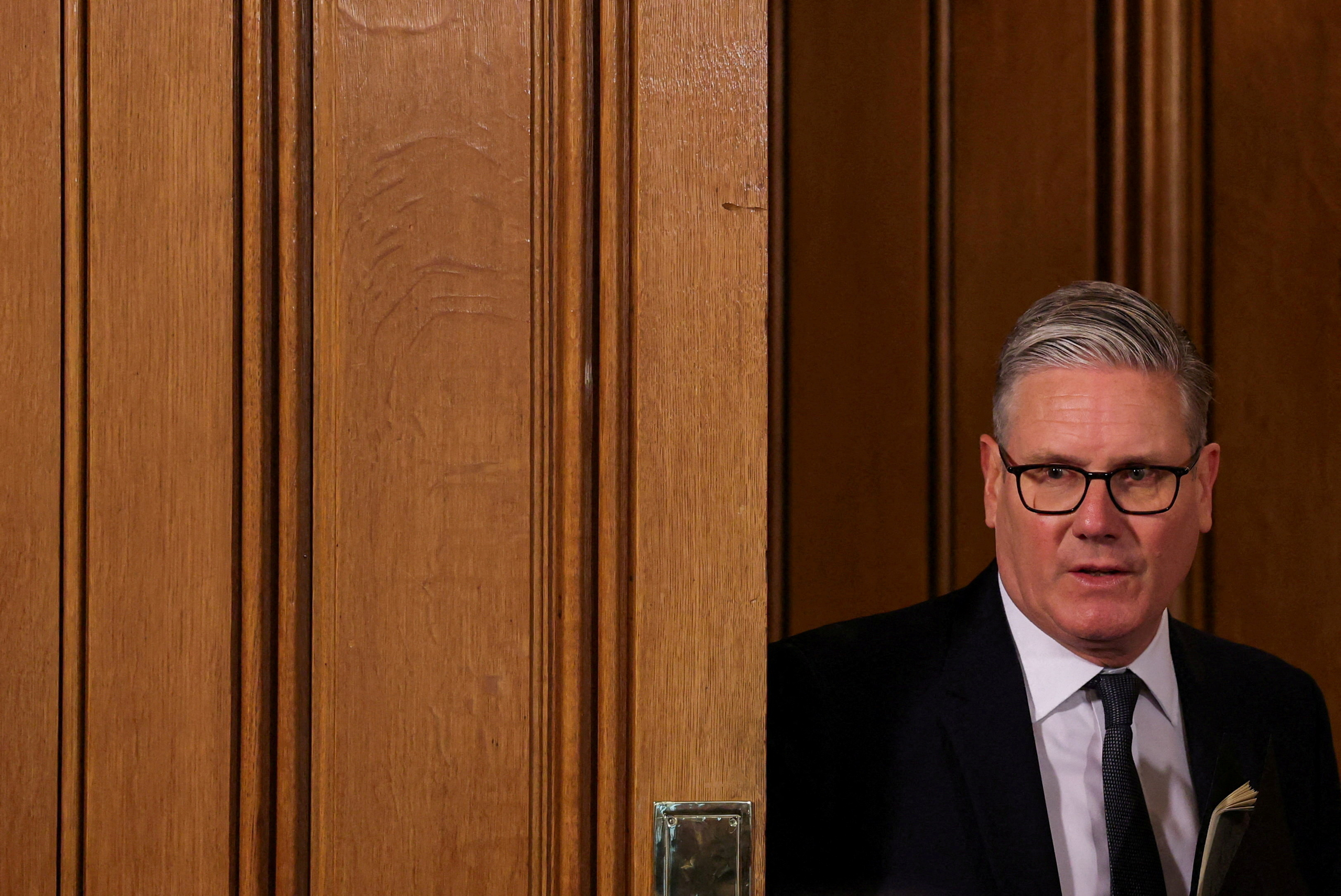
Keir Starmer was consulting colleagues about whether he can stay on as prime minister on Tuesday ahead of a crunch cabinet meeting that comes after ministerial aides quit and almost 80 lawmakers publicly called for him to go.
Starmer, in the top job for less than two years, had vowed on Monday to stay the course after large swathes of his parliamentary party turned on him following one of the worst defeats for Labour in last week’s local elections.
British media reports said several cabinet ministers, including interior minister Shabana Mahmood and foreign minister Yvette Cooper, have told Starmer he needs to set out a date at which he will step down.
Almost 80 lawmakers, from different ideological wings of the party, have called for Starmer to set out a timetable for his departure, to trigger a leadership competition.
What happens in Starmer quits?
HAS A LEADERSHIP CONTEST BEEN TRIGGERED?
Not yet.
On Monday, several ministerial aides stepped down and more than 70 Labour lawmakers publicly called for Starmer’s departure after his appeal for another chance seemingly fell on deaf ears.
Some senior cabinet ministers, according to media reports, have told Starmer to announce a plan for his exit.
ISN’T THAT ENOUGH?
No. Labour has strict rules governing the removal of a party leader and the system requires lawmakers to coalesce around specific candidates rather than just express “no confidence” in their current leader.
At the moment most of those against Starmer have called for him to set out a timetable for his own departure – effectively asking him to resign without needing to be forced out.
One former junior minister, Catherine West, has made a formal attempt to gauge support for Starmer’s exit but this is not the same as a leadership challenge and she has not declared her intention to stand to replace him.
IF HE DOESN’T RESIGN, HOW WOULD A CHALLENGE WORK?
Any candidate wishing to make a challenge would need to secure the support of 20% of Labour members of parliament. With Labour currently holding 403 seats, that equates to 81 backers.
Candidates also must meet thresholds for support from grassroots Labour Party organisations, and from affiliated organisations such as trade unions.
Starmer would have an automatic right to be on the ballot paper, if he chose to fight the contest.
If only one candidate qualifies, there is no vote: the candidate is elected unopposed as Labour leader and becomes prime minister.
If more than one candidate qualifies, the winner is decided by a ballot of all Labour Party members and affiliates. The winner then becomes prime minister.
Senior minister Darren Jones told Times Radio on Tuesday that Starmer was listening to colleagues and it was up to him to make a decision.
“He’s listening to colleagues, and he’s talking to colleagues. I can’t get ahead of any decision he may or may not take,” Jones said.
Starmer had sought to shore up his position on Monday when he promised in a speech to act more boldly and with more urgency to tackle Britain’s many problems.
But almost immediately his lawmakers started to publicly call for him to quit or signal that he would go, pushing borrowing costs higher.
Starmer had said the country would never forgive the centre-left Labour Party if it embarked on a leadership challenge, just two years after its huge parliamentary majority was supposed to bring an end to the political chaos that had gripped the country since Britain voted to leave the European Union 10 years ago.
Starmer is Britain’s fourth prime minister in five years. The move against him comes a day before King Charles is due to set out the government’s legislative agenda in a parliamentary ceremony of pomp and splendour on Wednesday.



Click here to change your cookie preferences