
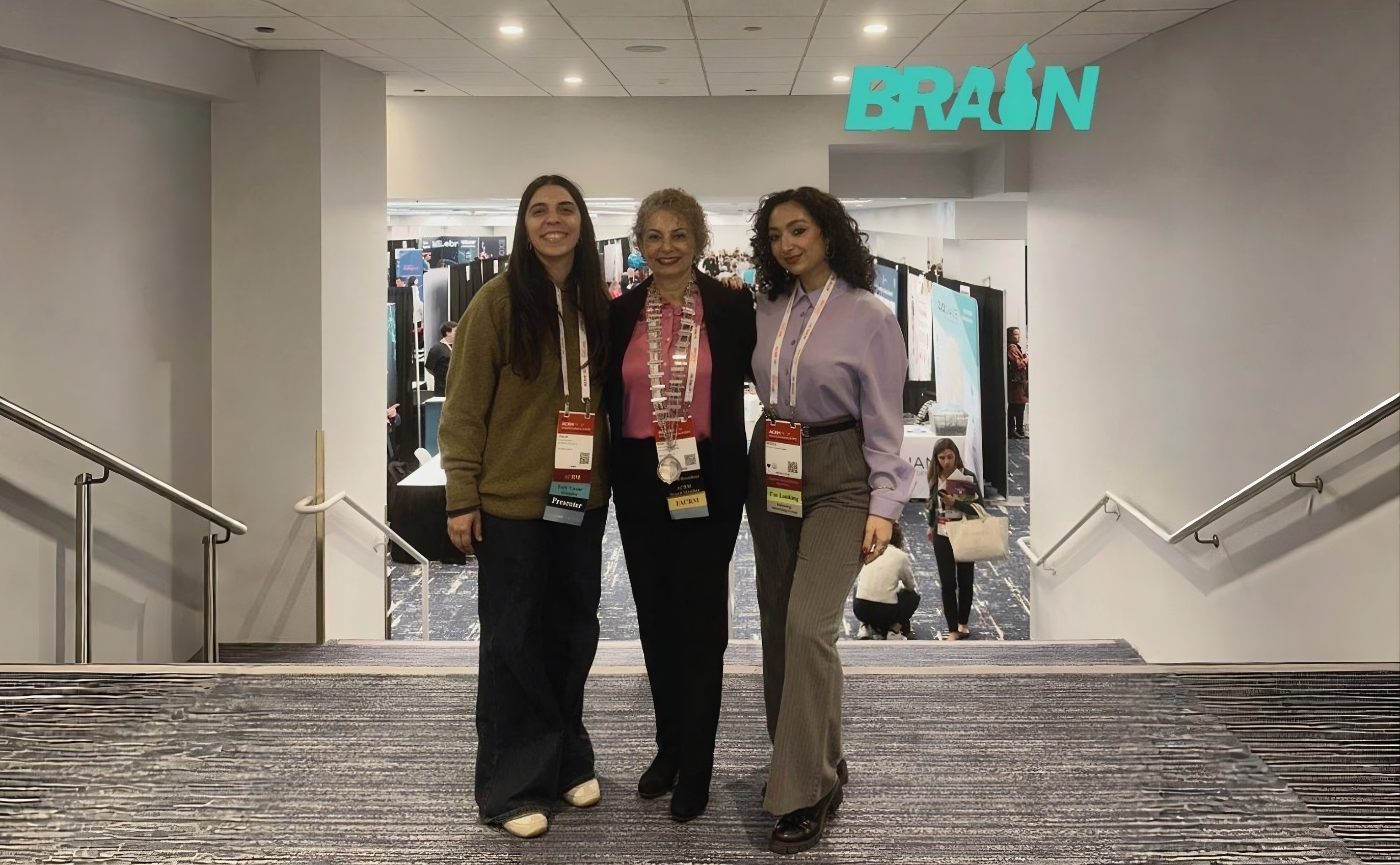
A Cyprus-based digital health startup is advancing cognitive rehabilitation through a new platform, aiming to address gaps in awareness and access to treatment across the healthcare system.
The initiative centres on CAT-BRAIN, a digital cognitive rehabilitation platform developed by a multidisciplinary Cypriot research and innovation team, combining decades of neuroscience research with practical clinical application.
The scientific foundation of the platform is led by founder and scientific director Fofi Constantinidou, a professor specialising in neurocognitive rehabilitation and the original developer of the underlying Categorisation Programme.
The team also includes chief executive officer Nicole Christodoulides, who leads commercial strategy and investor engagement, and chief research officer Ioulia Solomou, a clinical psychologist overseeing scientific validation and design.
Technical development is headed by chief technology officer Eric Hetzel, who brings experience from both startups and large-scale operations, while Savvas Yiangou, marketing and communications associate, supports market positioning and outreach.
Speaking to the Cyprus Mail, the team explained that “CAT-BRAIN is a digital platform that helps clinicians deliver structured, evidence-based cognitive rehabilitation, making therapy easier to manage, more consistent, and more efficient while improving how progress is tracked and outcomes are achieved”.
The platform builds on more than 20 years of clinically validated research and translates an established therapeutic approach, the Categorisation Programme, into a fully digital format accessible to healthcare professionals.
According to the team, existing digital tools in this field often fall into two extremes, either simplistic “brain games” lacking scientific grounding or clinically robust systems that are difficult to use, with CAT-BRAIN designed specifically to bridge this divide.
The platform supports the entire therapeutic process, from patient assessment to treatment and progress tracking, within a single integrated system aimed at clinicians such as speech and language therapists, psychologists and rehabilitation professionals.
The broader context for the startup’s development reflects a significant gap in awareness around cognitive rehabilitation in Cyprus, where even healthcare professionals may be unfamiliar with the therapy.
This lack of awareness has tangible consequences, with many patients never being referred to appropriate rehabilitation services despite potential benefits for conditions such as stroke, traumatic brain injury, dementia and long Covid.
The team stressed that cognitive rehabilitation is a structured, personalised therapeutic process delivered by trained specialists, and not simply activities such as puzzles or brain games, which are often mistakenly associated with the field.
They also pointed to systemic challenges, explaining that access to such therapy typically depends on referrals from doctors, meaning that when referrals are not made, treatment does not begin.
The startup linked these issues to limited coordination between healthcare disciplines and insufficient public and professional awareness, factors that can prevent patients from receiving comprehensive neurological care.
Given the above, CAT-BRAIN was developed to support clinicians in delivering more consistent and measurable rehabilitation while improving patient access through digital tools.
In terms of recent progress, the startup reported international recognition, having been selected among the top 12 global innovations in the health and wellbeing category at the World Summit Awards 2025.
The company has also gained exposure to international investors through participation in Athenian Nexus, marking a step towards commercialisation and scaling.
At the same time, the platform has secured early market validation, including its first one-year paying client in the United States and three paying clients in Cyprus across private practices and rehabilitation units.
The startup is currently in the early commercialisation stage, with a validated product, completed pilot programmes and a total of four paying customers.
Looking ahead, the team stated that “our single most crucial objective in the next 12 months is to secure our first cohort of paying customers and establish repeatable customer acquisition channels, alongside securing strategic investment”.
Achieving this will require early-stage funding, business development support and continued access to clinical partners, all of which are seen as essential to scaling the platform and expanding into international markets.
The company is targeting a global market of approximately 3 million clinicians, with an initial serviceable segment of around 1.2 million professionals in regions with developed digital health infrastructure.
In the United States alone, an estimated 340,000 clinicians provide cognitive or neurorehabilitation services, with the startup aiming to reach around 35,000 of them within five years.
The team believes that widespread adoption could significantly improve clinical efficiency and expand access to structured, evidence-based cognitive rehabilitation worldwide.
Moreover, support from the Cyprus Seeds programme has played a key role in the company’s development, particularly through mentorship, networking and exposure to investors.
The team highlighted that guidance on intellectual property and market positioning has been instrumental in transitioning from academic research to a commercially viable product.
They mentioned, however, that securing early-stage funding remains the most significant challenge, with the startup relying on investor connections and support networks to advance its commercial ambitions.
The company is also seeking partnerships that can facilitate access to clinicians, rehabilitation centres and healthcare providers, particularly in Cyprus, the United States and the European Union.
Such collaborations are expected to support pilot programmes, accelerate adoption and help navigate complex healthcare procurement systems.
Ultimately, the startup positions its platform as part of a broader effort to modernise cognitive rehabilitation and ensure that more patients receive timely and effective care.





Click here to change your cookie preferences