
Whenever the Middle East enters a period of tension, the same assumption almost automatically resurfaces: that Cyprus will become an immediate recipient of capital inflows and that the real estate market will rise almost by default. Reality, however, is more complex and far less dramatic than this simplified narrative suggests.
Cyprus does indeed possess substantial advantages, such as geographic proximity, a European legal framework, institutional stability and a high degree of predictability in transactions. In times of uncertainty, these characteristics gain particular importance, often outweighing even the expected return on an investment.
This does not mean, however, that every crisis automatically translates into a surge of capital inflows or a sharp rise in property prices.
The real estate market does not react instinctively, but with delay. The first wave of demand is almost always defensive, expressed mainly through rentals, temporary relocation, and the movement of families. At this stage, the priority is not investment, but security and functionality.
Purchase decisions emerge only when uncertainty becomes prolonged and ceases to be perceived as temporary. In other words, when a crisis evolves into a new normal, genuine investment behaviour begins to take shape.
This has a very specific implication: the initial pressure appears not in sale prices, but in availability and rental levels. Only later, and under certain conditions, does demand translate into purchases. This distinction is critical; without it, the market risks operating on expectations rather than real data.
A second common mistake is treating Cyprus as a single real estate market. In reality, it is a collection of sub-markets, each with distinct characteristics, dynamics, and exposure to international demand.
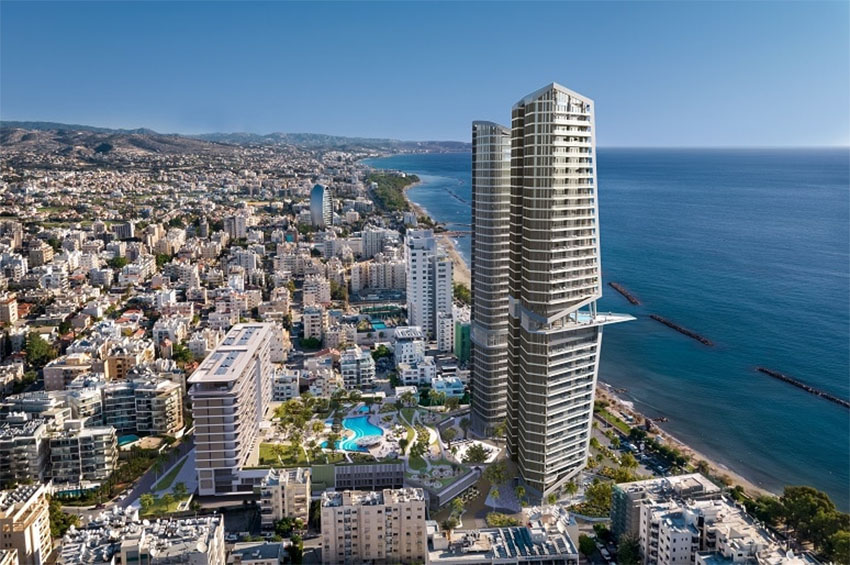
Limassol remains the primary reference point for high-income buyers. However, the maturity of the market and already elevated price levels limit the scope for rapid growth. It has effectively become more of a value-preservation market than one of high outperformance.
Larnaca, by contrast, exhibits characteristics that make it more receptive to new capital flows. Lower entry costs, strategic proximity to the airport, and the growing presence of buyers from the Middle East create a different investment profile.
Paphos continues to enjoy strong international demand, but of a different nature. It remains primarily a lifestyle and second-home market, less directly linked to immediate geopolitical movements.
The concept of a safe haven is useful but often applied without the necessary nuance. High net worth investors do not operate in a one-dimensional or reactive manner. On the contrary, they focus on risk diversification, allocating capital across multiple markets while maintaining alternative options.
Cyprus’ geographic proximity to areas of tension acts both as an advantage and, for some investors, a factor of caution.
Cyprus may form part of the solution, but it is rarely the only option. Ultimately, a safe haven is defined not only by geography or timing, but primarily by trust in institutions and consistency in the rule of law.
The current environment does not create a new real estate bubble. Rather, it accelerates an already emerging trend: the differentiation between local markets and the strengthening of international demand in selected locations.
The opportunity lies not in expecting a broad-based surge, but in understanding where demand will materialise, and with what delay. Markets that combine affordability with growing interest, with Larnaca being a characteristic example, are more likely to outperform compared to more mature markets.
Limassol will remain a pillar of stability. Paphos will continue its more balanced trajectory. The next wave of growth, however, may not necessarily emerge where attention is currently focused.
Ultimately, geopolitical tension does not create opportunities. It simply reveals who is prepared to recognise them.
George Coucounis is a lawyer specialising in Immovable Property, based in Larnaca, [email protected], www.coucounislaw.com, Tel: 24 818288




Click here to change your cookie preferences