
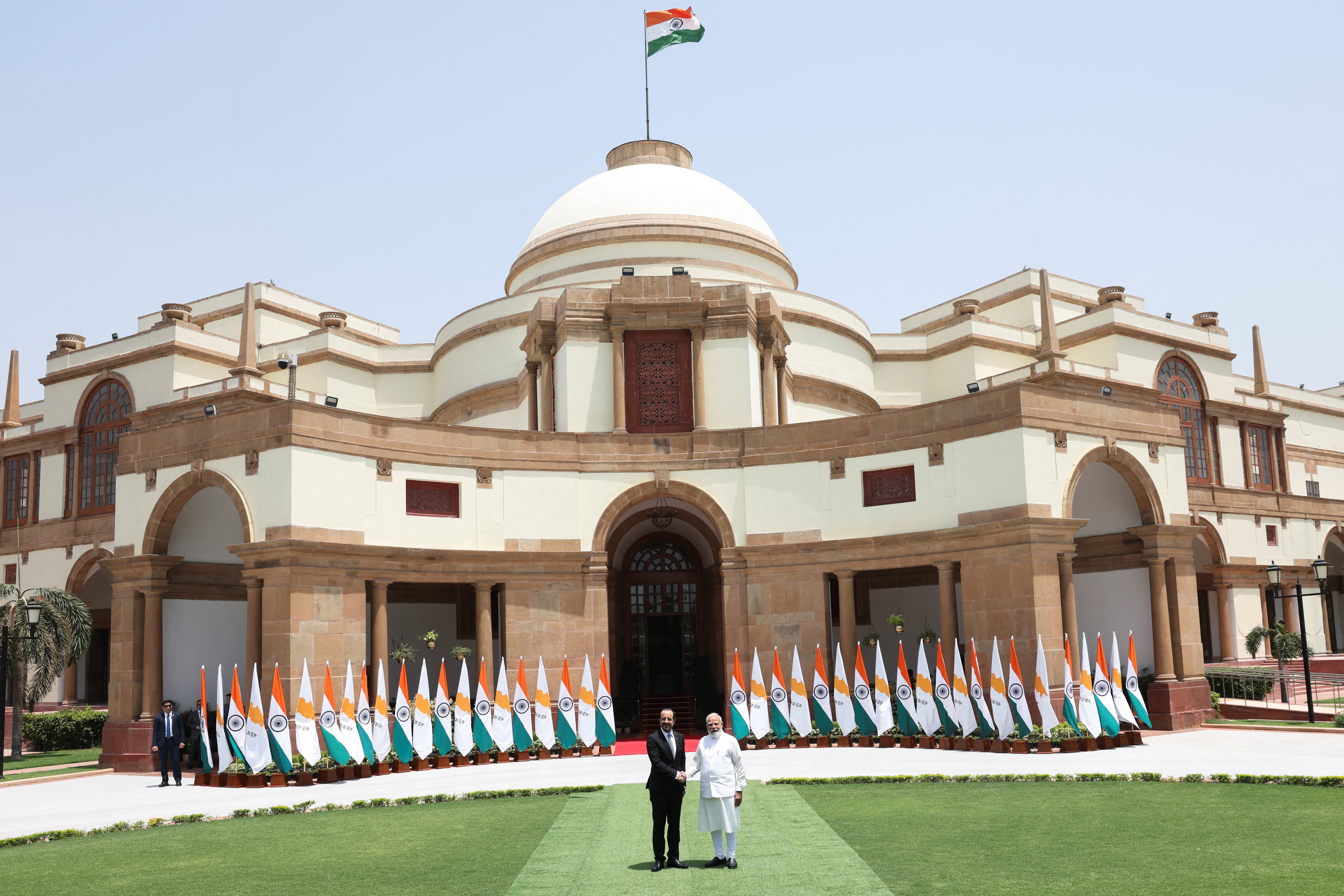
Terrorism was the focus of the lion’s share of President Nikos Christodoulides’ meeting with Indian Prime Minister Narendra Modi at the latter’s official residence, Hyderabad House, in New Delhi, on the third day of the former’s state visit to the subcontinent.
A joint declaration signed by both leaders stressed that they “categorically and unequivocally condemned terrorism in all its forms and manifestations, including cross-border terrorism”.
To this end, Christodoulides offered Cyprus’ “solidarity and unwavering support to India in its fight against cross-border terrorism”.
Both leaders then “condemned in the strongest terms” a mass shooting which took place in the town of Pahalgam in April last year, and which predicated two and a half weeks of conflict between India and its neighbour Pakistan, as well as a car bombing which was executed at the Red Fort in Delhi last November.
On this front, they “emphasised that those responsible should be held accountable” and called for “decisive and concerted international efforts to combat terrorism in a comprehensive and sustained matter in accordance with international law”.
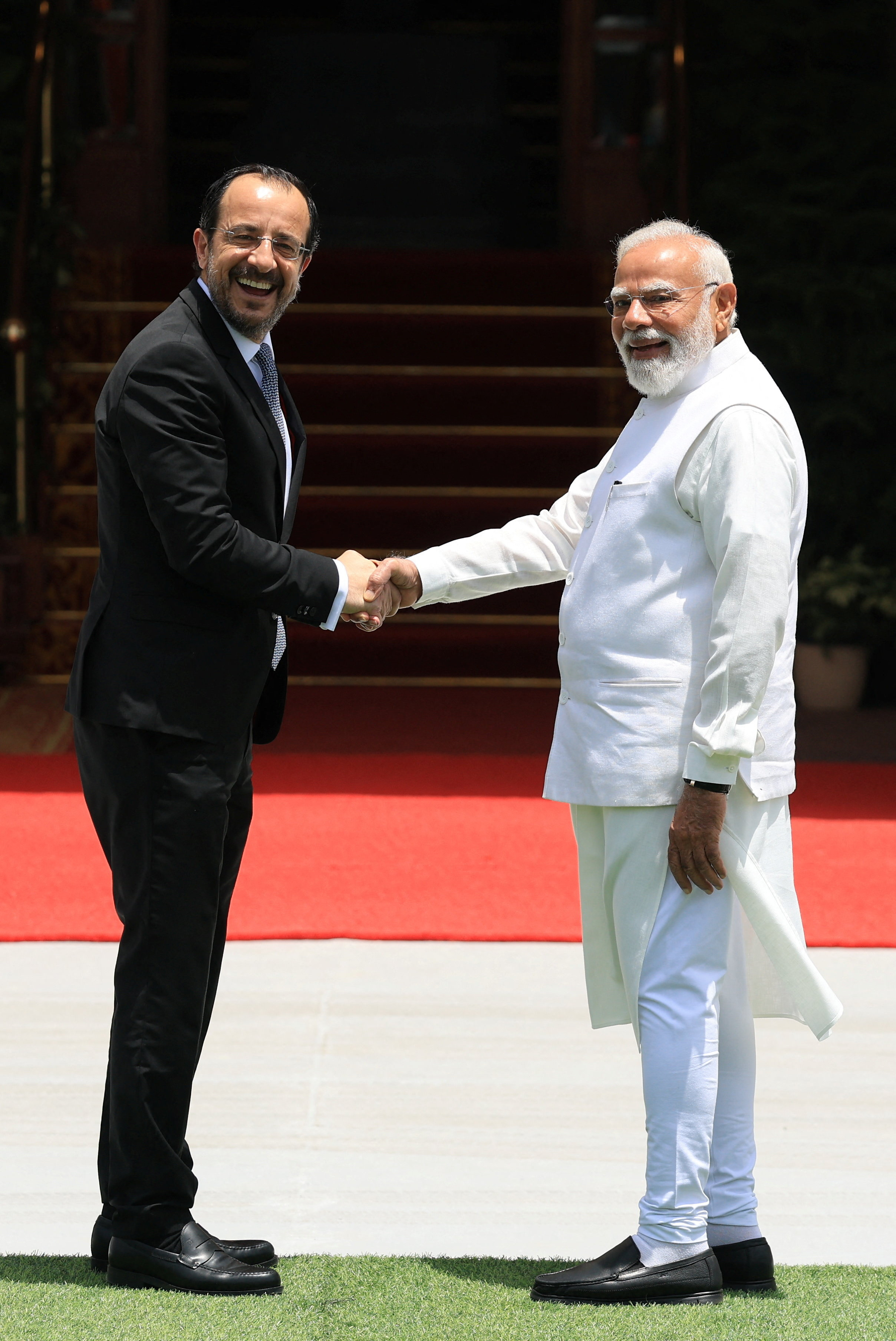
Looking ahead, they called for a strengthening of “multilateral efforts to combat terrorism” and for the proposed United Nations comprehensive convention on international terrorism to be finalised in an “expeditious” manner.
“They urged for strong and concerted action against all UN- and EU-designated terrorists and terrorist entities,” the joint declaration added.
Additionally, both leaders “underlined the need for cooperation to counter violent extremism and radicalisation, financing of terrorism and money-laundering as well as to prevent exploitation of new and emerging technologies for terrorist purposes and to tackle terrorist recruitment”.
They also called for the “elimination” of “terrorist safe havens and infrastructure”, for “terrorist networks” to be “disrupted”, and for the “combating” of the financing of terrorism.
Both leaders then “reiterated their zero-tolerance approach to terrorism, rejecting double standards, state sponsored terrorism and any justification for such acts, under any circumstances”, and welcomed the signing of a memorandum of understanding which will establish a joint working group on counterterrorism.
This group, the joint declaration said, “will provide a framework to enhance bilateral cooperation in counterterrorism through information and knowledge sharing and capacity building”, with its first meeting set to take place “as early as possible”.
On the wider matter of security, both leaders “noted the ongoing close cooperation between relevant agencies of both countries”, making explicit reference to “emerging threats in the cyberspace”.
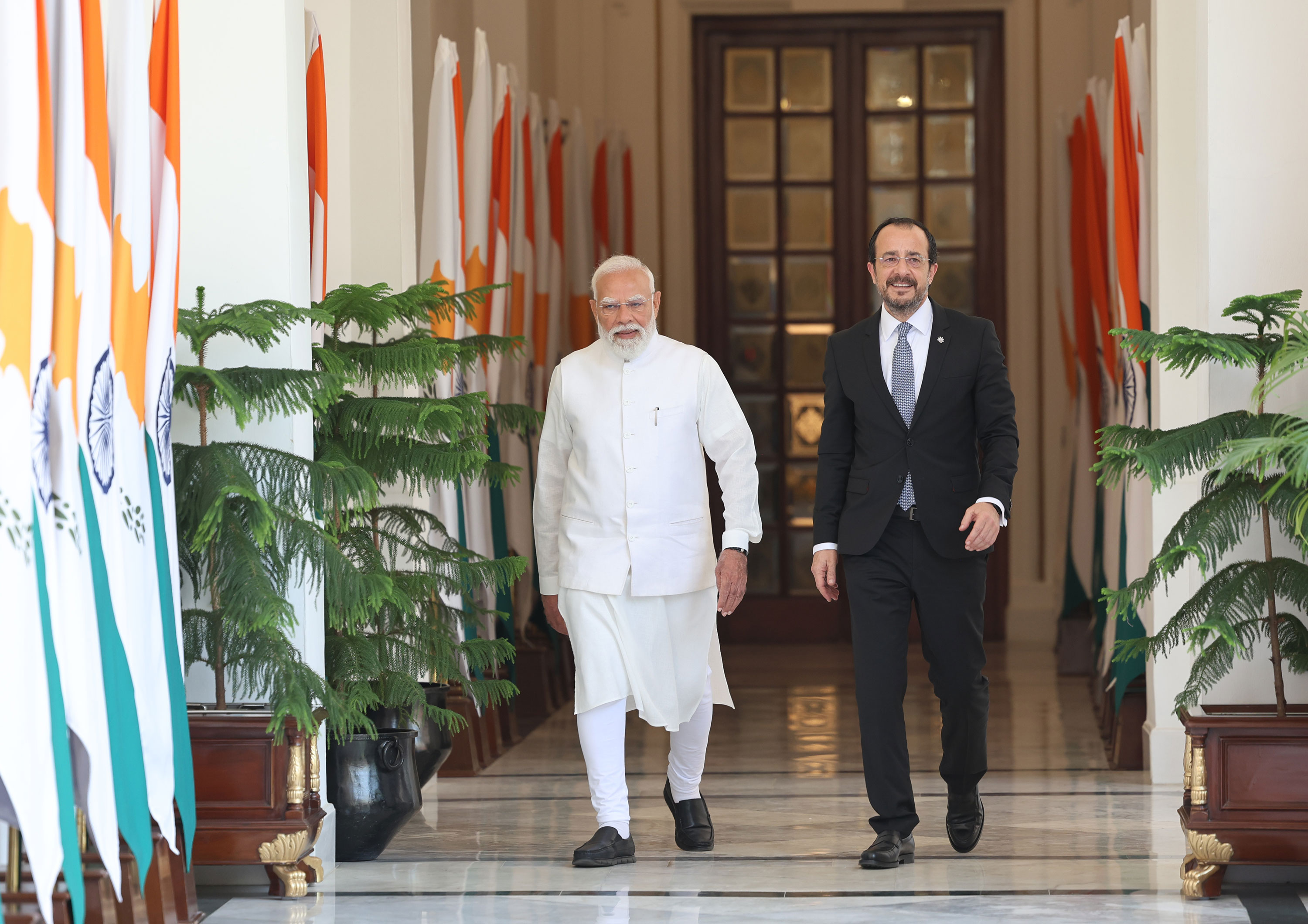
“In this context, the leaders welcomed the establishment of [a] cybersecurity dialogue between the two countries,” the joint declaration said.
It added that both leaders agreed to “deepen defence and security cooperation, including through collaboration between their respective defence industries, with a special focus on cybersecurity and emerging technology”.
This came off the back of a signing of a memorandum of understanding between the society of Indian defence manufacturers and the Cyprus defence and space industry cluster at Thursday’s Cyprus-India business forum in Mumbai.
In addition, both leaders stated that they welcome the bilateral defence cooperation programme which was signed by both countries in February, as well as Friday’s signing of a technical arrangement for the establishment of official cooperation on search and rescue matters.
Those two agreements, the joint declaration said, “will provide an institutional framework for promoting defence industrial cooperation and technology partnership” and “build on the momentum” of the growing defence cooperation between India and the European Union in light of a defence and security partnership which was signed in January.
Both leaders also welcomed the agreement reached regarding a roadmap for bilateral defence cooperation between India and Cyprus over the next five years.
They also highlighted that both India and Cyprus are “maritime nations with deep-rooted naval traditions”, and as such “encouraged expanding cooperation in the maritime domain”.
This cooperation, the joint declaration said, includes “regular port calls by Indian naval vessels and exploring opportunities for joint maritime training and exercises to enhance maritime domain awareness and regional security”.




Click here to change your cookie preferences