
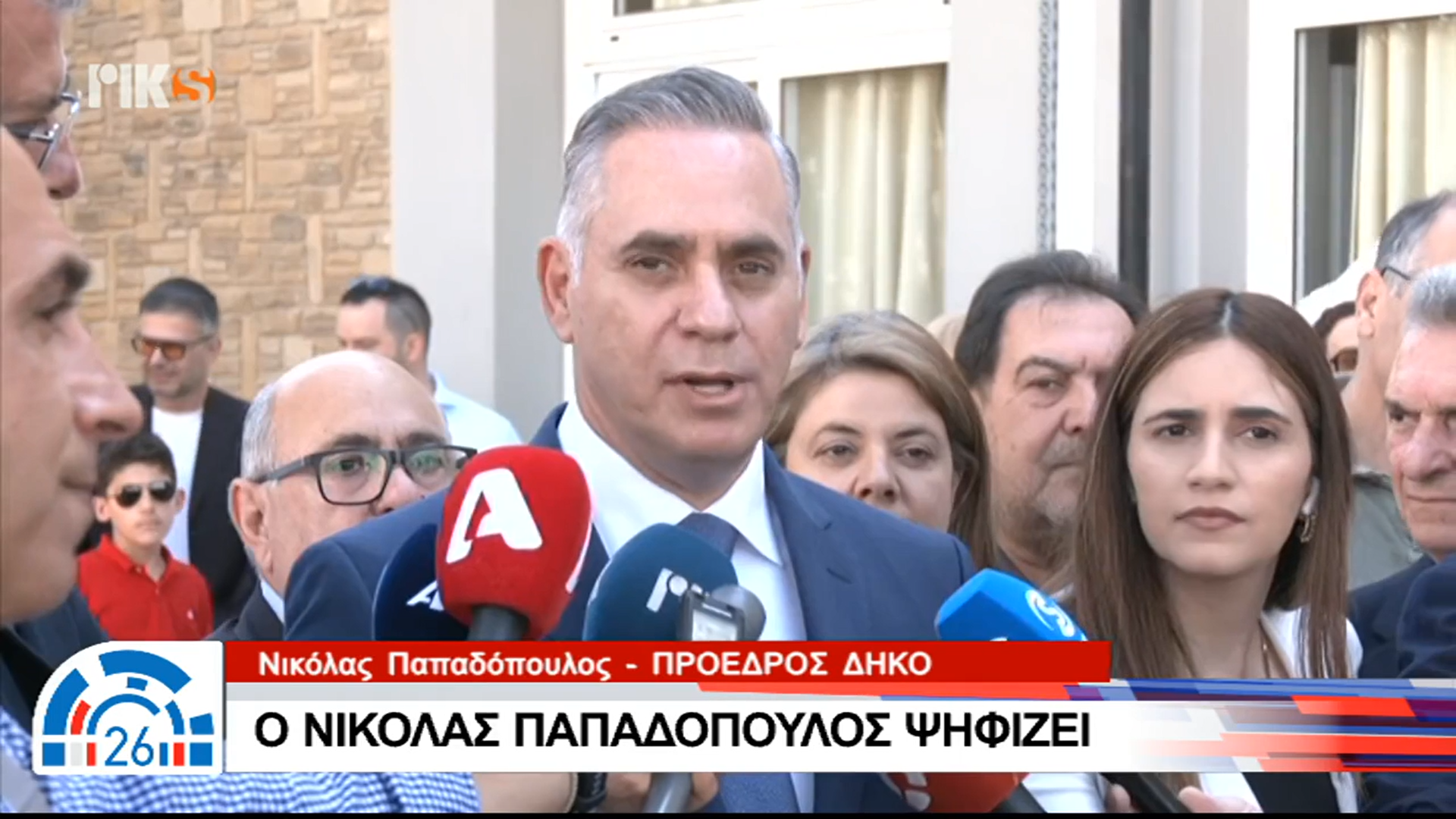
Diko leader Nikolas Papadopoulos called for public participation and political unity on Sunday after casting his vote in Engomi,
Papadopoulos voted at the 2nd Primary School of Engomi accompanied by his wife and twin children, who were voting for the first time.
Speaking after leaving the polling station to reporters, he said the elections would determine “the future of our country, the future of our families, the future of our children.”
He urged the public to take part in the democratic process, saying voters would help shape “the future that our Cyprus deserves.”
Papadopoulos added that the country must “protect everything we have achieved to date and build even more” while safeguarding economic stability and security for families.
“Cyprus has a perspective, Cyprus has a future, let’s ensure it today”, he said.
In Limassol, Edek president Nikos Anastasiou appealed to “put an end to couch criticism” after voting in Kato Polemidia.
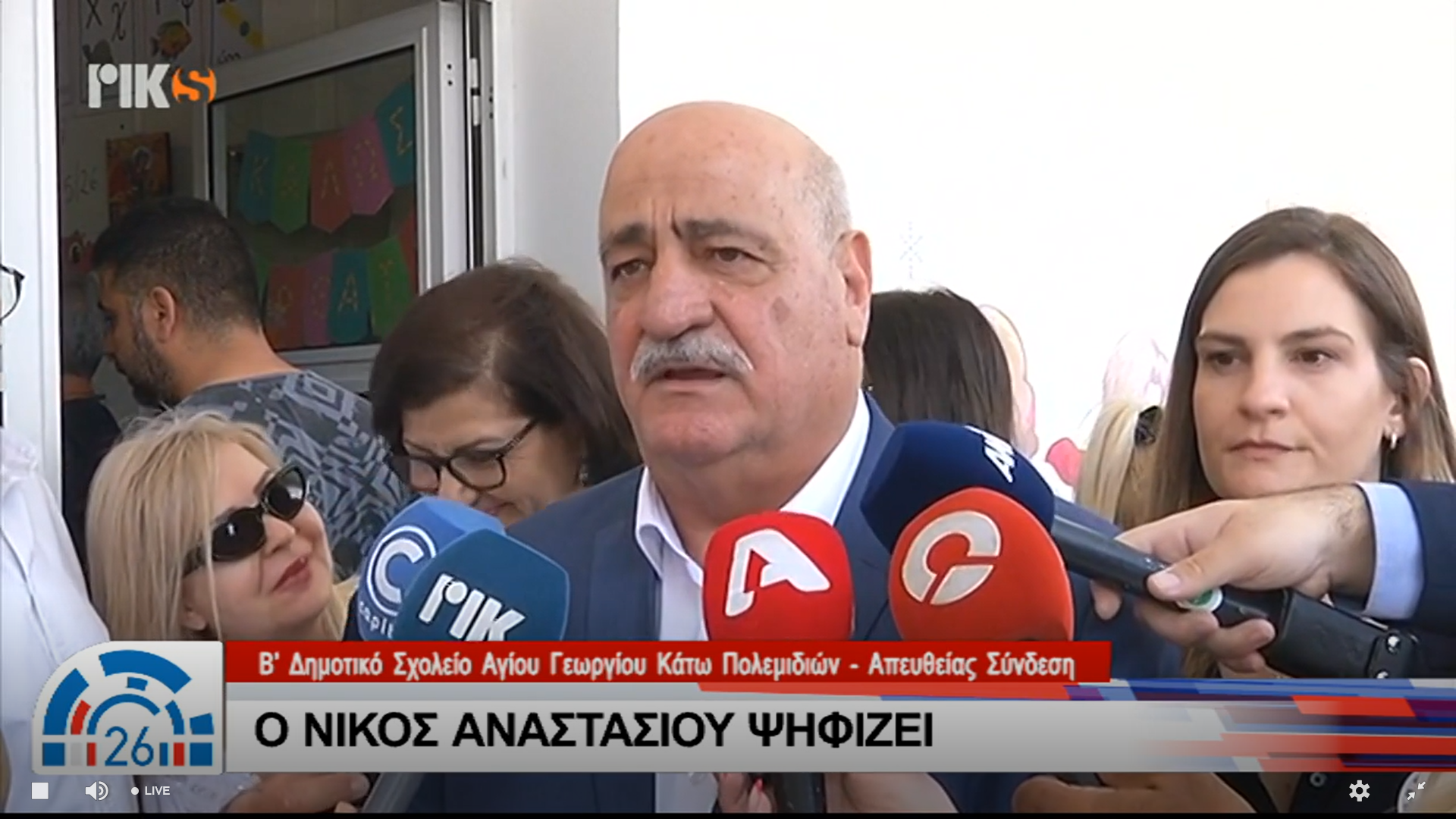
He described the elections as “a celebration of democracy” and said participation was essential for determining the future direction of the country.
Anastasiou also stressed the importance of cooperation in the new parliament, calling for “a serious parliament” capable of working collectively for the progress of Cyprus.
Elsewhere in Nicosia, Siko Pano leader Sotiris Christou voted at the 2nd Primary School of Makedonitissa.
Christou said recent institutional shortcomings had exposed weaknesses in democratic procedures and argued accountability was needed to prevent similar situations in the future.
He remarked that “today is the right day for citizens to stand up and make their voices heard”, a reference to his party’s own name ‘Siko Pano’ (Stand Up)
He added that voters should recognise “they are the owners of the state and not the customers,” stressing that the outcome of the elections would influence public life “for years to come”.
Dipa president Marios Garoyian also appealed for “national consensus, unity and collective work” following what he described as a divisive election campaign marked by tensions and personal attacks.
Garoyian said Cyprus faced economic, institutional and geopolitical pressures and argued that “solutions do not come with slogans.”





Click here to change your cookie preferences