
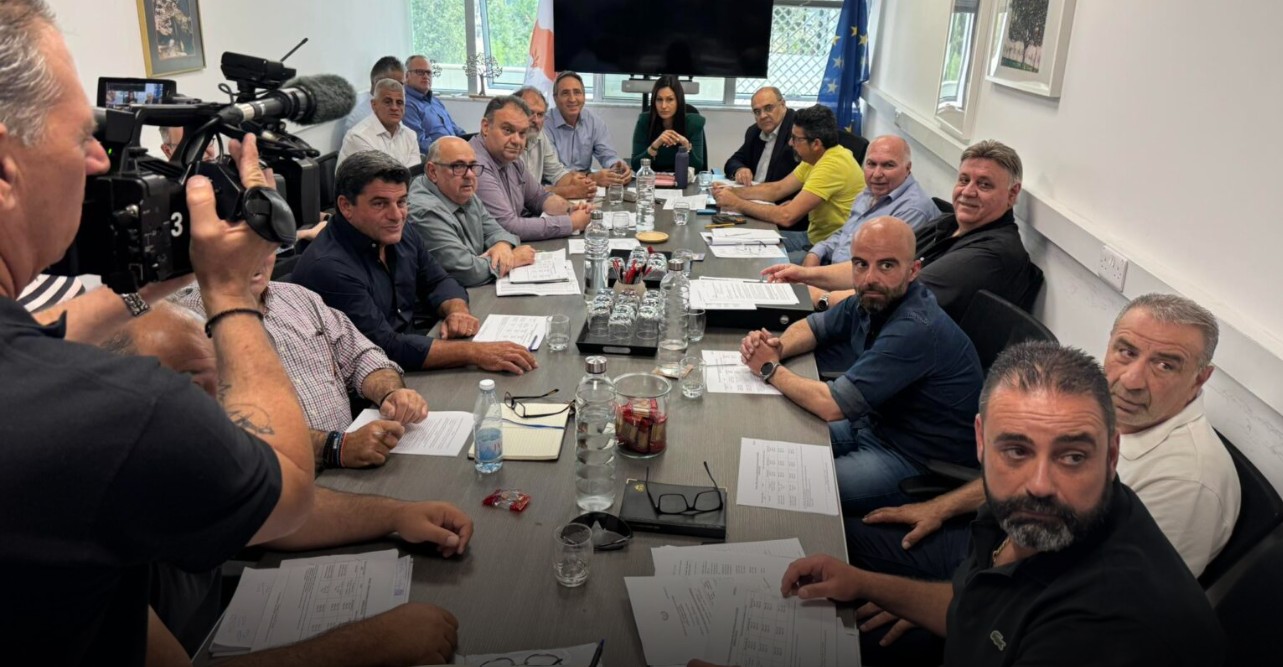
Consultations between veterinary services, livestock farmers and agricultural organisations failed to produce any major breakthrough on Monday, as farming representatives reiterated their demand to seek a meeting with President Nikos Christodoulides over the handling of the foot and mouth crisis.
The third consecutive meeting on the outbreak was held at the Veterinary Services headquarters under the supervision of director Christodoulos Pipis.
Discussions focused on containment measures, livestock culls and restrictions imposed under European protocols following the spread of the disease across affected districts.
Agricultural organisations and the group known as “the voice of livestock breeders” said no significant progress emerged from the meeting, describing discussions as largely repetitive.
Speaking to Politis, farmers’ union leader, Michalis Lytras said veterinary officials again explained “what is prohibited and what is permitted” under European regulations concerning infected units and movement controls.
Farmers and agricultural representatives raised concerns over the continued culling of animals and restrictions affecting rural operations, including controls on the transport of hay and animal feed supplies.
Panagrotikos president Kyriakos Kailas said the organisations now intend to request direct talks with the president because the crisis has “a political aspect” extending beyond technicalities.
The organisations are seeking intervention regarding EU oversight of animal health measures in the north, where concerns have been raised over monitoring and disease prevention controls.
Lytras argued that the EU should verify how annual funding allocated to the Turkish Cypriot community for disease prevention is being used.
“They receive European money and there should be checks,” he insisted, adding that such matters could not be resolved solely through veterinary authorities.
The latest meeting followed growing tension over the outbreak, particularly after the disease spread last week to a sheep and goat unit in Pachna.
Authorities confirmed that repeated sampling would be carried out at the affected unit after reactions from farmers in the area, while the agriculture ministry said concerns raised by livestock owners had been taken into account and no immediate cull would proceed at this stage.
According to official figures, 117 infected units have so far been identified.
Of these, 100 involve sheep and goat farms, 14 concern cattle units and three involve pig farms.
A total of 71,000 animals have either been culled or are expected to be slaughtered as part of containment measures, including 43,000 sheep and goats, 3,000 cattle and more than 24,000 pigs.
The infected animals account for around 11 per cent of the country’s adult sheep and goat population, 3.5 per cent of cattle and almost 8 per cent of pigs.
Last week, agricultural organisations also urged Christodoulides to renew efforts for an exemption from European culling protocols and criticised European animal welfare commissioner Oliver Varhelyi over the handling of the outbreak.



Click here to change your cookie preferences