
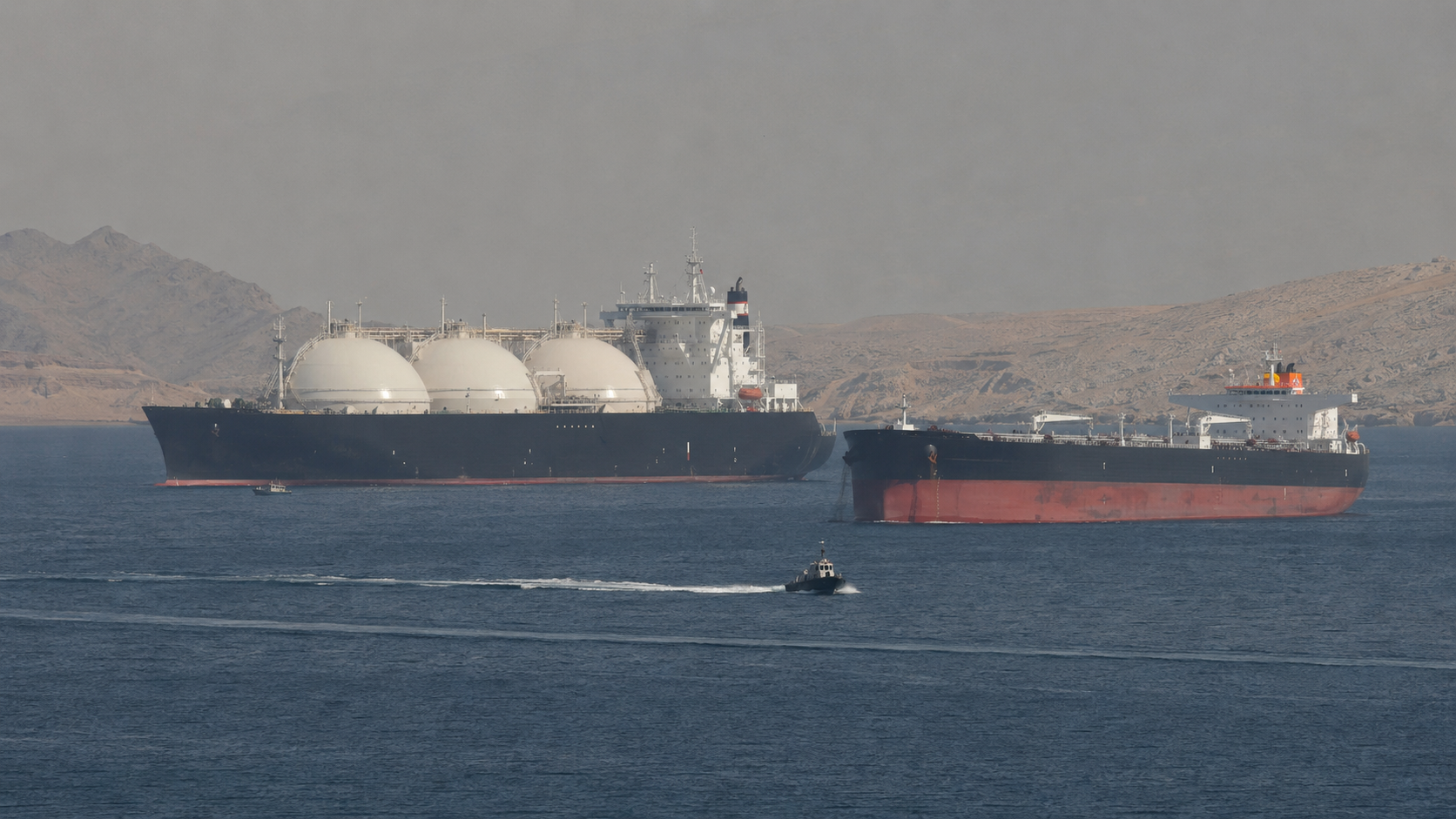
A small number of oil and LNG tankers have begun leaving the Gulf through the Strait of Hormuz, offering limited relief to Asian buyers, even as traffic through the key energy route remains sharply below normal levels after nearly three months of disruption.
According to Asharq Al Awsat, citing shipping data, two liquefied natural gas tankers were exiting the strait earlier this week, heading to Pakistan and China, while a supertanker carrying Iraqi crude for China left the Gulf on Saturday after being stranded for almost three months.
The disruption follows the US-Israeli war on Iran, which began on February 28, and has severely curtailed movement through the Strait of Hormuz, one of the world’s most important energy chokepoints. Around one-fifth of global oil and LNG supplies normally pass through the waterway, making the slowdown a major concern for energy markets, shipowners and crews.
The vessels are among only a handful of tankers to have exited the Gulf this month through a route ordered by Iran. Last week, three Very Large Crude Carriers (VLCCs) made their way to China and South Korea carrying around six million barrels of crude, according to Reuters.
One of the latest movements involved the LNG tanker Fuwairit, which crossed the Strait of Hormuz on Monday and was expected to discharge its cargo in Pakistan on Tuesday, based on LSEG and Kpler shipping data cited by Asharq Al Awsat. The Bahamas-flagged vessel had loaded LNG at Qatar’s Ras Laffan port around March 28.
At the same time, the VLCC Eagle Verona, which left the strait on Saturday, is expected to reach Ningbo in eastern China on June 12. The Singapore-flagged vessel, chartered by Unipec, the trading arm of Sinopec, had loaded nearly two million barrels of Basrah crude around February 26.
Reuters also reported on Thursday that three major tankers carrying oil and LNG had exited Hormuz earlier this week with their transponders switched off, underlining the continuing security sensitivity around movements through the waterway. The vessels included two crude tankers and one LNG carrier heading towards Asian destinations, while shipping data showed that some vessels were only reappearing on tracking systems after weeks of being untraceable.
However, the recent exits do not amount to a return to normal conditions. Before the war, the strait handled an average of 125 to 140 vessel passages a day. Reuters reported this week that daily traffic remains far lower, with around 11 daily transits recorded in recent movements, even after a slight pick-up in activity. A Reuters report on May 27 said oil tanker traffic remained significantly limited, despite a COSCO-operated products tanker crossing the strait.
The human impact is also becoming more severe. Around 20,000 seafarers remain stranded inside the Gulf on board hundreds of ships, with many vessels unable to leave because of security risks, insurance restrictions and uncertainty over safe passage arrangements.
For Asian energy buyers, the latest departures provide some reassurance that cargoes can still move under specific conditions. Pakistan has already received limited Qatari LNG cargoes through Iran-approved arrangements, while China continues to receive selected crude and LNG shipments through controlled routes.
Still, the broader picture remains fragile. Tanker broker Gibson, cited by Reuters, said a full restoration of pre-war conditions would depend on improved security, mine clearance and updated insurance provisions. Until then, movements through Hormuz are likely to remain selective, irregular and closely monitored.
For the shipping industry, the latest crossings show that the strait is not fully closed. Yet they also show how far the market remains from normality, with energy cargoes moving vessel by vessel, crews still trapped in the Gulf, and insurers, charterers and shipowners waiting for clearer signs that the region can be safely reopened.





Click here to change your cookie preferences