
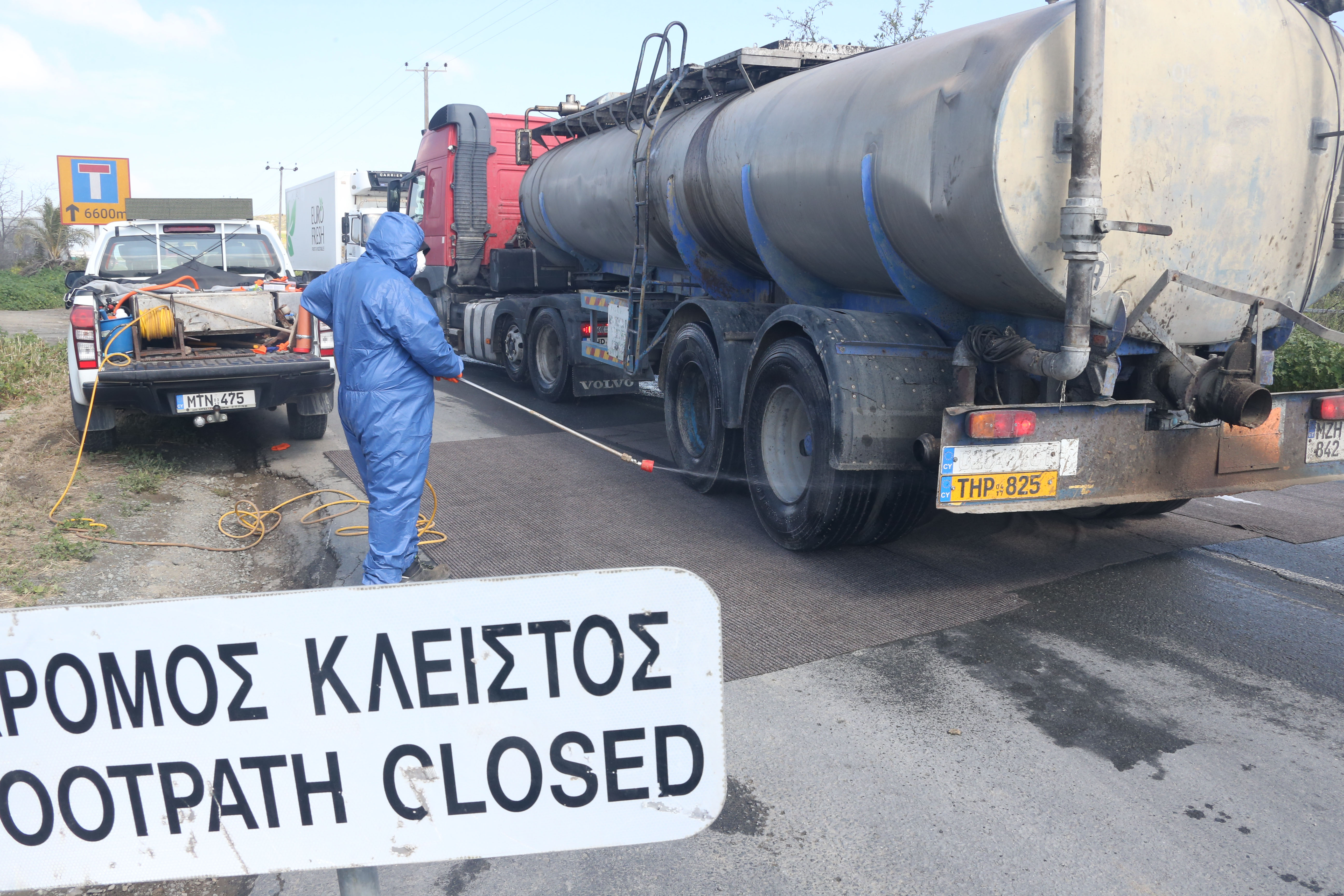
Farmers have agreed to accept the culling of livestock on farms where foot and mouth disease has been detected, Agriculture Minister Maria Panayiotou said on Tuesday.
She announced the “immediate completion” of livestock culling, which was later clarified to mean that the culling of livestock would continue as European Union legislation dictates, estimating that the process would be completed within the next 24 hours.
The announcement followed protests at a farm in the Famagusta village of Pachna during which they prevented veterinary services department staff from access and potentially culling the livestock, which predicated last Friday’s protest at the presidential palace.
Panayiotou also said that there will be an “increase in compensation” for sheep and goat farmers whose animals are culled as a result of outbreaks of the disease.
Compensation amounts already exceeded those initially foreseen by the EU’s maximum values on which it will agree to co-finance compensation for culled animals.
Prior to Tuesday’s meeting, the government’s position was to pay farmers between €43 and €178 per regular sheep and goat and between €47 and €420 per sheep and goat which is deemed to be of “high genetic value” as compensation if they are culled as a result of the disease.
Additionally, it was due to pay farmers between €150 and €1,500 per regular cow culled, with this figure rising to up to €2,500 for exceptional cattle.
The EU’s maximum values sit at €1,000 per cow and €140 per sheep, with the bloc financing 30 per cent of compensation payments up to that amount.
Now, the amount payable in Cyprus is set to rise further, with Panayiotou saying that the exact amounts will be determined “in the coming days”.
In addition, she said that increased fines will be levied on those found to be illegally moving livestock to and from the north.
If cabinet accepts her proposal, on-the-spot fines of up to €100,000 could be issued, while courts will be empowered to issue fines ranging up to €250,000.
The proposal will be placed before the cabinet on Thursday.
She went on to say that the nationwide vaccination campaign is “being rapidly completed”, with 84 per cent of cattle, 78 per cent of sheep and goats, and 41 per cent of pigs now having received a second dose of the vaccine.
Additionally, she said that the police and the national guard will be deployed to ensure compliance with biosecurity measures, while the teams sent by the veterinary services department for sampling, vaccination and culling will be “separated”.
The epidemiological team, she said, will now meet at least once a week alongside representatives of the veterinary services department and of livestock farmers’ organisations.
Head of the scientific committee for the reconstruction of the livestock sector Stavros Malas welcomed the measures, saying the authorities and scientific community had “four basic tools to stop” the outbreak.
“The first step is to stop the source and it is the trafficking of animals from the occupied territories which was the main reason for the entry of the virus into the free areas,” he said.
“This must stop. There can be no sustainable livestock farming if this continues.”
Malas also stressed the importance of biosecurity measures, saying that “if strict biosecurity measures are not followed and if these are violated, then the spread of the virus is inevitable”.
Member of the epidemiological team Dimitris Tsiartas warned that restrictions would remain in place for the foreseeable future.
“No one should expect a relaxation of the measures for at least the next two to three months, a lot of strictness is needed,” he said.
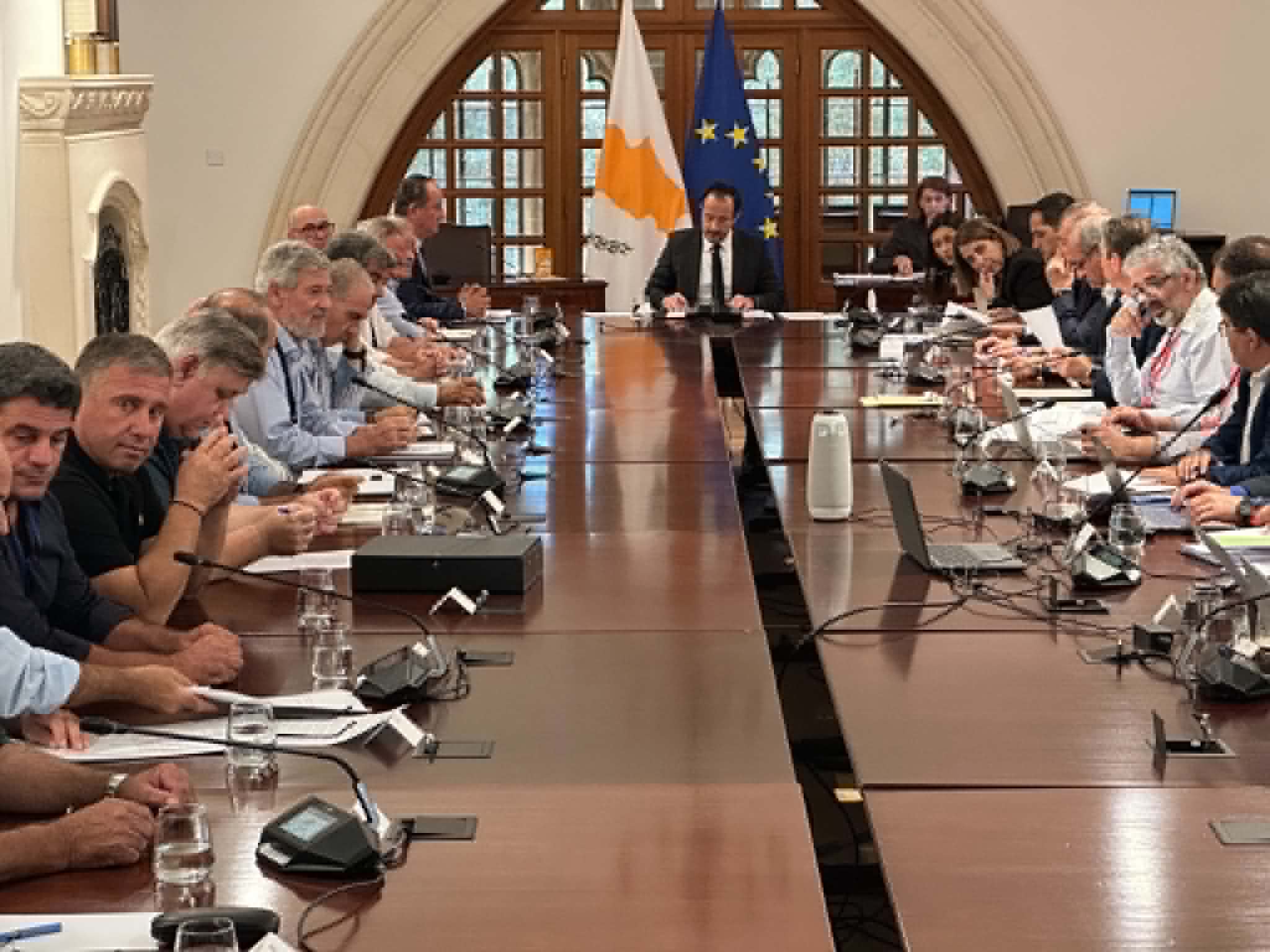
Farmer representatives welcomed several of the decisions announced following the meeting with President Nikos Christodoulides.
“We had a very constructive meeting with the president. The most important thing is that the fines for the illegal passage of various materials through the occupied territories are increasing very significantly,” said farmer’s union EKA secretary-general Panicos Hambas.
“The president brought a spirit, not only of unity, but also informed us a lot regarding the consultations he has made and the demands he has requested from the EU,” Panagrotikos secretary-general Tasos Yiapanis added.
At the same time, livestock farmers acknowledged that the continuation of culling remains a difficult outcome despite progress on compensation.
“Our news is not good, six to seven thousand sheep and goats are destined for slaughter,” president of the newly formed association Voice of the Livestock Breeders Neophytos Neophytou said.
“The only negative thing about this meeting for us is that we came out without stopping the killings,” he added.
In later comments to Alpha TV, Neophytou said livestock farmers remained dissatisfied with the overall outcome because they had hoped to secure a halt to culling operations.





Click here to change your cookie preferences