
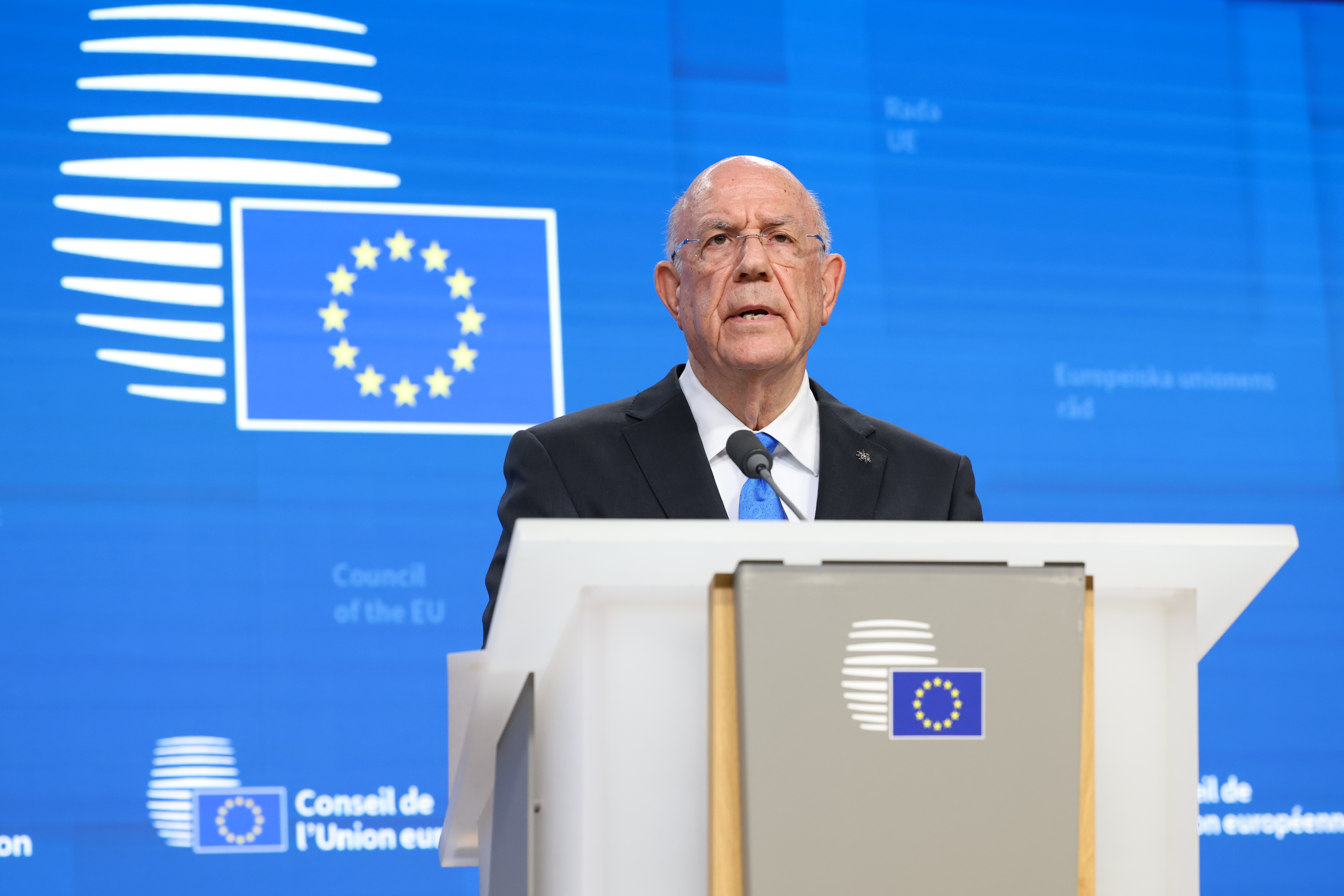
Cyprus and the European Commission have signed the country’s loan agreement allowing the country to receive funds under the European Union’s €150 billion Security Action for Europe (Safe) programme.
The agreement was signed by Finance Minister Makis Keravnos and European Defence Commissioner Andrius Kubilius, with the latter promising that “very soon, EU support will start reaching Cyprus’ military and industry”.
Cyprus is the sixth EU member state to have signed a loan agreement, with Poland, Lithuania, Croatia, Romania, and Belgium all having had their own agreements signed, and Poland having received the first disbursement of funds available to it under the programme on Friday.
In total, Poland was given a little over €6.5bn of the almost €44bn to which it is entitled under the scheme, with Poland being the largest recipient of funding of any EU member state.
Cyprus, meanwhile, secured over €1bn of funding through the programme, with Defence Minister Vasilis Palmas saying last year that the funding would see the National Guard acquire military hardware to “cover [its] priorities” until 2030.
He added that the Safe programme came about “at a time when the European Union’s needs to cover shortcomings are significant”, and at a time “when the mobilisation of equipment programmes and joint procurement programmes is becoming urgent”.
“The €150bn which will be invested by member states in the joint procurement of high-tech weapons systems is expected to be the trigger for a new promising era for European defence, with the ultimate goal of autonomy, technological dominance, and resilience,” he said.
Cyprus’ investment plan had been approved by the Council of the EU in February, with President Nikos Christodoulides at the time describing the Safe programme as “an important financial tool”.
He added that the Council of the EU’s approval of the funding is “an indication of the correct work which was carried out in Cyprus”, before highlighting the fact that Cyprus is “among the first member states where the relevant amount was approved”.





Click here to change your cookie preferences