
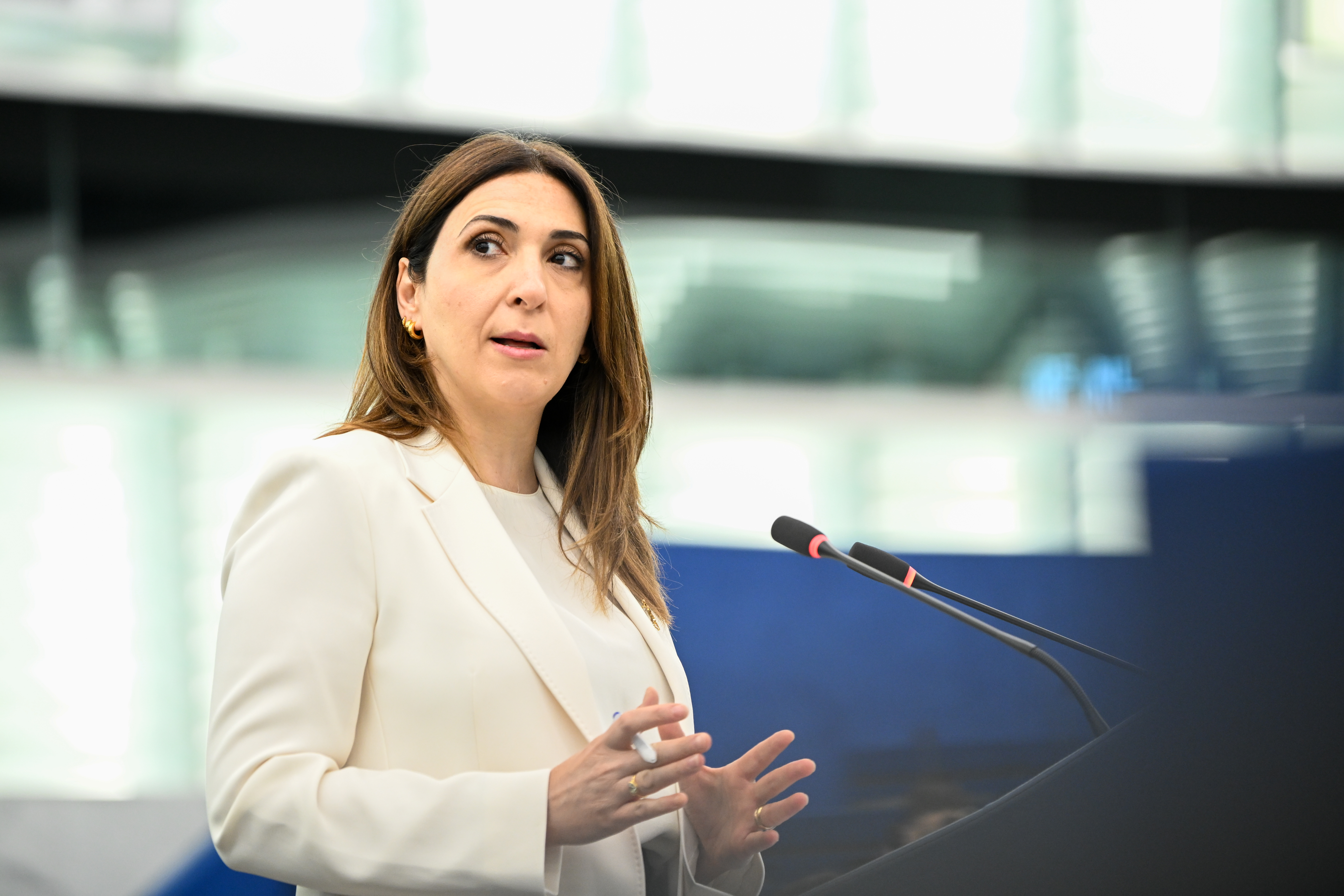
The challenge facing the European Union is to move from a reactive approach to one focused on anticipating and preventing hybrid threats, Deputy Minister for European Affairs Marilena Raouna told the European Parliament on Wednesday.
Addressing a plenary session in Strasbourg on the protection of EU citizens’ data from hybrid threats, Raouna said the growing number of increasingly sophisticated cyberattacks was causing significant concern among both citizens and industry.
“In today’s environment of hybrid threats and escalating cybercrime, member states are stronger when they stand united,” she said, according to a statement issued by the secretariat of Cyprus’ presidency of the Council of the EU.
She said the bloc had built a strong and coordinated framework to bolster cybersecurity, describing it as a key pillar of democratic institutions and the resilience of the single market.
Raouna noted that the EU had developed a robust legislative framework in recent years and was working to strengthen it further, welcoming the European Commission’s proposed cybersecurity package currently under discussion at the Council.
She also said the Council supports strengthening the role of the EU Agency for Cybersecurity (Enisa) to enhance operational cooperation and improve cyber resilience both across the bloc and among member states.
Raouna warned that today’s security environment is shaped not only by cyberattacks but also by broader hybrid threats posed by malicious actors.
“These threats are becoming increasingly sophisticated, combining cyberattacks with foreign information manipulation and interference, economic coercion, sabotage and other tactics,” she said.
While primary responsibility for cybersecurity remains with member states as a matter of national security, she said the Council had developed a framework for a coordinated EU response to hybrid campaigns, alongside the EU Cyber Diplomacy Toolbox, aimed at improving the bloc’s ability to deter and respond to malicious cyber activity.
She noted that this includes hybrid rapid response teams, which can be deployed at the request of member states and partner countries to help address hybrid threats.
According to Raouna, the framework is supported by the European External Action Service, which provides central analytical capabilities for detecting and assessing hybrid threats.
She also recalled that in March the Council adopted conclusions aimed at strengthening the EU’s capacity to tackle hybrid threats, reaffirming its commitment to making full use of available tools.
In addition, she said the European Democracy Shield initiative, working together with the European Centre of Democratic Resilience, was further reinforcing collective efforts.
“The challenge is to move from a reactive approach to anticipation and prevention,” Raouna said, adding that the EU is continuously strengthening its ability to help member states detect, deter and disrupt hybrid campaigns before they fully materialise.





Click here to change your cookie preferences