
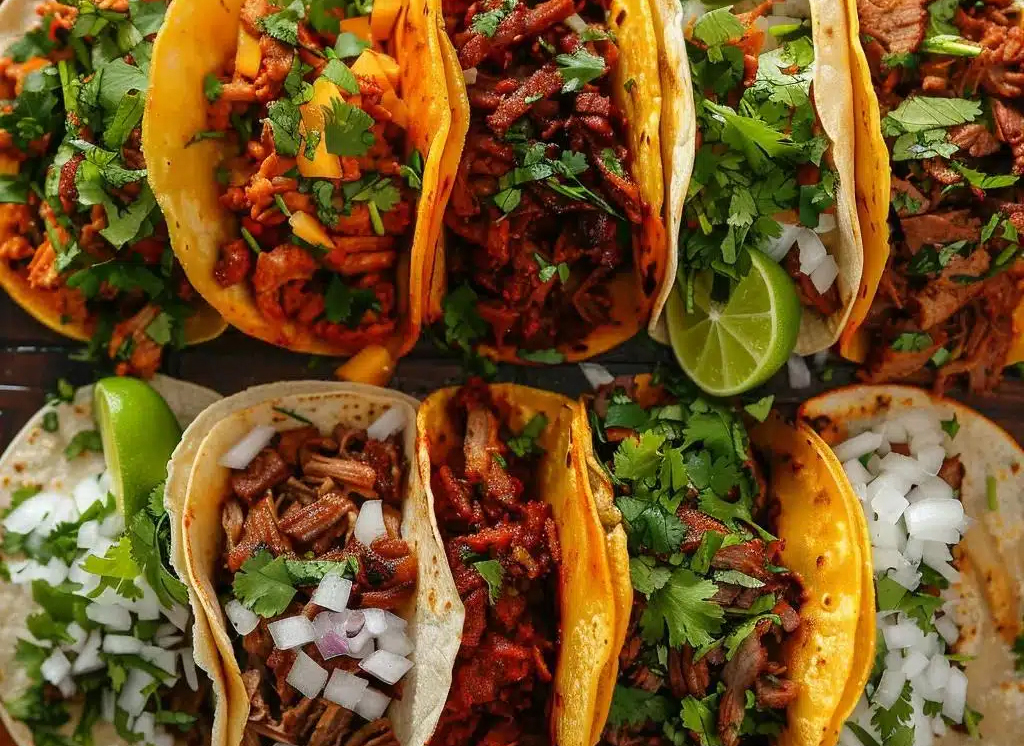
Mexican tacos are among the most enduring expressions of the country’s culinary heritage, with origins tracing back to pre-Hispanic Mesoamerica, where corn tortillas formed a staple of indigenous diets long before the arrival of Europeans.
Archaeological evidence and historical accounts suggest that early forms of tacos were used as edible utensils, with soft tortillas wrapping small portions of fish, beans or insects, offering both practicality and nourishment in daily life. With the Spanish conquest came new ingredients such as beef, pork and cheese, which gradually integrated into indigenous cooking traditions, reshaping the evolving identity of the taco.
Over centuries, tacos became central to Mexican street food culture, embodying accessibility, flavour and regional diversity. By the nineteenth and twentieth centuries, they were firmly established as an everyday food consumed across all social classes, from rural villages to bustling urban centres.
Their cultural significance extends beyond nourishment, symbolising communal eating and the blending of indigenous and colonial culinary influences that define much of Mexican cuisine today.
The evolution of the taco has been remarkable, particularly in modern times, as urbanisation and globalisation have introduced new ingredients, cooking methods and interpretations. Street vendors continue to serve traditional forms cooked on flat griddles or charcoal spits, while contemporary restaurants experiment with gourmet fillings and presentation styles. Despite these innovations, the essence of the taco remains rooted in simplicity, flexibility and the use of fresh, locally sourced ingredients.
Regional variations across Mexico are particularly rich. In Mexico City, tacos al pastor – inspired by Lebanese shawarma – feature marinated pork cooked on a vertical spit and served with pineapple. In the north, beef dominates, often grilled and served in flour tortillas, reflecting cattle farming traditions.
The Yucatán Peninsula is known for cochinita pibil, slow cooked pork flavoured with achiote, while Baja California has popularised fish tacos, combining coastal abundance with crisp textures and fresh salsas. Each variation reflects local geography, history and cultural exchange.
Tacos are typically enjoyed year round, though they hold a special place in evening street food culture, when markets and stalls come alive with smoke, aromas and conversation. Their adaptability also makes them suitable for festivals and family gatherings, where they are assembled fresh and shared communally.
In Cyprus, tacos have gained popularity in recent years, particularly in casual dining settings where they are often adapted with local ingredients such as halloumi or grilled vegetables. This fusion highlights how the taco has become a global culinary form, capable of absorbing new influences while maintaining its core identity.
Today, tacos continue to represent both tradition and innovation, connecting local Mexican heritage with global culinary curiosity in a form that remains both humble and endlessly adaptable and continue to inspire chefs, home cooks and food writers across continents in ever changing interpretations throughout the culinary world.




Click here to change your cookie preferences