
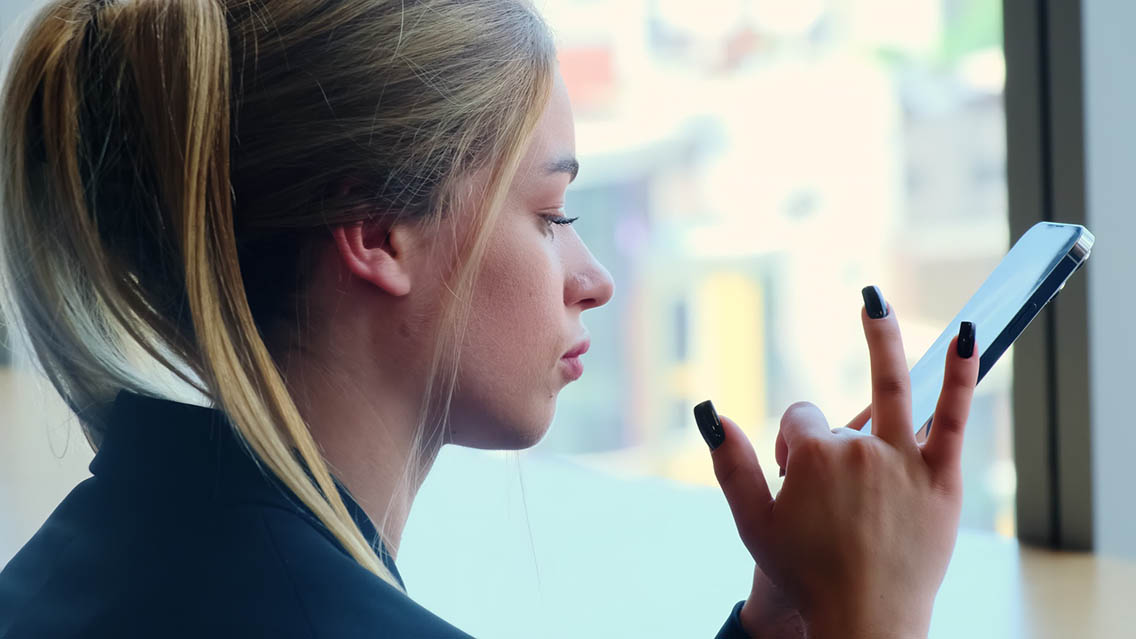
Can you go a day without your phone? The honest answer, for most of us, is no.
We depend on them for time, contacts, news, calendars, and directions, which has made us reliant on these devices. This constant flow of information has gradually distanced us from the world around us, making it harder to be present and leading to excessive screen time.
Even so, what we all really need is a pause. A moment of rest. A digital detox, even if it’s brief.
Now imagine you’re a child again, growing up in the 1980s when life was simpler, slower, and more about living than posting. You spent your days outdoors, under the sun, playing with friends until it got dark.
Along the way, that kind of presence became rare. Today, self-reflection and rest are often neglected. We discuss children’s screen addiction but rarely consider our own.
Have you checked how many likes a post received more times than you’d admit? Or scrolled aimlessly, your thumb on autopilot? We must decide if we need a complete reset or just a brief break.
Life is currently passing us by in fragments. No breathing. No living. No real interaction.
This shift is evident everywhere. In 2024, the small French village of Seine-Port, about 50 kilometres southeast of Paris, took an unusual step by voting to discourage smartphone use in public spaces.
Mayor Vincent Paul-Petit called it a response to the “smartphone invasion”, particularly among younger people. Shopkeepers were encouraged to display signs asking customers to put their phones away and engage with others. Teenagers were offered old-fashioned “brick” phones if they agreed to avoid smartphones until age 15.
Though it may seem extreme, the idea is straightforward: we sometimes need to disconnect to remember how to live without constant stimulation.
Residents were asked to refrain from scrolling while walking, sitting in cafés, restaurants, or shops. There was no police enforcement; the aim was to reclaim public space for genuine conversation, eye contact, and human connection.
The scale of the problem
Screen time reveals how ingrained this has become in our lives. My phone logged about 1 hour and 30 minutes by 2.30pm one day.
At the Cyprus Mail, usage varies from 37 minutes to 5 hours and 32 minutes daily. On average, that totals around 2 hours and 26 minutes each day, equating to about 17 hours a week, 73 hours a month, and nearly 890 hours a year. This means roughly 37 full days a year are spent staring at a screen.
Some use their phones minimally, while others are almost constantly on them, highlighting how normalised this behaviour has become.
A day without technology
The idea of a digital reset isn’t new. It was inspired in part by YouTuber Niklas Christl and his video “DOPAMINE DETOX: How to Take Back Control Over Your Life.” I watched it a couple of years ago, but like many things, I didn’t act on it. I told myself I didn’t have time.
Then came 2020.
During Covid, the world slowed down in a way none of us expected. Nature responded in ways we noticed immediately: clearer waters, quieter skies, even dolphins returning to Venice after decades.
But we were still inside still online, still scrolling, still consuming. Locked down, yes, but more connected to screens than ever.
Try this: take a phone away from a child for just ten minutes and watch the reaction. Or try it on yourself.
When was the last time you navigated a day without your phone? Could you read a map without Google Maps? Could you sit through a moment of silence without reaching for something to fill it?
This isn’t about shame. It’s about awareness.
Because when we remove the constant stimulation, something interesting happens we feel uneasy. Disoriented. Restless. And that discomfort tells us something important: we’ve become dependent on stimulation.
Introducing ADWYP
This is where “A Day Without Your Phone” (ADWYP) comes in.
ADWYP is a simple concept: a structured break from constant digital stimulation. It’s designed for people who feel overstimulated, distracted, or overly dependent on external sources of pleasure.
The goal isn’t to reject modern life. It’s to reset your sensitivity to become comfortable with stillness again. To reconnect with your own thoughts, your surroundings, and your ability to simply be.
During ADWYP, you can still read, walk, exercise, journal, or have real conversations.
Even a weekly 24-hour reset can make a difference. Think of it as retraining the brain. That small internal signal that says, “That was fun—let’s do it again,” doesn’t have to control you. It can be observed, understood, and managed.
The goal is simple: awareness.
Try it once a week. A full day without your phone.
Not as punishment, but as practice.
Walk without distraction. Talk without interruption. Sit without stimulation. Let time feel slower again.
And most importantly, don’t wait for tomorrow to try it.
Your present moment is already becoming your past.
So, live it, properly, fully, and while it’s still here.





Click here to change your cookie preferences