
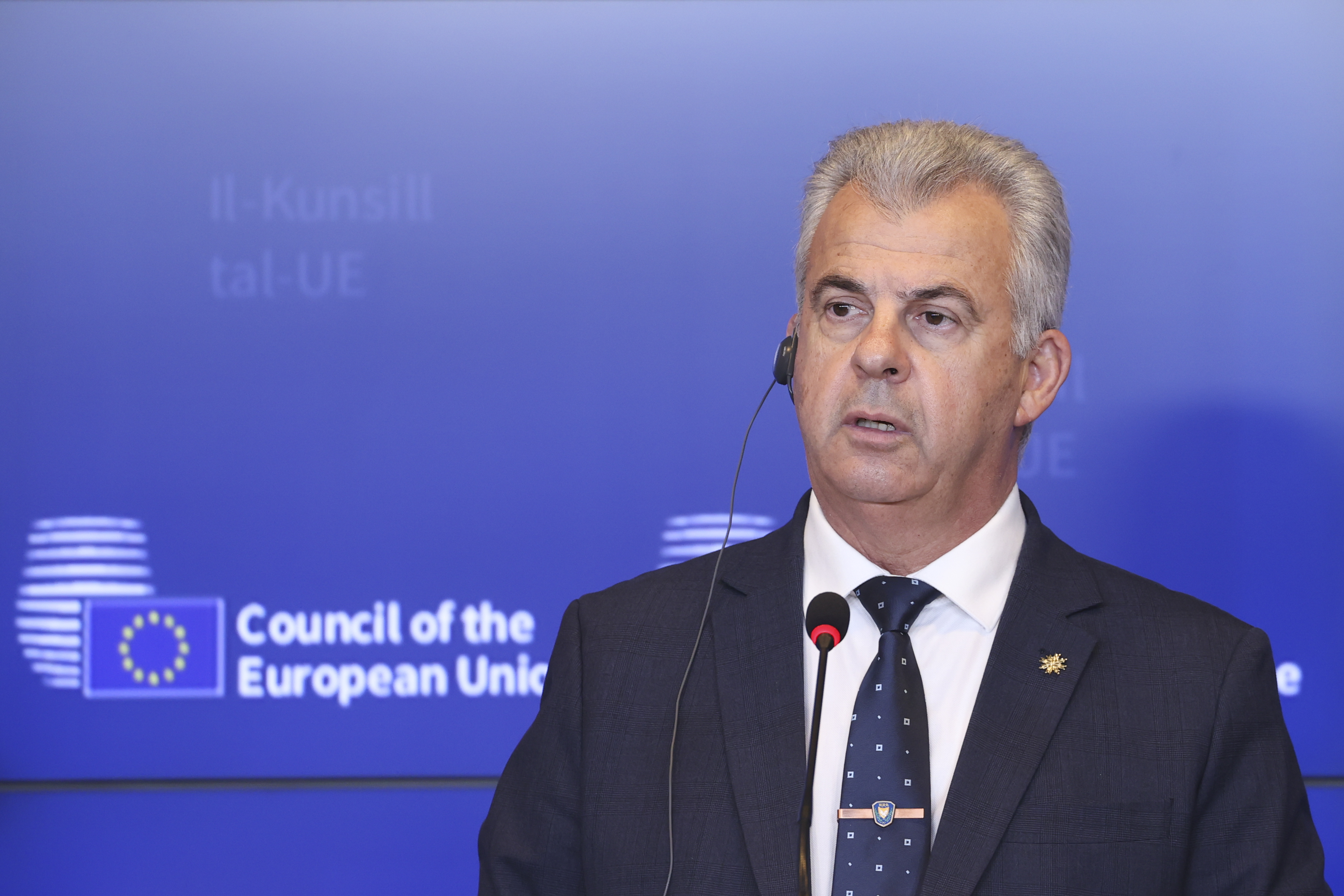
Justice Minister Costas Firitis on Sunday said that he and the government are aiming for construction of the new central prison to begin by the end of the year.
“Our goal is to create a modern prison complex which will meet security requirements, offer humane living conditions to prisoners, and at the same time, offer a suitable working environment for prison staff,” he told newspaper Politis.
He added that given these aims, “this is a project which requires time – five years – serious planning, and consistency”, but stressed that “it is a project which the country needs and which we have already put on track for implementation”.
On the matter of the current central prison, he said that “the reality is that today’s prison was designed or a completely different era and for a much smaller number of prisoners than it is called upon to accommodate today”.
“The existing facilities were built 135 years ago and operate today under conditions and requirements completely different than those for which they were designed. That is why we considered it imperative to proceed with the design of a new prison,” he said.
However, he stressed, “this is not a project which can be completed overnight, but a strategic development which will serve the country’s needs for many decades”.
“The site for the construction of the new prison has already been identified and the processes for maturing the project have begun, while cooperation is underway with the Council of Europe Development Bank for its technical preparation and financing,” he said.
That site is located near the Nicosia district village of Mathiatis, with the government at present appearing determined to go ahead with construction in the village despite local objections.
Village mukhtar Theodoros Tsatsos, for example, said that he has not agreed to the plans, and that they can only go ahead with the village’s consent.
He argued that there is no space left in the village, which already hosts two army camps, archaeological sites, churches, and farms.
At present, prison cells in Cyprus are on average the most overcrowded in the entire European Union, according to data released by the EU’s statistics agency Eurostat in May.
Cyprus’ prison has an occupancy rate of 227.6 per cent – a figure which dwarfs the second-highest rate of 134.2 per cent, recorded in Slovenia, and France’s rate of 129.3, which sees it rank third.
A rate of over 100 per cent means that a prison is holding more inmates than it was designed to hold. Cyprus’ rate – more than 200 per cent – means that it is holding more than twice the number of inmates than that for which it has capacity.
Earlier, the Council of Europe’s committee for the prevention of torture had warned of “serious problems” at the existing central prison in Nicosia and said it had “grave concerns” over “the high levels of inter-prisoner violence” at the facility.
It spoke of a “failure of prison staff to ensure the safety of those in custody” and said that this has been brought about in part thanks to a “chronic shortage of frontline officers”.
This shortage, it said, “has allowed stronger prisoner groups to dominate and impose informal punishments, undermining safety and order”.
It added that living conditions for inmates at the prison “remain very poor” and are “affected by severe overcrowding” and said that “up to four prisoners” share cells of less than six square metres in area.
In those cells, it said, “two persons are forced to sleep on mattresses on the floor, when such cells are scarcely sufficient for one person”.
Additionally, it said that access to toilets in the prison is “inadequate” for inmates, and that more than half of the prisons’ blocks are “lacking in in-cell sanitary facilities”.





Click here to change your cookie preferences