
The 2016 referendum on the UK’s departure from the EU is widely considered to be a milestone event. The purpose of this article is to assess its multi-level impact, considering that a decade of data now allows economists to replace speculative forecasts with actual empirical indicators.
The UK economy in 2016 presented a generally satisfactory picture. However, the country’s participation in European institutions was always peculiar. Despite its active presence, London maintained a steady distrust toward the political deepening of the union, securing significant exemptions, most prominently its non-participation in the Eurozone.
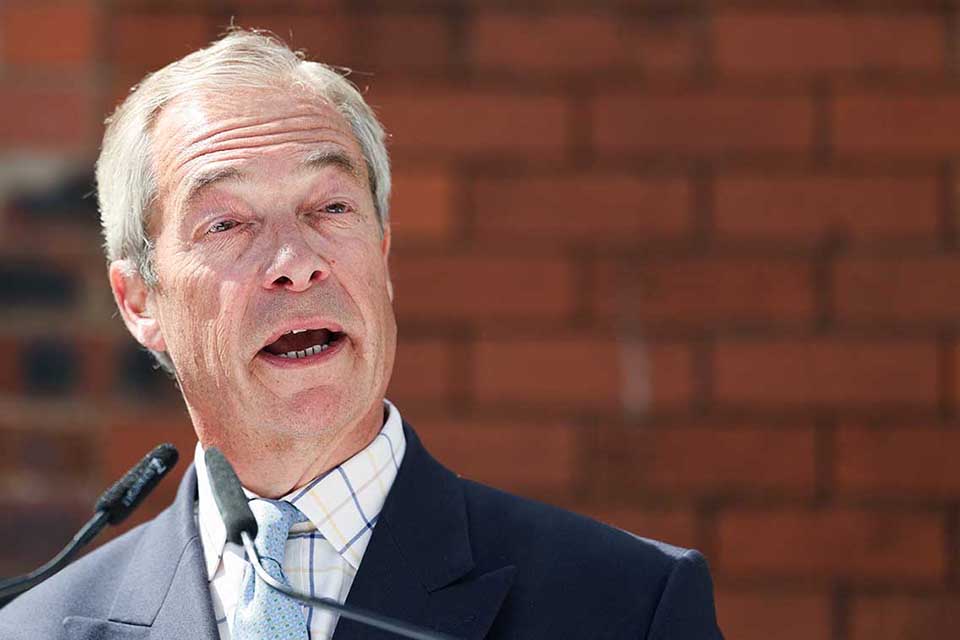
The prevalence of Brexit was fuelled by social media and a “Make America Great Again” style campaign. Its rhetoric was based on the perception of the erosion of British identity due to the EU’s open borders, a sentiment that Nigel Farage continues to utilise to this day.
Following time-consuming negotiations, the two sides arrived at a loose relationship, as the UK excluded even the option of a Customs Union. Brexit supporters predicted that decoupling would lead to GDP growth, better bilateral trade agreements with third countries, effective immigration control, lower taxation and fiscal benefits. Conversely, critics warned of an abrupt loss of at least 4 per cent of GDP and a shrinking of the country’s geopolitical influence.
Ten years later critics tend to be confirmed by a slump in trade, investment, productivity and a 4 to 8 per cent reduction in GDP, although the rise in debt and interest rates is not solely due to Brexit. A joint study by the National Bureau of Economic Research and the Bank of England confirmed that Brexit reduced UK’s GDP by 6 to 8 per cent by the end of 2025, which translates to an annual reduction between £100 billion and £200bn. The underlying drivers include an 11 to 18 per cent cumulative collapse in business investment due to prolonged regulatory uncertainty, alongside a 4 per cent stagnation in both employment and national labour productivity compared to a non-Brexit scenario.
The negative impacts include the exodus of European workers, despite the fact that the domestic anti-immigration sentiment was primarily focused on Asia. This has triggered severe structural labour shortages across agriculture, transport and hospitality. Real goods exports to the EU dropped by 6.5 per cent compared to 2015 pre-vote levels, ballooning the UK’s trade deficit with the EU to a record £139bn. On the contrary, the services sector proved resilient and was less affected. In fact, services achieved a record-breaking trade surplus of £46bn with the EU, demonstrating that decoupled knowledge-based sectors could bypass the heavy physical non-tariff barriers that impacted physical goods manufacturing.
Today, approximately 50 per cent of Britons appear to consider Brexit a mistake and 45 per cent wish to rejoin, yet political management remains complex. The Labour government – under Keir Starmer or his potential successor Andy Burnham – seeks an upgraded agreement but avoids rejoining or entering the Customs Union due to domestic challenges. At the same time, the opposition (Conservatives and Reform Party) does not favour upgrading relations with Brussels. This political stalemate persists despite recent Office for National Statistics data showing a 0.1 per cent month-on-month GDP drop, highlighting how trade friction continues to compound domestic economic vulnerabilities.
Simultaneously, the EU rejects piecemeal, special relationships, preferring the framework of the Customs Union or a structured relationship modelled after the Swiss system.
Many analysts now converge on the view that the benefits of a simple “upgrade” to the existing relationship will be negligible for the UK, pointing to full reintegration as the only substantial solution. Economic models from Frontier Economics indicate that mere regulatory alignment would yield only a modest 1.7 to 2.2 per cent boost in GDP growth, leaving the UK far below its pre-2016 growth trajectory. On the political front, however, crucial questions arise, such as: (a) whether a return should be decided solely through parliamentary avenues or it requires a new referendum, (b) the terms of the return, namely whether the UK will retain its old privileges and exemptions, and (c) the European veto, given that a reintegration agreement requires the unanimous support of all 27 member states.
The conclusion is that, 10 years later, Brexit has proven to be an exceptionally costly economic experiment, the political shackles of which remain nearly impossible to untangle.






Click here to change your cookie preferences