
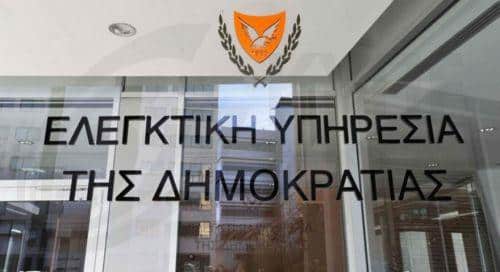
The widespread use of prefabricated classrooms in Cyprus’ public schools has become a permanent or semi-permanent solution to overcrowding, the Audit Office said in a special report released on Monday, highlighting serious shortcomings in the planning, oversight and management of school infrastructure.
Auditor-general Andreas Papaconstantinou stressed that the Audit Office does not object to the use of prefabricated classrooms in principle, noting that they can provide a flexible solution to temporary accommodation needs.
“The problem is that solutions introduced as temporary have, in some cases, become permanent, and that is not acceptable,” he said.
According to the report, the growing reliance on prefabricated classrooms reflects the absence of a long-term strategy for school infrastructure, delays in building and expanding schools, and increasing pressure from demographic and social changes.
The Audit Office also identified weaknesses in record-keeping, planning procedures and the systematic assessment of safety and functionality.
Papaconstantinou warned that extending temporary solutions indefinitely without a clear timetable for replacement could undermine the quality of the learning environment, create inequalities and increase both safety risks and long-term costs.
The report is the first part of a wider audit into school safety. A second report, focusing primarily on electrical installations, is due to be published on July 15.
Among its findings, the Audit Office said the education ministry does not maintain an up-to-date central register of prefabricated classrooms and lacks a mechanism linking pupil enrolment data with school capacity, limiting its ability to identify overcrowding and plan infrastructure effectively.
The report estimates that around 440 prefabricated classrooms are currently in use in primary and pre-primary education, while a further 69 classrooms are operating in secondary education, including 48 in general secondary schools and 21 in technical and vocational schools.
For the 2025-26 school year, authorities approved the installation of 36 additional prefabricated classrooms, as well as 10 smaller units for special education.
The Audit Office said increasing pupil numbers in some areas, a rise in children with migrant backgrounds and the expansion of compulsory pre-primary education had all contributed to overcrowding without a corresponding increase in permanent school facilities.
It also noted that many prefabricated classrooms have remained in use for more than a decade.
As an example, the report cites the Third Primary School of Ypsonas, where seven prefabricated classrooms were installed between 2017 and 2024, while a new school building is not expected to be completed for at least another four years.
The report also raises concerns over safety and functionality.
Although technical services inspect sites before classrooms are installed, the Audit Office found there is no documented, standardised assessment process using uniform health and safety criteria.
Inspectors also found cases where prefabricated classrooms were not connected to the main school buildings by covered walkways, despite this being required under the ministry’s own design standards.
Other shortcomings included inadequate playground layouts and limited functional outdoor space.
The Audit Office also found that, unlike new schools and major extensions, prefabricated classrooms are often installed without going through the full planning approval process, despite effectively creating long-term expansions of existing schools.
It noted that the legal framework for private schools is considerably stricter, requiring planning permission and full compliance with safety standards before prefabricated classrooms can be installed.
The Audit Office called on the education ministry to strengthen the regulatory and supervisory framework governing public school infrastructure.
Its recommendations include creating a central register of prefabricated classrooms, linking pupil enrolment data with school capacity, drawing up a long-term plan to replace temporary classrooms with permanent facilities, and introducing standardised procedures to assess safety and planning suitability before new units are installed.




Click here to change your cookie preferences