
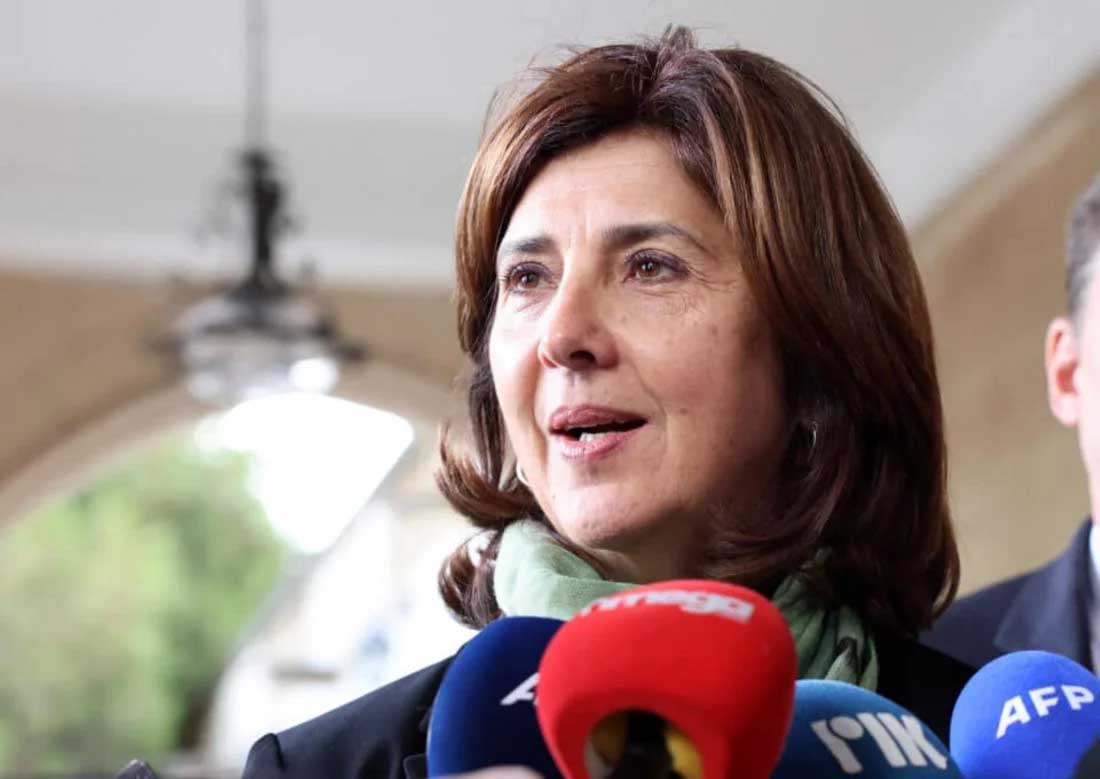
Nicosia demands a 'substance first' reaffirmation of a federal baseline, while Ankara relentlessly pursues 'procedure first' requiring upfront recognition of sovereign equality
For nearly a decade since Crans-Montana, Greek Cypriot leaders have operated under the illusion of a risk-free status quo. However, UN envoy María Angela Holguin has shattered this complacency, warning that treating the stalemate as a safe haven is now a fatal miscalculation.
Encircled by escalating Middle Eastern conflicts, Cyprus can no longer pretend to exist in an isolated bubble. Furthermore, Nicosia’s performative diplomacy masks profound foreign policy contradictions; the government’s pursuit of Western military roadmaps violently clashes with the island’s hyper-mobile tech economy, Turkey’s regional dominance and the irreversible physical transformations solidifying in the occupied north. Ultimately, this volatile realpolitik has driven UN Secretary-General Antonio Guterres to force a final 5+1 summit to address a status quo that has entirely outlived itself.
The accountability pivot
In a bold confrontation, Holguin exposed those who deliberately perpetuate the island’s division to cling to domestic power. She condemned leaders who feign a willingness to negotiate simply to appease voters, shifting the burden of accountability onto the leadership by reframing this prolonged paralysis as a calculated, self-serving choice. To bypass the media spin and fabricated ‘secret roadmaps’ politicians use to derail talks, Holguin strategically withheld any written proposals. This crucial manoeuvre denied leaders their usual escape route, forcing public focus onto the alarming physical realities already transforming the ground. Her uncompromising ultimatum warns that unless citizens grant their leaders the political space for painful concessions, diplomacy will permanently collapse, leaving the island entirely at the mercy of raw military power.
Irreversible shifts on the ground
Since the 2017 talks collapsed, time has actively eroded the prospects for peace. Ankara and the northern administration have aggressively transformed the island’s political, demographic and physical landscape. Most notably, Varosha has been converted into a tourist hub in direct defiance of UN Security Council resolutions, while the potential for resolving displaced property claims is being systematically destroyed by a corporate-led construction boom in northern regions like Trikomo. Compounding this legal erasure, the north is being inexorably bound to mainland Turkey through massive infrastructural integration, including undersea water pipelines and planned subsea electrical grids. This multi-front assimilation points to a fatal reality: the terrain required to build a balanced, bizonal federation is rapidly vanishing.
Stalling tactics and strategic gridlock
The impending 5+1 conference is virtually doomed to fail unless the underlying motives of both sides are radically exposed. Instead of confronting the island’s existential threats, both sides remain entrenched in zero-sum positions, prioritising domestic political survival over genuine compromise. Nicosia’s current manoeuvres highlight the depth of this gridlock. President Christodoulides’ 5-point proposal acts as an institutional smokescreen; by demanding a UN audit of past agreements before talks even begin, Nicosia orchestrates a bureaucratic paralysis to delay politically painful decisions. This performative diplomacy is further exposed by unrealistic Confidence-Building Measures, such as demanding the opening of the Kokkina crossing – a fortified Turkish military enclave guaranteed to fail. Simultaneously, demanding a return to the agreed framework while courting US and French military alignments constitutes a deeply flawed external balancing strategy. Rather than deterring Turkey, this approach provokes a severe security dilemma, prompting Ankara to accelerate its military build-up in the north.
Ankara’s two-state pivot
The Crans-Montana collapse triggered Turkey’s pivot toward a two-state solution. This geopolitical entrenchment has forged an inflexible stalemate where even moderate Turkish Cypriot leaders like Tufan Erhurman demand explicit, upfront UN guarantees to lift economic embargoes before revisiting past agreements. This highlights a paralysing dispute over diplomatic sequencing: Nicosia demands a ‘substance first’ reaffirmation of a federal baseline, while Ankara relentlessly pursues a ‘procedure first’ strategy requiring upfront recognition of sovereign equality. This irreconcilable clash practically guarantees failure unless compromises are made.
The fallacy of the western shield
As the Eastern Mediterranean devolves into a geopolitical powder keg, Guterres’ primary goal for the summit is to prevent a catastrophic escalation. Driving this mobilisation is a highly confidential Western blueprint aimed at replacing Cyprus’ 1960 guarantees with a radically new Nato-based security framework. However, this proposition naively assumes that Ankara will voluntarily forfeit its unilateral right of intervention and physical military presence. Furthermore, the blueprint ignores a retracting United States and mistakenly relies on a fragmented European Union that lacks the military teeth to enforce security guarantees in the volatile Levant.
To force cooperation despite these fatal flaws, the UN and EU are executing a transactional strategy. They are dangling the ‘Three Directs’ (flights, EU trade and diplomatic contacts) and lucrative incentives like Customs Union modernisation to push President Erdogan to the table in exchange for territorial concessions and flexibility on a federal model.
Confronted with this reality, Nicosia can no longer afford the luxury of maximalist positioning. To neutralise Turkey’s asymmetric physical advantage, the Greek Cypriot leadership must abandon performative stalling and proactively champion a functional bizonal federation, preserving its single international legal personality.
The Schengen contradiction
President Christodoulides’ foreign policy rests on a profound structural paradox, as it is designed for a unified country. While Nicosia has successfully transformed the south into a Western-integrated tech hub, this volatile digital capital relies on absolute predictability and will rapidly flee if Turkey leverages its regional dominance to launch electronic warfare or gray-zone provocations across the buffer zone. Moreover, this Western integration strategy clashes directly with Cyprus’ concurrent push for Schengen accession. Meeting strict European security criteria requires installing biometric checks and physical barriers across the 180-kilometre Green Line. These measures would inadvertently transform a temporary ceasefire boundary into a hardened EU external border, practically delivering Turkey its ultimate goal of a two-state partition.
Allowing the peace process to stagnate, actively accelerates the hardening of an unmanaged division into an irreversible reality. Trying to bypass the foundational 1960 legal framework by forming hollow alliances with a retracting US and a fragmented EU will fundamentally fail to deter Turkish ambitions, leaving Nicosia, in the absence of a solution, a divided, highly vulnerable, permanently exposed front-line entity in a changing and hostile environment.


Click here to change your cookie preferences