
Inside FinSight Ventures' strategy for spotting high-growth tech in Cyprus and beyond
The anticipated IPOs of Anthropic and OpenAI could be among the most consequential market events of a generation by setting a benchmark valuation for AI-native firms.
Alexey Garyunov, general partner at FinSight Ventures, has been positioning ahead of that moment.
FinSight’s portfolio spans generative AI unicorns like Databricks and Scale AI, and fintech plays in Uzbekistan and India.
Based in Cyprus, the fund sits at the crossroads of international capital, operating where most institutional investors won’t look, which, according to Garyunov, is precisely the point.
In an interview with the Cyprus Mail, Garyunov explained why the aforementioned IPOs could serve as market milestones, while also discussing the unique investment landscape of Cyprus as an emerging innovation hub, and the high-growth potential of generative AI and fintech across overlooked global markets.
With the firm’s General Partner based in Cyprus, how do you assess the current appetite among Cypriot investors for high-growth global technology assets like generative AI and fintech?
Cypriot investors don’t fit a single profile.
Unlike many other markets, the capital based in Cyprus spans the full risk spectrum and allocates across every asset class—some investors lean conservative, favoring fixed income and real estate, while a substantial cohort actively seeks high-risk, high-growth exposure.
That latter group is shaped in large part by the tech entrepreneurs and family offices who have made Cyprus home, including the founders behind companies like Plata and Finom.
Combined with the cluster of technology hubs now operating on the island, this concentration of operator capital is what defines the local appetite for tech investment.
Given the recent focus on Cyprus as an emerging innovation hub, what specific advantages does the island offer for a venture capital fund operating at a global level?
Venture investing is ultimately a capital-gains business, and Cyprus offers clear tax advantages for that model.
Beyond the headline rate, the island’s appeal for a globally operating fund rests on three things.
First, proximity to capital: a dense concentration of family offices is based in Cyprus, letting fund managers maintain close, ongoing relationships with their investor base rather than managing them from a distance.
Second, livability: Cyprus is genuinely welcoming to expats, and the climate, lifestyle, and quality of local products matter more to internationally mobile investors than most people assume.
Third, connectivity: carriers like Wizz Air and Cyprus Airways and other carriers link the island to major EMEA hubs, keeping a global fund within easy reach of its markets and counterparties.

As we approach anticipated IPOs for major players like Anthropic and OpenAI, what long-term impact do you expect these flotations to have on the broader valuation benchmarks of the AI industry?
Until now, the private market has had no public benchmark—not a single AI-native company trading—and therefore no anchor for how to value multiples, growth rates, or margins across the sector.
Valuations have rested on conviction rather than comparables. Putting two AI leaders into public view sets that anchor for the first time. Once it does, I’d expect a repricing of private-market reference points.
What today gets justified by sector exceptionalism will finally be tested against real margins and actual growth—and that pressure will reach well beyond the companies that list.
So the short answer is that the AI IPOs matter more over the long run, because they don’t just move liquidity; they reset how an entire asset class is priced.
Your Generative AI Index Fund offers a curated entry point to companies like Databricks and Scale AI – what key metrics do you prioritise when selecting these unicorns in such a rapidly evolving market?
We select companies that are clear leaders in their respective verticals, and the primary metric is revenue—specifically ARR scale and its trajectory.
From there, we look hard at the quality of that revenue, which usually shows up in gross margin.
The higher the gross margin, the more genuine value customers are placing on the product rather than the underlying compute.
Finally, and increasingly important, is retention.
The boom in AI-first companies has produced what’s come to be called “vibe revenue”—dollars coming from early adopters and enthusiasts eager to try anything new but quick to churn.
Durable net retention is what separates a real franchise from a company riding curiosity, and it’s where we spend a disproportionate amount of diligence.
Beyond the excitement surrounding AI, your portfolio demonstrates a strong focus on fintech in emerging markets like Uzbekistan and India — what specific opportunities are you seeing in these regions that might be overlooked by more traditional Western-focused funds?
Uzbekistan and India sit on two very different sides of our thesis.
We invested in Uzbekistan because the quality of banking services was lagging well behind regional peers, and e-commerce was almost nonexistent compared to neighboring markets.
The reason was straightforward: the country had been effectively uninvestable for foreign capital for years.
The new administration changed not just the investment climate but the broader economic trajectory—and we want to be the first institutional investor on the ground in markets like that.
For a traditional VC, it takes years to even begin looking at a country like Uzbekistan. We’ll be adding another portfolio company that fits this thesis shortly.
India is the opposite case. It isn’t short on venture capital—it’s on track to become the world’s third-largest economy, and the opportunity set spans manufacturing, consumer, home-grown deep tech, and financial services.
There, the edge isn’t being early to the country; it’s having the relationships and conviction to win the right deals in a crowded, fast-moving market.
How do you view the ongoing integration of generative AI toolkits into traditionally conservative, highly regulated sectors such as law and medicine?
It’s counterintuitive, but adoption in these two conservative sectors is growing fast—I’d argue only coding is moving quicker.
In healthcare, OpenEvidence is already used by two-thirds of American doctors; last year alone, more than a million patients were treated by physicians relying on it.
Abridge is another standout, now deployed across 300-plus health systems in the US.
In legal, there’s a genuine race underway between Harvey and Legora, each adopted by more than half of the AmLaw 100.
What makes this remarkable is that both sectors were among the hardest places to sell software over the past decade—conservative, heavily regulated, and slow to change.
Generative AI appears to have broken that pattern, and it’s done so because the tools attach directly to the core work product of a doctor or a lawyer rather than sitting at the periphery.
When the value is that close to the billable output, even the most cautious buyers move.

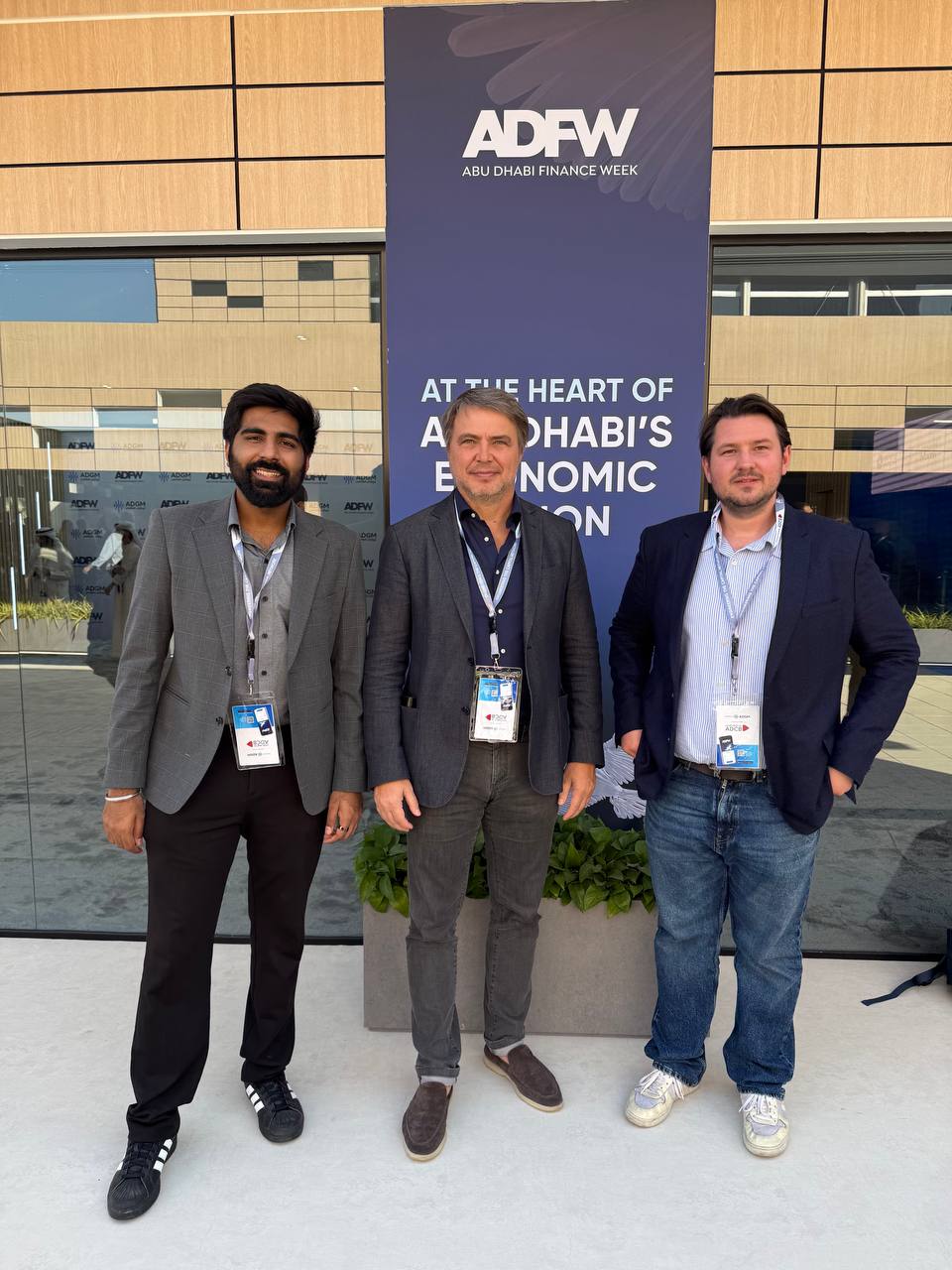


With your team recently visiting regions as diverse as South Africa, Panama, and Venezuela, what patterns or unique challenges are you identifying in the startup ecosystems of these developing economies compared to more established markets?
The defining challenge is that international investors simply don’t look at these markets, which forces companies to be far more self-sustaining and to show real traction before they can attract any global attention.
That has two direct consequences. First, companies raise at lower valuations, and founder dilution is far more severe than in developed markets.
A lot of investors read this as a risk signal, but it’s just the reality of the geography—in the US, a founder holding under 50 per cent after a Series A is a red flag; in a developing market, it’s the norm.
Pattern-matching from Silicon Valley actively misleads you here.
Second, because many of these markets are smaller, startups have to aim at the largest TAMs in their countries to generate outcomes big enough to matter.
In the US, you can build a large company by disrupting a narrow niche.
In a small market, that math doesn’t work—you have to go after the biggest legacy incumbents to create a venture-scale result.
For a private investor looking to balance their portfolio in the current climate, what role should high-growth AI and fintech funds play compared to more traditional asset classes?
The conventional framework is for an investor to hold 70–80 per cent in traditional asset classes—real estate, public equities, and fixed income—to capture market beta.
To generate returns above the market, the remaining 20–30 per cent goes into what we’d call alternatives, and both high-growth AI and fintech funds sit in that bucket.
Within it, the two play distinct roles. AI exposure is largely a bet on developed markets, while global fintech is how you diversify into emerging markets and pick up growth that isn’t correlated with the US and Europe.
The point of the alternatives sleeve isn’t to replace the core—it’s to add uncorrelated, higher-upside exposure on top of a stable foundation.





Click here to change your cookie preferences