
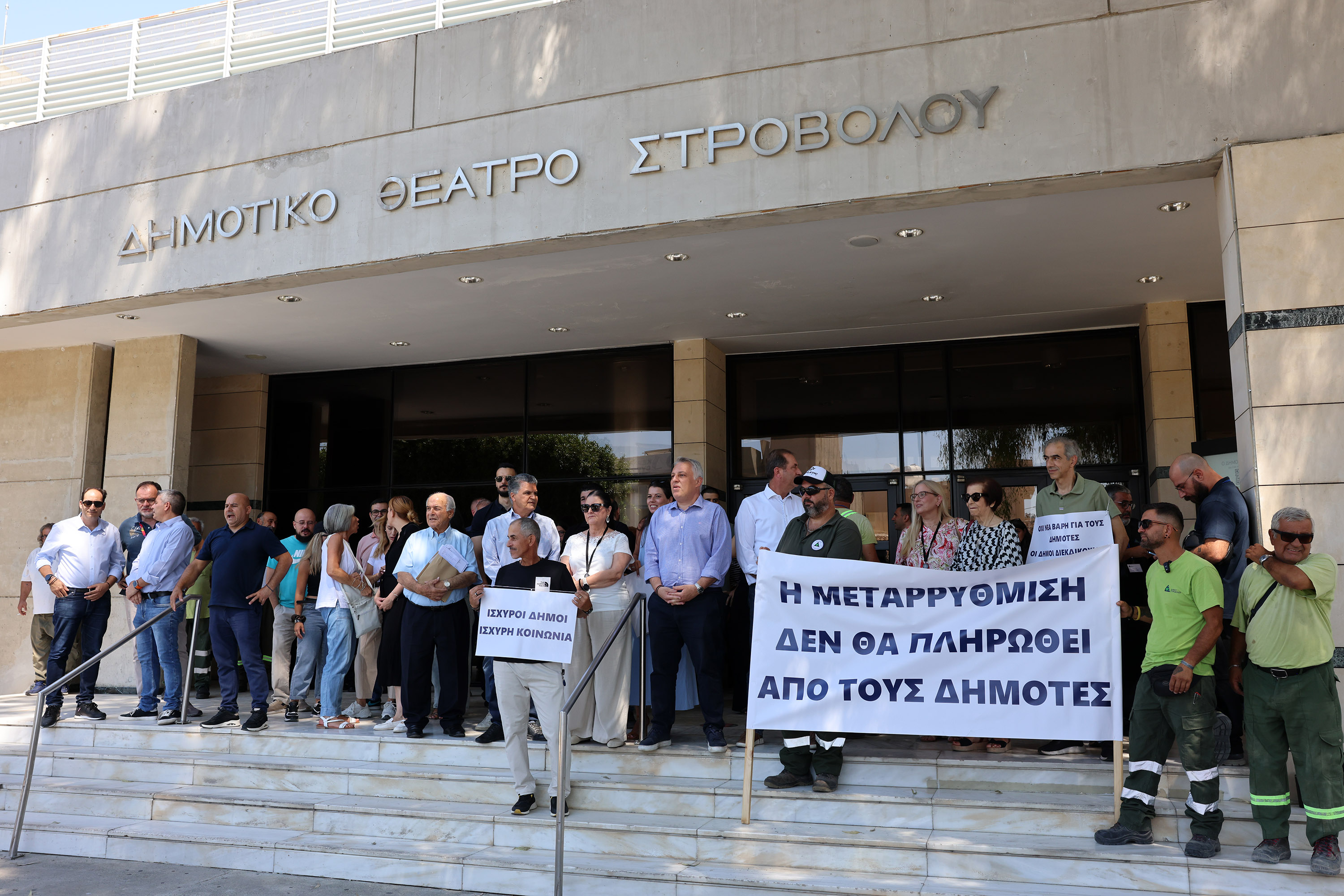
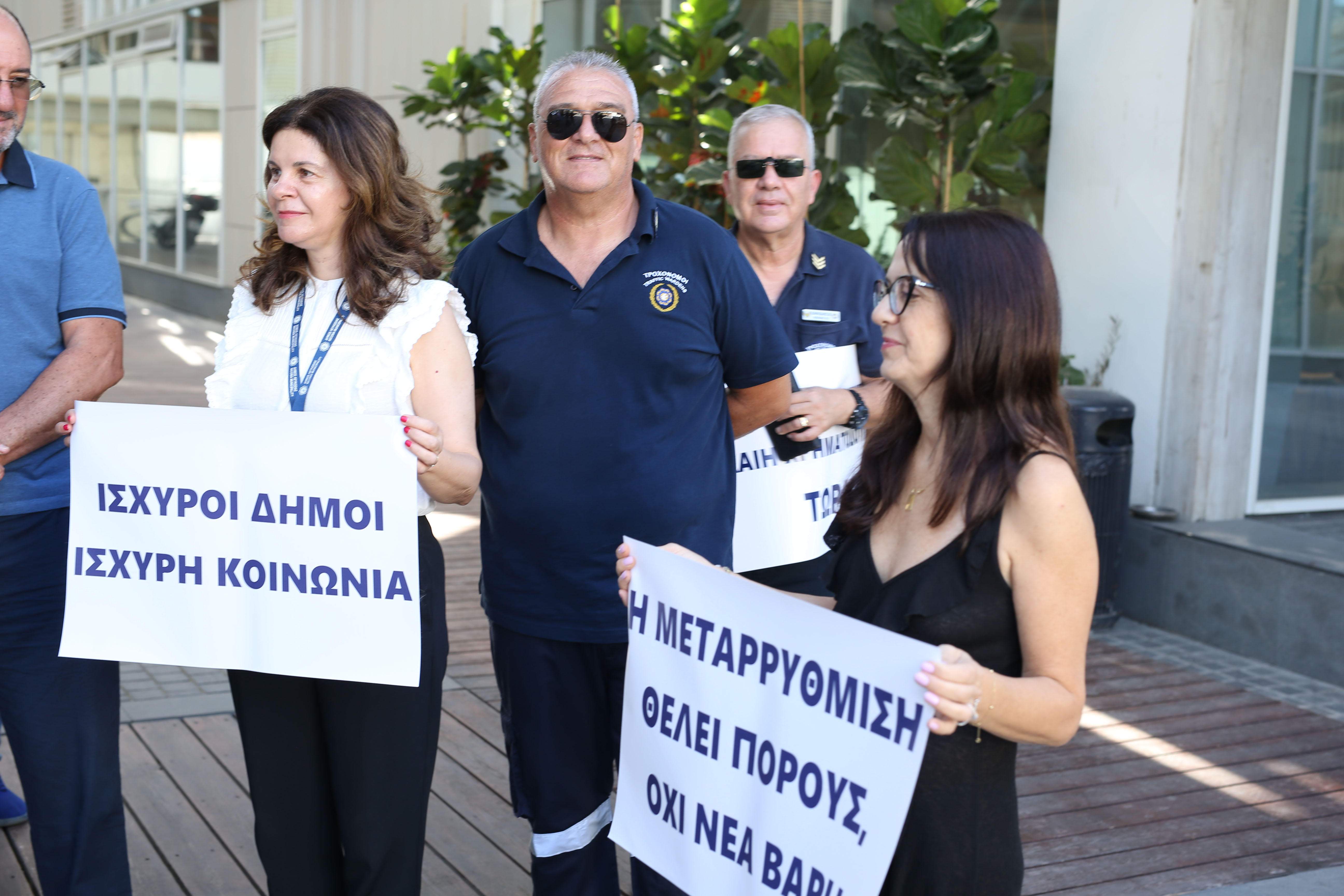
Nicosia mayor Charalambos Prountzos on Monday backed the municipalities’ protest over local government reform, calling for increased state funding and saying the capital was receiving at least €12.5 million less than it needed in government grants.
Describing Monday’s protest organised by the Union of Cyprus Municipalities as “highly symbolic”, Prountzos said inadequate funding directly affected residents’ quality of life rather than simply municipal operating costs.
“We want to do as much as we can, not just the basics,” he said, adding that staff costs accounted for around 40 per cent of the municipality’s expenditure.
Prountzos said a recent study concluded that Nicosia should receive at least €35 million in annual state funding, leaving a shortfall of €12.5 million compared with its current allocation of €22.5 million.
He reaffirmed that municipalities were prepared to make difficult decisions but insisted the government must also do its part.
Prountzos called on the state to introduce an indexation mechanism to adjust municipal funding in line with inflation and operating costs, while rejecting the interior ministry’s proposal to increase municipal fees.
“We have no problem with rationalisation; we are ready to make difficult decisions,” he said.
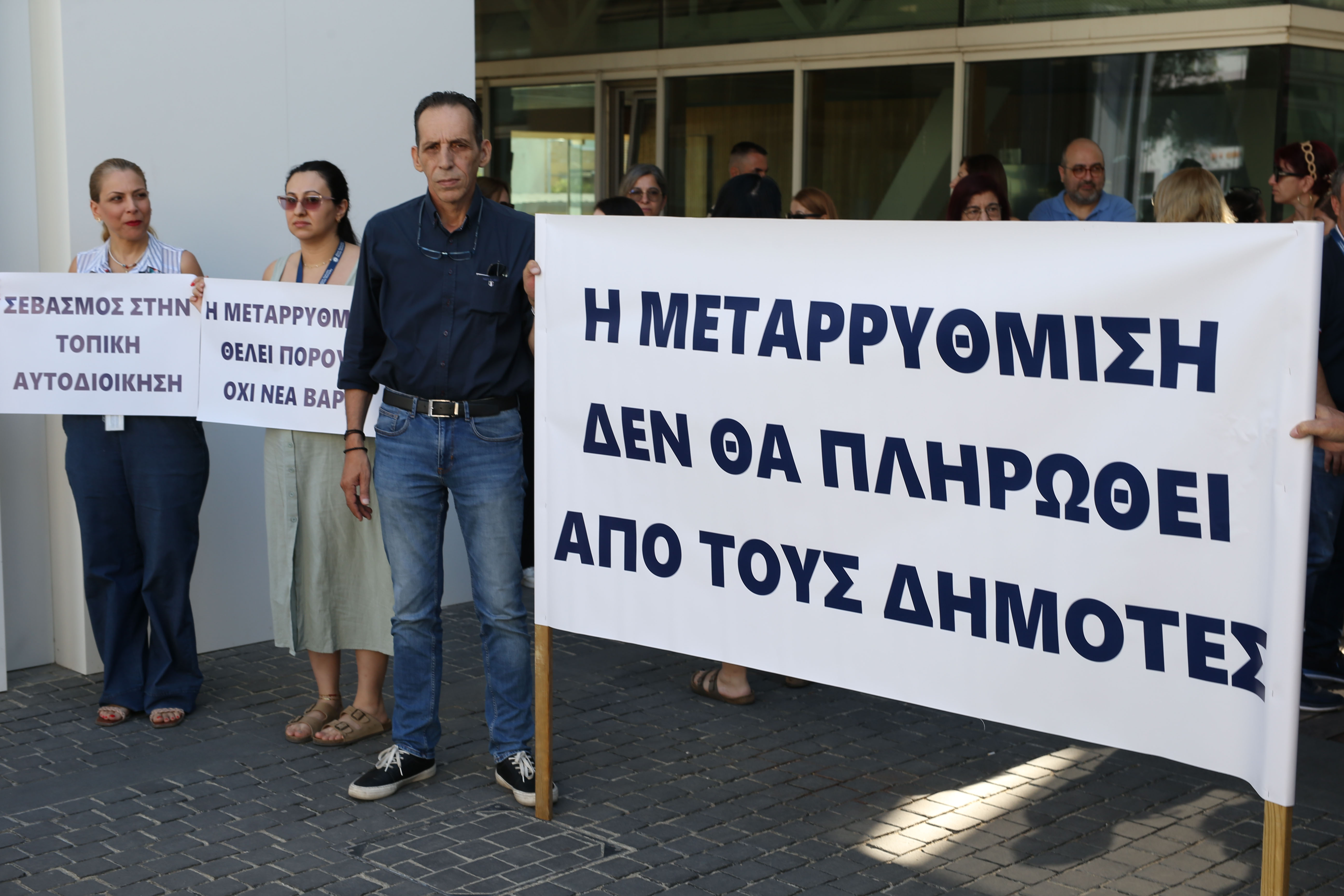
Strovolos mayor Stavros Stavrinidis echoed calls for increased state funding and greater administrative independence for municipalities.
“The state has two weapons: it can cut state funding if it disagrees with the figures submitted and it can refuse to approve municipal budgets,” Stavrinidis said.
He argued that the objectives of the local government reform had not been met and said the cost of providing services should not be passed on to residents through higher taxes or fees. He also warned that municipalities could take further action if no agreement was reached with the interior ministry.
“We are one of the countries that allocates a very low percentage of its state budget to local government,” he said.
According to Stavrinidis, municipal funding in Cyprus accounts for less than 2 per cent of the state budget, compared with between 4 and 5 per cent in many European Union countries and as much as 20 per cent in some cases.
He stressed that municipalities were not seeking additional funding because of poor financial management but because responsibilities had been transferred to them without the corresponding resources.
“The goal is not just to cover expenses. We also need to develop our cities, and without this support we cannot deliver what we have promised,” he said.




Click here to change your cookie preferences