
Something has quietly happened to business communication over the past couple of years. A large and growing share of the emails, landing pages, LinkedIn posts, and client updates you read were drafted, at least partly, by AI. You can feel it. The sameness has crept in. Everything has that faint sheen of competent, professional, slightly hollow text that reads like it was optimized rather than written.
For businesses, this is a real problem, and not an abstract one. In a market where more and more communication sounds identical, the writing that actually sounds like a human wins attention, trust, and response. Generic is expensive. It just doesn’t show up as a line item.
This article is about how to use AI for business writing, because you probably should, without landing in the generic middle where most AI-assisted business content lives.
Why generic business writing costs you
Let’s start with why this matters, because “sound more human” can feel like a soft, nice-to-have goal until you connect it to outcomes.
People Tune Out Sameness
Every professional inbox is now full of messages that sound the same. Cold emails that open with the same three formulas. Newsletters with the same tidy structure. When your message sounds like all the others, it gets processed the same way as all the others, which is to say, skimmed and forgotten. Distinctiveness is what earns a second look.
Trust Comes From Specificity
People trust communication that sounds like it came from a real person who knows their specific situation. Generic AI copy, by design, avoids specifics. It hedges, it generalizes, it stays safe. That safety reads as distance, and distance erodes trust. A prospect can tell the difference between a message written for them and a message written for everyone.
Response Rates Follow Humanity
Whether it’s an email, a proposal, or a piece of marketing, the response you’re after depends on the reader feeling something. Generic writing produces no feeling. It’s frictionless in the bad way, sliding past without leaving a mark. Writing with a human texture, a specific detail, a bit of personality, a real point of view, is what actually moves people to reply, click, or buy.
Where AI genuinely helps in business writing
None of this is an argument against using AI. Used well, it’s a genuine asset for business communication. It’s worth being clear about where it helps most.
AI is excellent for getting past the blank page. Staring at an empty email is a real productivity killer, and a rough AI draft eliminates it instantly. It’s good at organizing information you already have into a logical structure. It’s useful for producing volume when you need many variations of something. And it’s genuinely helpful for people who find writing stressful, because it lowers the barrier to getting started.
The mistake isn’t using AI for these things. The mistake is publishing what it produces without doing the human work that turns a generic draft into a message that actually lands.
How to make AI business writing sound human
Here are the specific practices that separate business writing that works from the generic AI-flavored default.
Lead With Something Specific
The fastest way to escape the generic zone is to open with a detail that could only apply to this specific message. A generic cold email opens with “I hope this email finds you well.” A human one opens with a specific observation about the recipient’s business, a reference to something they actually did, or a direct statement of why you’re really writing.
Generic: “I hope this email finds you well. I wanted to reach out to discuss how our solution might be able to help your business grow.”
Specific: “I saw your team just opened a second location in Pune. Congratulations, and also, that’s usually the exact moment the systems that worked for one location start breaking. That’s what I want to talk to you about.”
The second one sounds like a person who did five minutes of homework. The first sounds like a template sent to ten thousand people, because it was.
Cut the Corporate Hedge Words
AI business writing is full of soft, hedging, corporate language: “solutions,” “leverage,” “streamline,” “in order to,” “we believe that.” Strip these out. Say what you mean plainly. Plain language sounds more human and more confident, and confidence sells.
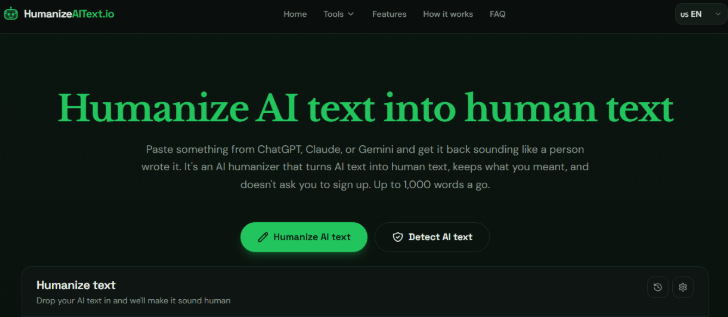
This is where an AI text humanizer can do useful first-pass work, catching the robotic corporate phrasing and evening out the mechanical rhythm before you add the specific, human touches that only you can supply. It handles the generic smoothing so you can focus on making the message actually about the reader.
Write Like You Talk
Read your business writing aloud. If you’d never say it out loud to the person’s face, don’t write it. “We are excited to announce the launch of our new initiative” is not something a human says. “We built a new thing and I think you’ll actually like it” is. Business writing has permission to be more human than most people give it, and the more human it is, the better it performs.
Keep One Real Opinion
Generic business writing is opinion-free because opinions feel risky. But a message with a genuine point of view is far more memorable than one that carefully says nothing. Wherever you can, include one real, specific belief. “Most CRMs are overbuilt for companies your size” is an opinion. It’s also the kind of thing that makes a reader think you actually understand their situation.
Match the Format to the Channel
An email should read like an email. A LinkedIn post should read like a person talking, not a press release. Marketing copy should have energy. AI tends to produce the same medium-formal register for everything, so adjust the tone to fit where the writing will actually appear. Human communication is context-aware in a way default AI output isn’t.
A practical example: rewriting a marketing paragraph
Here’s a common piece of AI-generated marketing copy and what it looks like after being made human.
AI default: “Our platform offers a comprehensive suite of tools designed to help businesses streamline their operations, improve efficiency, and drive growth. With our innovative solutions, companies can optimize their workflows and achieve their goals more effectively.”
Read that and try to remember a single concrete thing it said. You can’t, because it didn’t say anything. Every phrase is a placeholder.
Human version: “Most teams we work with are losing about a day a week to work that shouldn’t require a human at all: copying data between apps, chasing status updates, rebuilding the same report every Monday. We automate that specific category of busywork. You get the day back.”
The human version makes a specific claim, names concrete examples, and promises a specific outcome. It sounds like it was written by someone who actually understands the customer’s day, because it addresses the customer’s day rather than gesturing vaguely at “efficiency.” Running the generic draft through a tool to humanize AI generated text gets you partway there by removing the robotic phrasing, but the specific examples, the day-a-week claim, the concrete busywork, still have to come from a human who knows the business.
Building an AI business writing workflow that works
Here’s a workflow that captures AI’s speed without landing in the generic zone.
Start by using AI to draft, treating the output as raw clay rather than a finished product. Next, run it through a humanizing pass to strip the most obvious robotic and corporate patterns, which saves you the tedious mechanical editing. Then do the human work that actually matters: add a specific detail about the recipient or the situation, cut every hedge word, insert one real opinion, and adjust the tone to fit the channel. Finally, read it aloud and fix anything you’d never actually say.
This process is fast. It takes minutes, not hours. And it produces business communication that sounds like it came from a real person at a real company, which, in a sea of identical AI-flavored messages, is increasingly the thing that gets noticed.
Frequently asked questions
Is it okay to use AI for business emails and marketing?
Yes, and most businesses already do. The issue isn’t whether you use AI, it’s whether you publish its generic default output or do the human work to make it specific and distinctive. AI is a genuine time-saver when used as a first draft rather than a final product.
Why does AI business writing sound so generic?
Because AI generates the most statistically average, broadly acceptable phrasing, which is exactly the opposite of the specific, opinionated, context-aware writing that performs well in business. It also defaults to corporate hedge words and a uniform formal tone that reads as hollow.
What’s the single biggest improvement I can make to AI business copy?
Add specificity. Replace vague claims about “efficiency” and “solutions” with concrete details, real examples, and specific outcomes relevant to the actual reader. Specificity is what separates business writing that gets a response from writing that gets skimmed.
Does humanizing AI business content take a lot of time?
No. A typical workflow adds only a few minutes: run the draft through a humanizing pass to remove robotic phrasing, then add a specific detail, cut the hedge words, and include one real opinion. The speed of AI drafting plus a quick human edit is far faster than writing from scratch.
How do I keep my brand voice consistent when using AI?
Feed the AI examples of your existing brand writing, and edit every draft against a clear sense of your brand’s tone. Decide in advance whether your brand is plain-spoken, warm, bold, or technical, and revise AI output to match. Consistency comes from the human editing layer, not from the AI itself.
DISCLAIMER – “Views Expressed Disclaimer – The information provided in this content is intended for general informational purposes only and should not be considered financial, investment, legal, tax, or health advice, nor relied upon as a substitute for professional guidance tailored to your personal circumstances. The opinions expressed are solely those of the author and do not necessarily represent the views of any other individual, organization, agency, employer, or company, including NEO CYMED PUBLISHING LIMITED (operating under the name Cyprus-Mail).





Click here to change your cookie preferences