
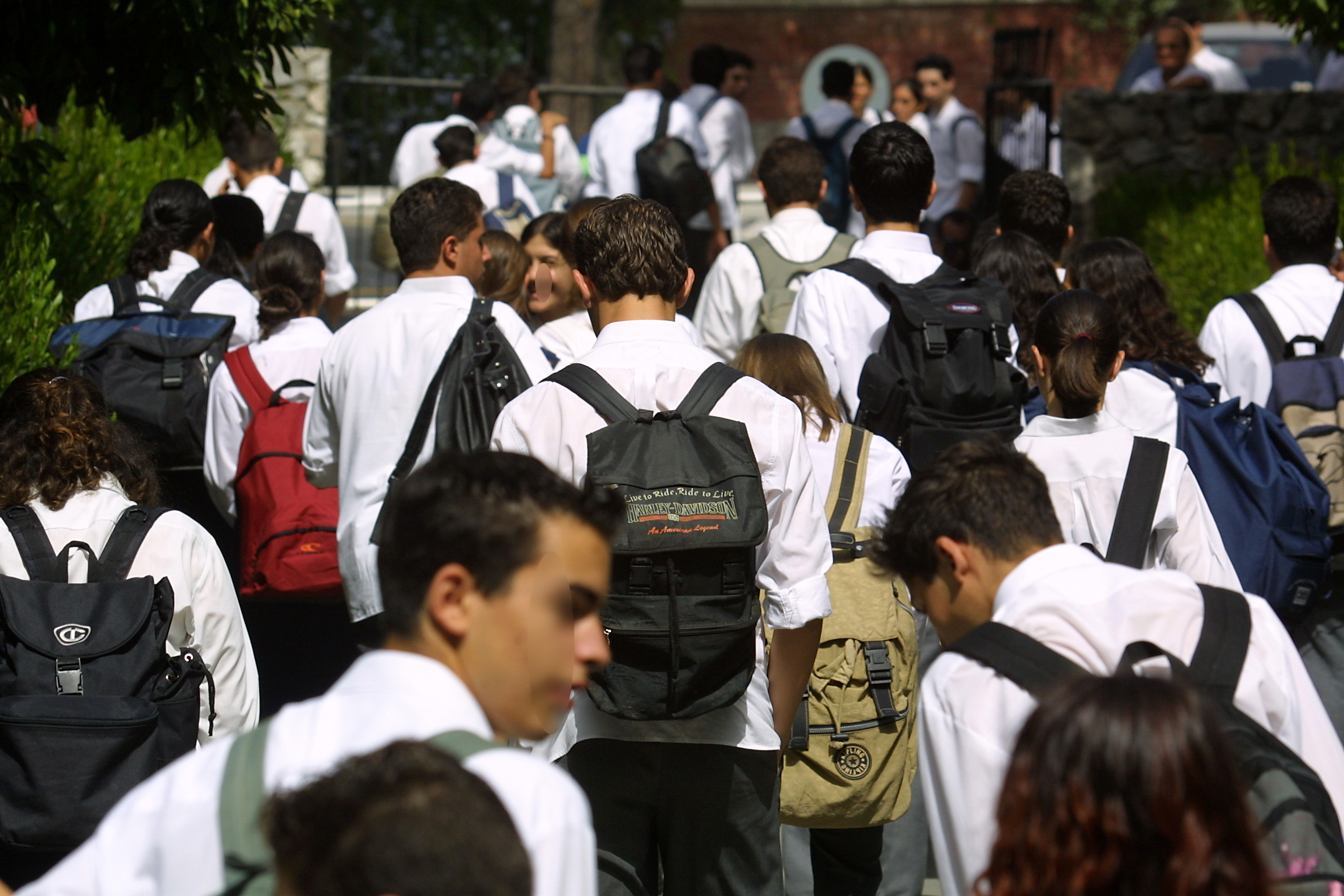
It seems strange that the education ministry felt obliged to issue a missive about prayers and religious instruction at public schools. Greek Orthodox prayers and religious instruction have been part of public education since the establishment of republic, so why did the ministry feel the need to issue new instructions to school heads? Have public schools shown slackness in providing religious indoctrination to their students or has the Church asked the ministry to re-assert the Greek Orthodox values of public education now that we have a more meddlesome archbishop?
In primary schools, before the start of first period, teachers “ensure there is morning prayers” while “children who are not Orthodox Christians “could pray quietly to their own God,” said the ministry. It emphasised that religious education “continues to constitute one of the main objectives of our schools,” and that the lesson of religious instruction “must on no account be downgraded.” It also warned against the head teacher taking all religion classes or these being given to a teacher with no interest in the subject teaching the lesson.
In a show of religious tolerance, the ministry said that children who were not Orthodox, did not have to attend religious instruction lessons, so long as their parents or guardians made this request of the school. The missive, which was reported in Phileleftheros, also covered secondary schools, saying that religious instruction was “considered very important because of the values and principles it promoted.” There is also talk of “religious literacy,” the “orthodox faith,” the “religious tradition of the country” as well as of the Holy Trinity.
Is the education ministry concerned that teachers and heads at public schools are not too keen on the religious indoctrination the Church and State had imposed on education since 1960? It should accept that Cyprus has changed, that people have changed, their worldviews have changed and we cannot remain stuck in the 1960s and ‘70s. Public schools should have become secular, but the Church is far too powerful and influential to allow this to happen. It would not even consent to the lesson of religious studies in which children learn about the different religions instead of being indoctrinated about the Orthodox faith.
A more important issue that must concern the education ministry is that religious indoctrination has no place in schools that are champions of critical thinking. For years politicians have been telling us that our education system must promote critical thinking but do not realise that this is incompatible with religious indoctrination which has always been a feature of public schools. The education ministry should be considering how to remove religious indoctrination from the school curriculum, if it were truly committed to education that prioritised critical thinking. Instead it is ordering teachers and school heads to carry on the uncritical teaching of the faith.





Click here to change your cookie preferences