
By Maria Demertzis
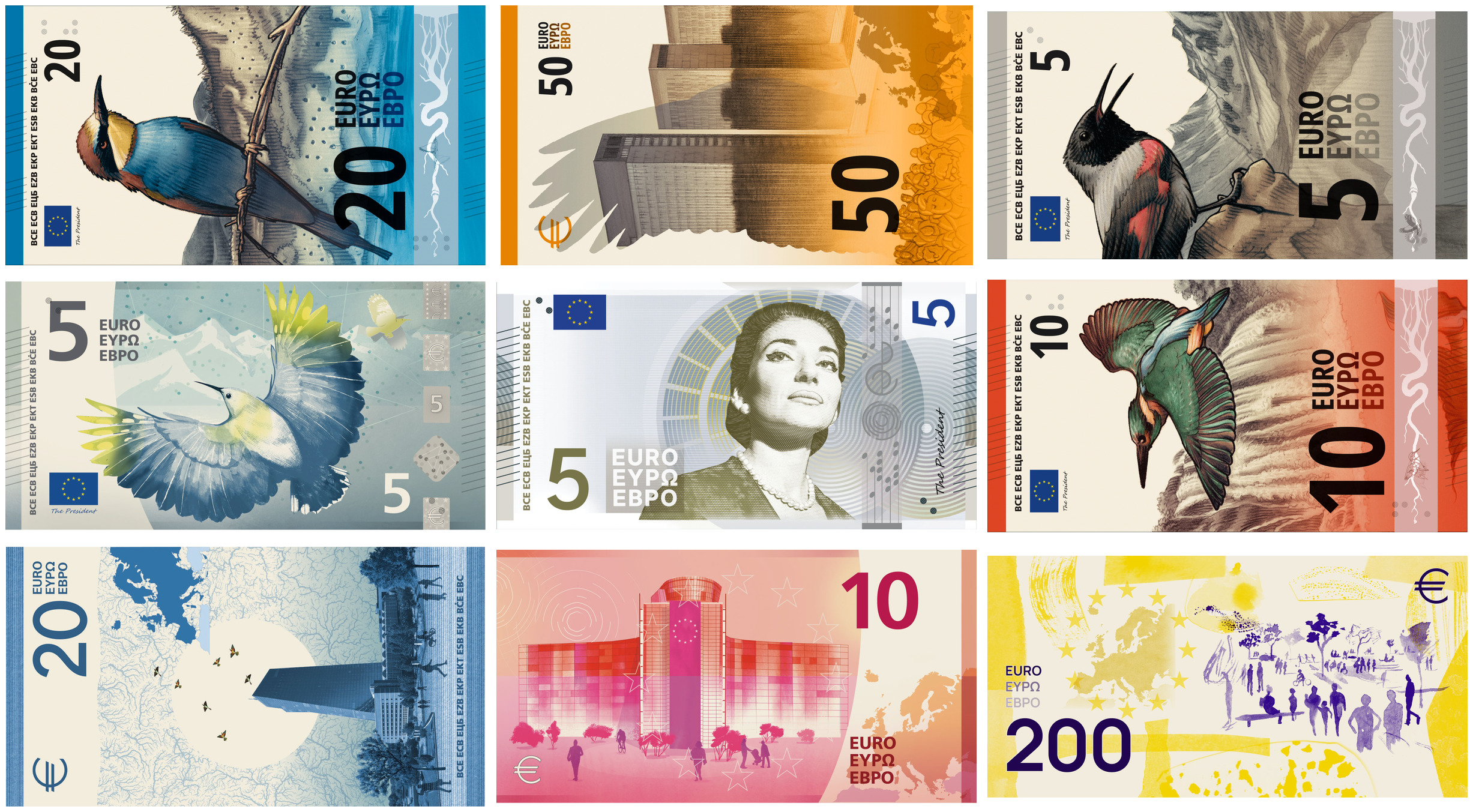
The European Central Bank is redesigning the euro notes and has asked the public to help her choose one of 10 candidate designs, half depicting famous Europeans and half depicting birds and rivers. The public is responding en masse, an indication of how much Europeans value the money in their wallets.
Six million people have voted for their favourite euro design in the first week of the survey launched by the ECB in July. This is a whopping one million votes per day, and at that rate, if sustained, a very big bulk of the eurozone population will have cast a vote by the time the survey closes, at the end of September.
I shouldn’t have been surprised by Europeans’ keen interest in having a say in what the next generation of their money should look like.
Our family was no exception. I voted immediately for my two favourite designs, both featuring prominent Europeans, delighted at the idea that finally we could put a face to Europe, and we could all agree who these faces are.
I remember the first time round when the design of Europe’s money was done to avoid an argument. The arches, windows and bridges of the first generation of euros would depict styles, not existing monuments. And while these might be symbols of openness and cooperation, they also ensured that no member state would claim ownership and, more importantly, none could feel excluded. I remember feeling disappointed at the missed opportunity to depict European culture and, with that, advance the much-needed, in my view, concept of European identity.
There is, however, another side. Two reactions by my sons would reveal a much more interesting story.
My two teenage sons, part of the TikTok generation, were of course immediately aware of the survey and, much to my surprise, very keen to vote. This is the generation that receives income (pocket money) digitally, does all its payments by phone, and even creates a digital kitty to share expenses with friends. They have little to no opportunities to touch physical cash, and yet they are very keen to define what it should look like. When confronted with it, they told me that they do have emergency cash (at their mother’s insistence), and this is as much their money as anyone else’s (and arguably more, given their age). Their digital experience with money does not dilute their understanding and affinity to cash. I was comforted that the physical anchor to our financial system is not threatened by digitalisation any time soon.
But even more surprising, given my set views on what the new design should look like, was their clear preference for birds and rivers over people and living civic spaces. Who are these dead people, they asked? But was the issue the choice of individuals? If Callas was replaced by Dua Lipa, Beethoven by Guetta and Cervantes by Ronaldo, would that be better? No. The issue was not the people portrayed. Water and nature are forever; people are ephemeral and no six historical figures can represent a vast and varied public. By contrast, rivers cross frontiers, and birds migrate just as we are expected to do in a Europe without borders.
It then dawned on me that this competition was going to be a win-win. It does not matter which design is selected, as we will all find something to identify with. I will cherish the metaphor of biodiversity, just as they will have heard of Marie Curie when they are taught about her in their next physics class and will recognise the 9th symphony when they hear it at the next New Year’s celebration. Support is crucial for sustaining the value of money and the 10 candidate designs have won over the whole of the family, at least mine.
You can vote until September 21.
Maria Demertzis is Professor of Economic Policy at the European University Institute, Florence. The article is reposted from the Blog of the Cyprus Economic Society https://cypruseconomicsociety.org/blog/blog-posts/





Click here to change your cookie preferences