
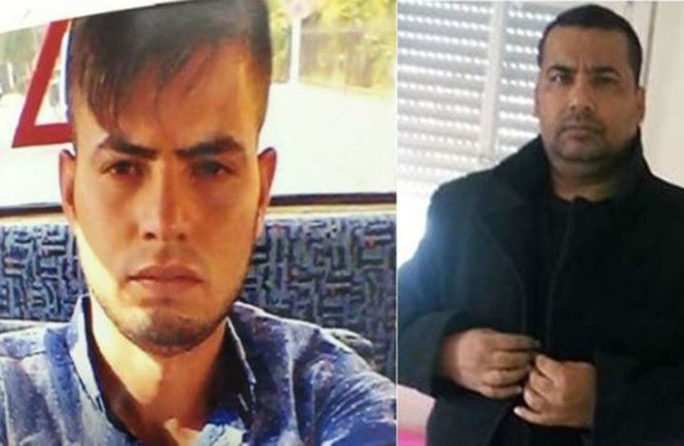
The parents of George Low, the British man who was stabbed to death in Ayia Napa in 2016, on Friday said that they have “more hope” of achieving justice for their son after the circumstances of the case was debated in the British House of Commons earlier this week.
Helen and Martyn Low described the parliament debate as “emotional”, while Martyn Low also said that it was “very encouraging”, and said of British parliamentary undersecretary of state for foreign affairs Uma Kumaran that “it seems as if she wants to take things forward”.
George Low was stabbed during the August of 2016, and the two men who were suspected of being involved in the murder, Sali Ahmet and Mehmet Akpinar, were both arrested by the Turkish Cypriot police later that month after travelling to Nicosia and climbing up the city walls on Markos Drakos street.
Police officer Ayhan Ozogul then told the Turkish Cypriot Nicosia district court that both men had confessed to the murder.
However, then Turkish Cypriot leader Mustafa Akinci’s undersecretary Gurdal Hudaoglu told newspaper Yeniduzen at the time that the Republic of Cyprus’ authorities never officially notified the Turkish Cypriot authorities of the incident or that it believed the pair had crossed to the north after committing the murder.
As such, the Turkish Cypriot authorities could only prosecute them for illegally crossing the Green Line, and they were both eventually deported in June 2017.
Akpinar then returned to Cyprus in July 2017, this time via the new port of Kyrenia, and was once again convicted of doing so without the permission of the Turkish Cypriot authorities, and deported for a second time.
More recently, an attempt was made in Turkey’s Hatay province to prosecute Akpinar for the murder, with it believed that he was the one who stabbed Low, but the case was eventually dropped.
The Republic of Turkey’s authorities’ position appears to be that the case cannot proceed without evidence being handed over by the Republic of Cyprus, while the Republic of Cyprus maintains that it cannot hand evidence over to a state with which it does not maintain diplomatic relations.
UK ‘actively engaged’ in case
In the House of Commons earlier this week, Kumaran said that “while responsibility for the investigation lies with the Cypriot authorities, the UK government has remained actively engaged on this case throughout”.
She said that the case “remains open” in the Republic of Cyprus, and that “throughout this time, the British high commission in Nicosia and consular officials have pushed for progress with the investigation and prosecution of the suspects”.
She added that in 2024, British high commissioner of the day Irfan Siddiq had “asked the Cypriot authorities … to consider transferring the case to Turkey so that Turkish authorities could explore a prosecution” and that “this year, further representations were made in support of that request”.
“Frustratingly, the Cypriot authorities decided not to pursue that option. They believed that it would be difficult for Cypriot officials to provide the evidence and testimony needed to support the case in the Turkish court,” she said.
She went on to say that the UK has “lobbied Cyprus to transfer the case to Turkish jurisdiction” but lamented that “the Cypriot authorities have told us they are not in a position to do that as a result of jurisdictional issues between the two countries”.
“Looking ahead, the Cypriot authorities have confirmed that international arrest warrants remain in place and that they are ready to move forward if either suspect is detained, whether in Turkey or elsewhere. We will continue to press Turkey to take action,” she said.



Click here to change your cookie preferences