
Cyprus and Greece reaffirm shared maritime strategy at shipowners’ dinner
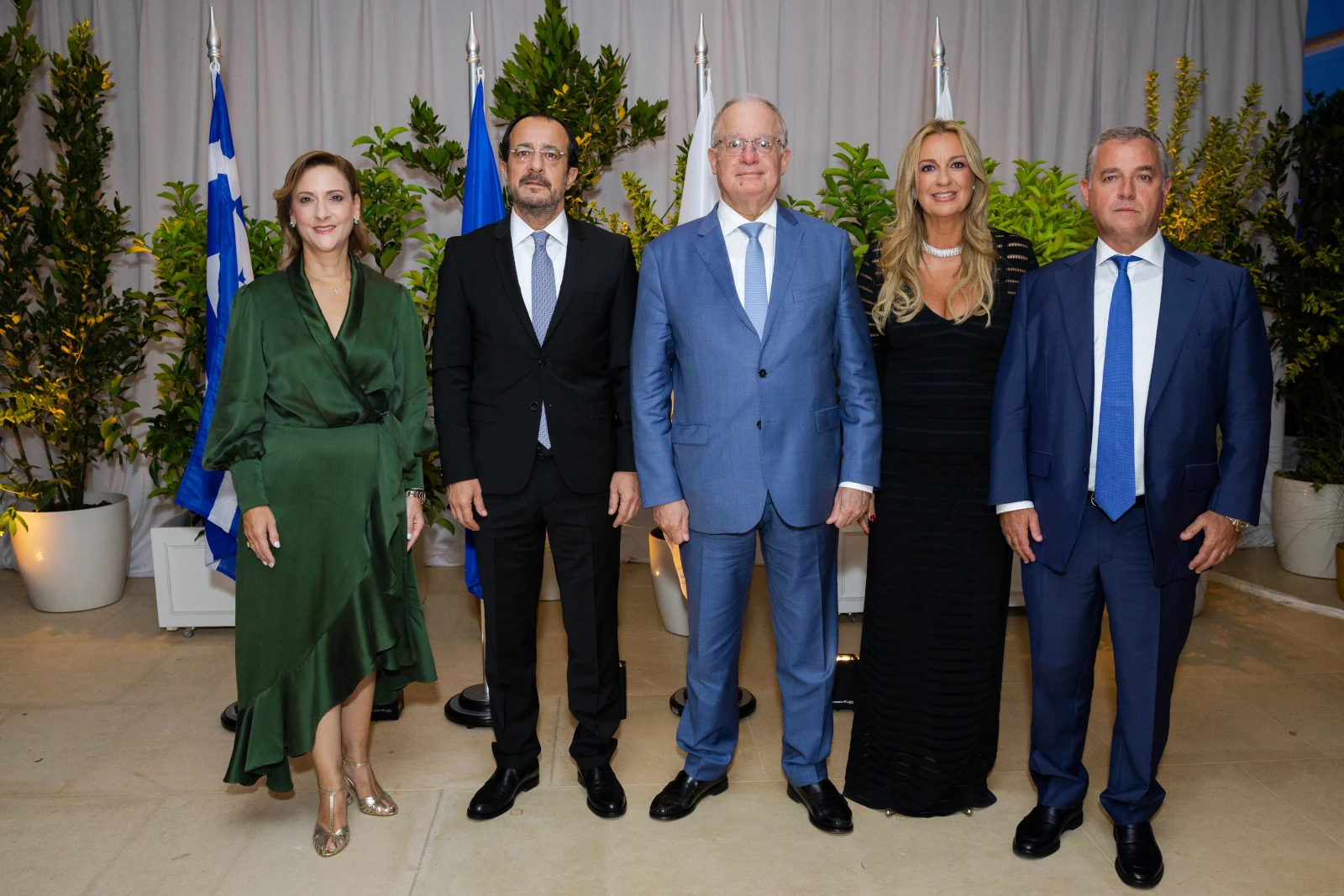
Cyprus and Greece reaffirmed their shared maritime priorities at a dinner hosted by the Cyprus Union of Shipowners (CUS) in honour of President Nikos Christodoulides in Athens on September 18.
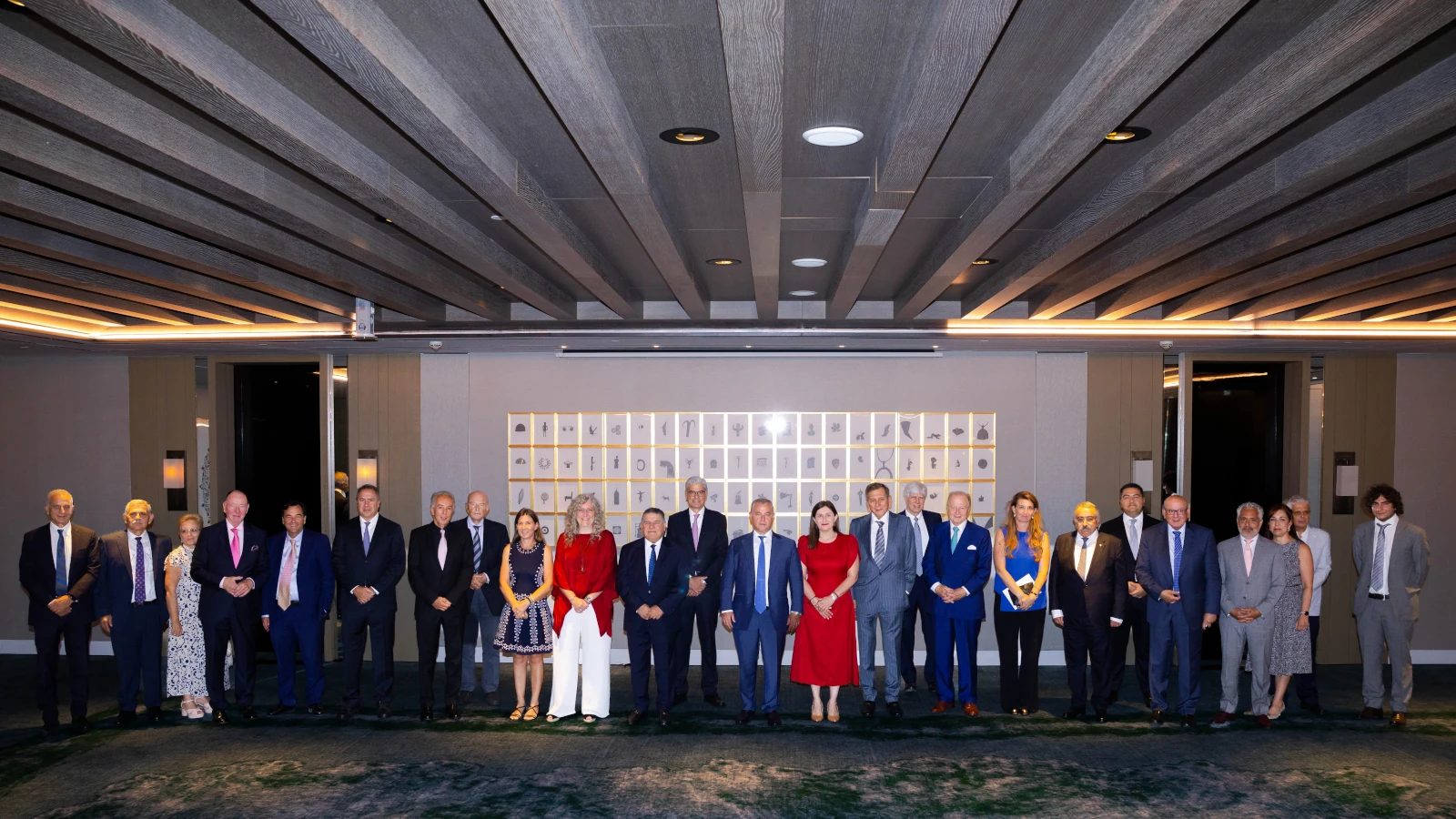
The dinner was held at the Four Seasons Astir Palace Hotel on the occasion of the CUS annual general meeting and brought together senior political and government figures from both countries, as well as European officials, diplomats and prominent shipowners.
President of the Hellenic Republic Constantine A. Tassoulas attended alongside Greek government vice-president Kostis Hatzidakis, Cyprus Foreign Minister Constantinos Kombos, Shipping Deputy Minister Marina Hadjimanolis and government spokesman Konstantinos Letymbiotis.
European representatives included Commissioner for Sustainable Transport and Tourism Apostolos Tzitzikostas and MEP Elisavet Vozemberg-Vrionidi, while ambassadors from Greece and Cyprus and US Ambassador to Greece Kimberly Guilfoyle were also present.
Opening the dinner, CUS president Polys V. Hajioannou stressed the strategic importance of Greek and Cypriot shipping, describing the two countries as central to Europe’s maritime strength and to the protection of free navigation worldwide.
“Ships and their crews safeguard energy security and the supply of global economies on a daily basis,” Hajioannou said, while warning that European shipping was facing a disproportionate regulatory burden from measures including the EU Emissions Trading System (ETS) and FuelEU Maritime, particularly for small and medium-sized enterprises.
He called for a level playing field and a green transition based on mature technology and genuinely available fuels, while also pointing to the steady growth of the Cyprus flag and the longstanding support provided by Greek shipowners.
Hajioannou said the unity of Greece and Cyprus and their shared maritime vision provided the basis for a pioneering, resilient and forward-looking shipping sector capable of responding to technological and geopolitical challenges.
Tassoulas subsequently underlined the same spirit of unity and strategic alignment between the two countries, praising the historic role of shipping as a pillar of economic strength and international influence for both Greece and Cyprus.
“Free and safe navigation is a cornerstone of global stability,” Tassoulas said, stressing that heightened geopolitical tensions had increased the responsibility of both countries to protect the uninterrupted operation of global supply chains and uphold the principles of open seas.
On the green and digital transition of European shipping, Tassoulas said Greece and Cyprus needed to maintain a strong and coordinated voice within European institutions.
“Greece and Cyprus must maintain a strong and coordinated voice within European institutions, so that the transition remains competitive, technologically mature and aligned with the real needs of the sector,” he said.
Tassoulas also reiterated Greece’s support for a solution to the Cyprus issue based on United Nations resolutions and the European acquis, linking stability in the Eastern Mediterranean to maritime security and the prosperity of both countries.
Christodoulides, for his part, described shipping as a central component of Cyprus’ economy and international standing.
“Shipping is a fundamental pillar of the Cypriot economy and a key element of the country’s international identity,” Christodoulides said.
He thanked the CUS for its longstanding contribution to strengthening the Cyprus Registry and highlighted cooperation between Cyprus, Greece and other EU member states on maritime security.
“Cyprus works closely with Greece and other EU member states to ensure the security of international navigation,” he said.
Christodoulides also addressed the main structural challenges facing shipping, including decarbonisation, digitalisation, technological development and shortages of human capital.
“Every new measure must be realistic, proportionate and globally applicable,” he said, referring to the need for regulatory measures to reflect the practical conditions facing the industry.
He also highlighted the positive trajectory of the Cypriot economy and the achievements of the country’s shipping sector, including the continued growth of the Cyprus Registry and Cyprus’ increased presence at the International Maritime Organisation (IMO).
“The close cooperation between Greece and Cyprus in the maritime sector remains a constant point of reference, grounded in trust, coordination and a shared commitment to a strong and competitive maritime future,” Christodoulides said.
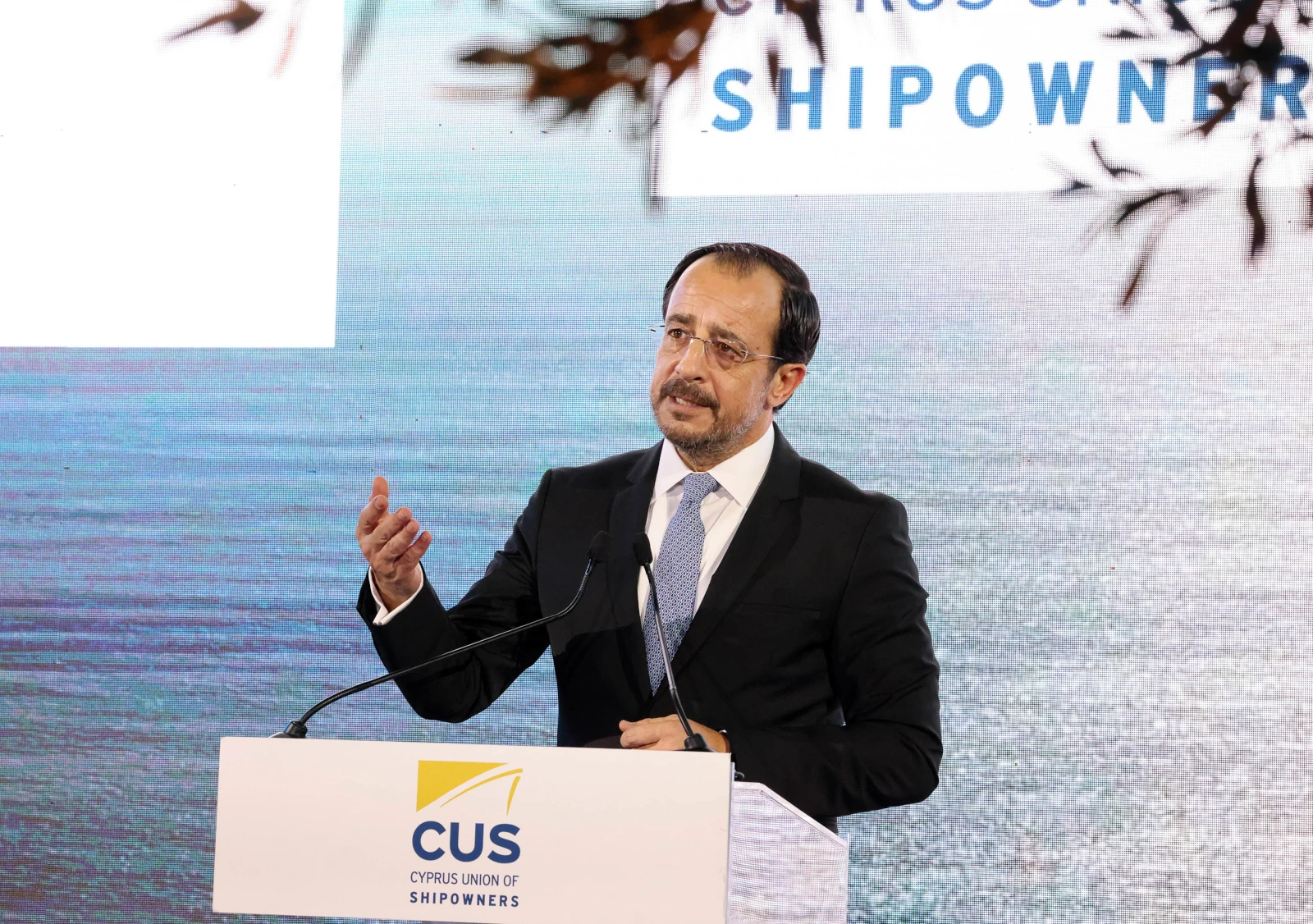
He described shipping as a strategic asset for both countries, adding that their joint approach to a rapidly changing international environment was essential to maintaining their international standing and strengthening Europe’s maritime presence.
The event concluded with an emphasis on shipping as a shared strategic asset for Greece and Cyprus, with the union highlighting unity and mutual appreciation between the two countries.
The CUS said continued bilateral cooperation, combined with the strong presence of shipowners and their commitment to a modern, safe and globally competitive maritime sector, provided a solid foundation for the industry’s future.
The union added that it would continue working to support the shared maritime priorities of Greece and Cyprus as the international environment evolves.
The dinner was attended by prominent shipowners including Angelakos, Coustas, Daifa, Dragnis, Efstathiou, Fafalios, Goumas, Hadjiyiannis, Hajioannou, Inglessis, Kanellakis, Klerides, Koch, Kollakis, and Laskaridis.
Other shipowners in attendance included Martinos, Melisanidis, Moundreas, Mouskas, Mylona, Paliou, Panagiotidis, Panagopoulos, Patitsas, Pittas, Procopiou, Saracakis, Souravlas, Stafylopatis, Stengos, Theocharakis, Tsatsakis, Tsavliris, Vafeias and Xylas, among others.





Click here to change your cookie preferences