
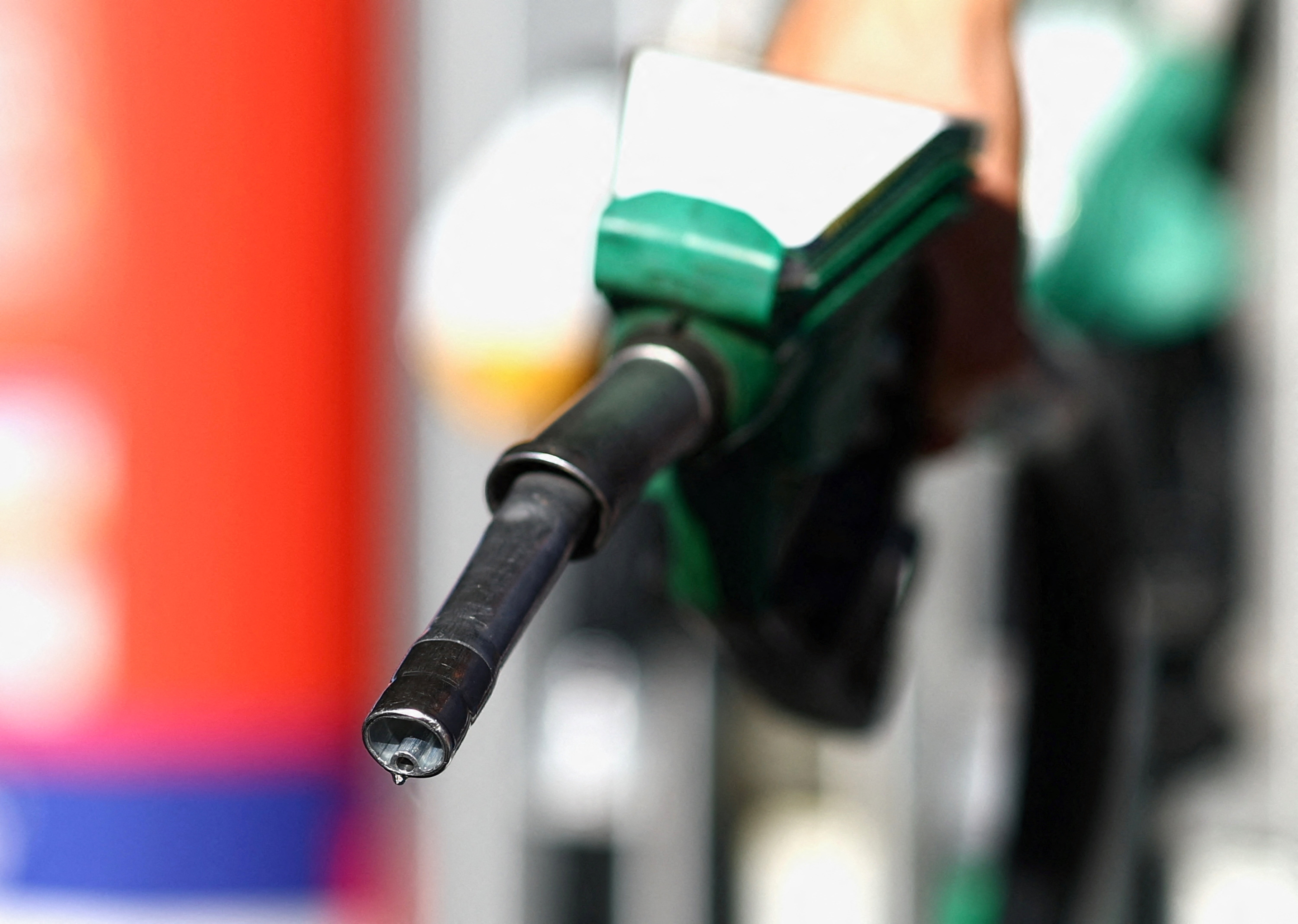
High prices at pump to persist into next year
Finance Minister Makis Keravnos on Tuesday cautioned against “alarmism” regarding rising fuel prices, while an energy expert predicted that high prices at the pump would persist until mid-2027.
Speaking on a television show, the minister said the government is monitoring the situation and is currently devising additional support/relief measures.
He said the support measures would be discussed at the meeting of the cabinet scheduled for September 30.
Once the measures are decided, they would be announced.
Keravnos opined that Cyprus “fares much better than any other country in the European Union”.
Despite the price hikes, which are global, Cyprus ranks as the fifth cheapest EU country in terms of petrol.
His assertion is largely borne out by data published by the European Commission. In the latest weekly oil bulletin (September 17), in Cyprus Unleaded 95 petrol went for €1.649 retail on average, compared to the €2.063 average across the EU-27. Diesel in Cyprus sold for €1.915 on average, compared to €2.158 across the EU-27.
Steeply rising prices
However, Eurostat data on Tuesday showed that Cyprus recorded one of the EU’s sharpest monthly increases in petrol prices in August, while fuel costs across the bloc continued to climb sharply on an annual basis.
Petrol prices in Cyprus rose 6.2 per cent between July and August, the fourth highest in the bloc.
At the same time, retail prices (taxes included) have spiked in the seven months since the outbreak of war in the Persian Gulf. On March 5, days after the start of the war, Unleaded 95 in Cyprus went for €1.318; on September 22 it averaged at €1.695.
Recently the government extended a discounted fuel consumption tax on petrol and diesel until the end of November.
Weighing into the topic, an energy expert forecast that steep fuel prices – mainly diesel and jet fuel – will remain until about the middle of next year.
Charles Ellinas said he anticipated that diesel would jump to beyond €2.20 a litre over the next couple of months.
Other than prices, the expert also alluded to potential supply shortages creeping in.
“We should expect problems, and be ready to deal with them for some time,” he told the Cyprus News Agency.
“Although the price of Brent is not very high today, having dropped under $100, the supply of diesel and petroleum products is facing a squeeze, even more so jet fuel, where in some countries, like the United States, they’re beginning to worry about having to ground airliners.”
Jet fuel prices show highest rises
According to Ellinas, diesel and jet fuel prices are more than double higher than Brent.
“And they will continue to rise, because unfortunately these problems cannot be solved today or tomorrow.”
High fuel prices have a knock-on effect on other commodities, such as food – due to more expensive transport.
“There is a chain-reaction effect on the economy, and sadly there is no easy way out, this is a problem for the whole world due to the war in Iran and Ukraine, and we’re now at a point where quick fixes are no longer available.”
Ellinas referred to Ukrainian strikes on Russian oil refineries, which he said contribute to rising fuel prices.
But an analysis by Larry Johnson, a former CIA intelligence analyst, shows that exports of Russian crude in fact account for just half a per cent of total global daily consumption of diesel and gasoil.
Johnson pointed out that the world burns roughly 28 million barrels of diesel and gasoil every single day. But currently Russia ships about 150,000 barrels a day.
In his analysis, Johnson makes the distinction between finished products (refined oil) and feedstock.





Click here to change your cookie preferences