
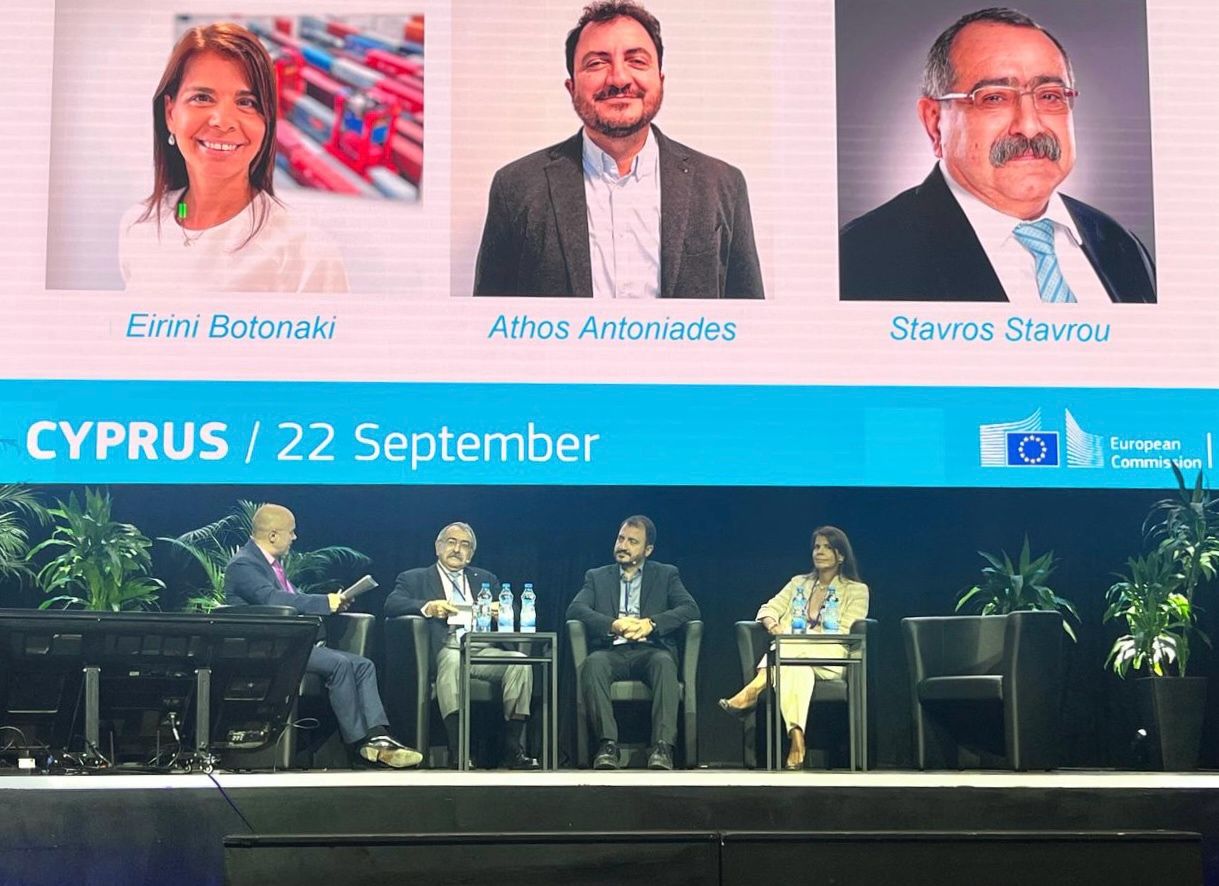
Cyprus businesses need easier access to European funding if EU initiatives are to translate into investment and growth, Cyprus Chamber of Commerce and Industry (Keve) president Stavros Stavrou said at EU Finance Day 2026 in Nicosia.
Speaking during a discussion on the EU strategy for financing business innovation and growth, Stavrou said the next generation of European funding should go beyond financing the creation of new ideas and place greater emphasis on helping businesses adopt, commercialise and scale innovation.
The discussion formed part of EU Finance Day 2026, held on September 22, bringing together European officials, lenders, investors and businesses to examine how access to finance can be improved as the EU seeks to strengthen competitiveness.
The wider speaker line-up reflected that mix. It included Eike Klapper, deputy head of unit for access to finance at the European Commission’s DG GROW, Aimilia Pistrika, head of the European Investment Bank Group office in Cyprus, and Eirini Botonaki, the EIB’s senior loan officer and global relationship manager for the banking sector in Greece and Cyprus.
Private-sector and investment perspectives came from Andreas Papadopoulos, head of commercial banking at Eurobank, Maria Markidou Georgiadou, founder and managing director of Cyprus Seeds, and Demetrios Zoppos, co-founder and partner at Cyprus venture capital fund 33East.
The programme also included Kyriacos Kakouris, adviser to the finance minister and former EIB vice-president, alongside representatives from the wider business and investment community.
Stavrou placed particular emphasis on very small businesses, arguing that new European financing arrangements must work for companies that do not have large teams or specialised departments dedicated to navigating EU programmes.
That is particularly relevant in Cyprus, where the business base is overwhelmingly made up of small firms. According to the latest full-year figures from the statistical service (Cystat), 94.8 per cent of Cyprus enterprises employed fewer than 10 people in 2023, while only 0.1 per cent employed 250 people or more.
Simplifying access, therefore, was as important as making finance available, Stavrou said, with businesses needing clearer routes towards the programmes and instruments that best match their investment plans.
Existing support structures could play a larger role in bridging that gap, he added, pointing to the Enterprise Europe Network, which advises businesses on financing, innovation, international expansion and participation in EU programmes.
In Cyprus, Keve coordinates the local Enterprise Europe Network consortium alongside the Research and Innovation Foundation, the European Office of Cyprus and the Cyprus Energy Agency. The network also provides companies with support in identifying suitable sources of finance and improving their readiness for investment.
Attention at the Nicosia event also turned to the proposed European Competitiveness Fund, one of the main elements of the EU’s next long-term budget for 2028-2034.
The European Commission originally proposed a €409 billion fund, designed to bring several financing streams under a single framework and application gateway. Its scope covers the clean transition and industrial decarbonisation, digital technologies, health and biotechnology, as well as security, defence and space.
The fund has since moved further through the EU legislative process. The Council adopted its partial negotiating position in June, including provisions for dedicated SME calls and closer links between EU financing advice and business-support networks. However, the fund’s final budget has not yet been agreed, as financial questions remain part of the wider negotiations over the EU’s 2028-2034 budget.
The Commission wants the fund to support projects across a broader part of their development cycle, from research and innovation through to commercial deployment, scale-up and manufacturing.
The chamber said it would continue working to ensure European financing opportunities translate into business growth, competitiveness and resilience in Cyprus.





Click here to change your cookie preferences