
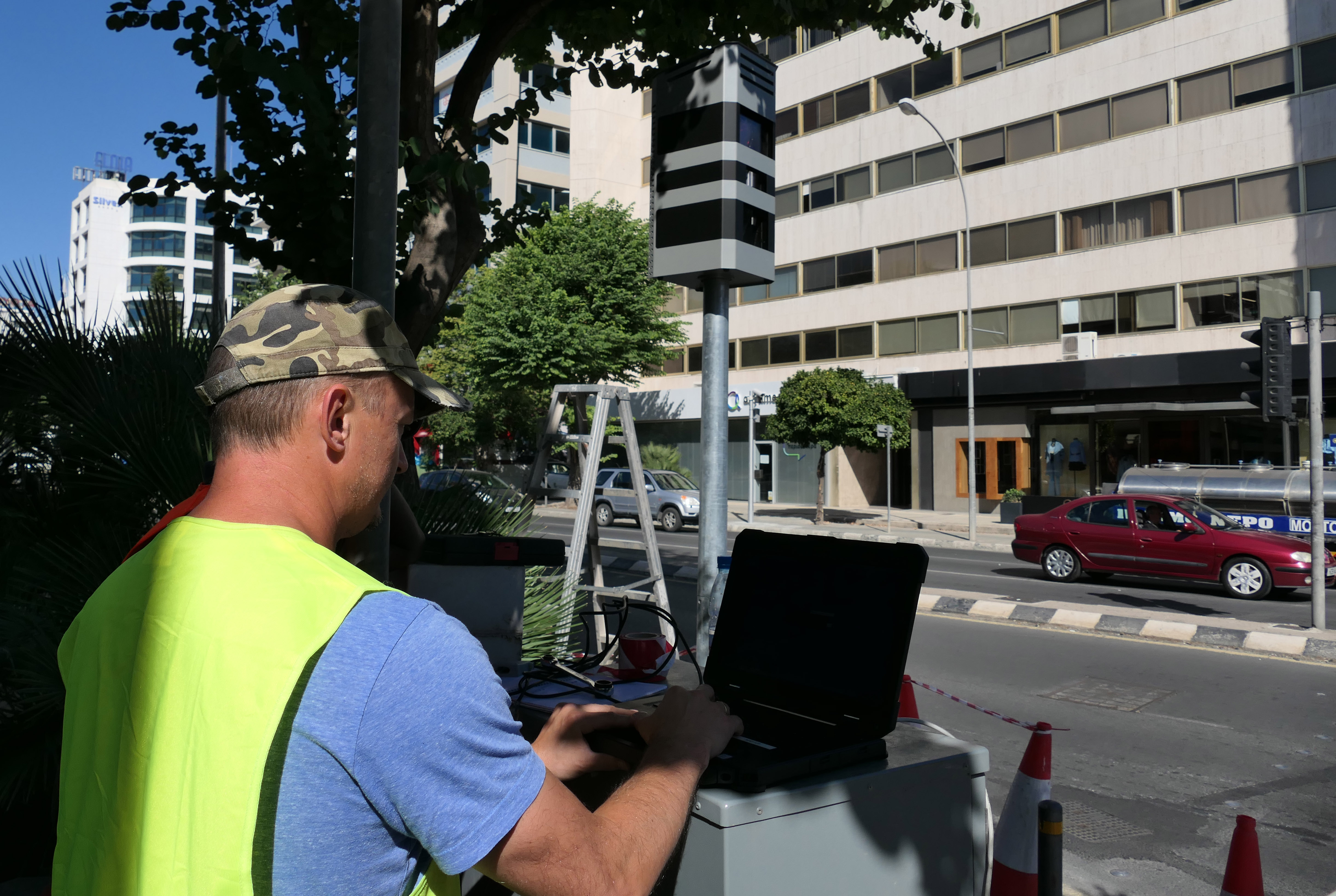
MPs said no on Monday to the release of €146,000 to upgrade traffic camera systems and to the photo radar list, which would enable authorities to collect outstanding fines at crossing points, stressing that the demands were “just aspirin to a larger problem”.
The House finance committee demanded information on the system, the legal basis for procedures and the number of out-of-court fines issued.
Speaking on behalf of the electromechanical services, Achilleas Pilias told MPs that the existing contractor needed to modify the system and link it to the police, pending a Law Office go-ahead.
Pilias said the system had been operating in a test environment and had thus not been in full operation.
Replying to a question by Akel MP Aristos Damianou if linking the systems had been approved by the data protection commissioner, Pilias said the approval had been obtained in 2022 when the contract came into force.
Damianou argued that serving fines at crossing points was “illegal” and would also turn them into “hard borders”.
A police representative explained that checking identification documents at crossing points was legal and that those served with a fine would have 90 days to pay it.
Akel MP Andreas Pasiourtides said this change essentially aimed at cutting costs for the contactor and wondered why it was necessary for the contractor to have access to data.
A representative for the contractor explained that the vehicle’s registration number needed to be sent to the police, so that it could be stopped at the crossing point, and admitted that the initial contract did not provide for two-way communication between the two systems.
Fine collector not accident preventor
Elam MP Marios Pelekanos said the traffic camera system functioned more as a mechanism to collect fines than to prevent accidents, and announced his party would not support the release of the requested funds.
According to Alma president Odysseas Michaelides, the amendment under discussion should have taken a different course, as the authorities were now “coming to legalise an illegality”.
Direct Democracy MP Yiannis Laouris questioned the funds requested, saying the amount was proportionally large for the task.
Referring to the crossing points, the police representative said this could be implemented for all vehicles, including those with Turkish Cypriot number plates, since data collection was required when passing through the crossing points.
The contractor said the proposed change required more than just a software update and needed inter alia access to information and operational procedures, as well as a call centre to be set up.
Speaking after the meeting, committee chairman Diko MP Chrysis Pantelides said the committee unanimously rejected – for a second time – the funds requested and the fine delivery system proposed for crossing points.
Impressively large
Pantelides said the MPs had not been convinced of the necessity of the funds and changes, adding that the number of undelivered fines was “impressively large”.
“Until we are convinced that the executive power understands this problem or until it brings a legislative solution for this problem, we are unwilling to continuously release funds which are just aspirin to a larger problem,” he said.
Disy MP Fotini Tsiridou said there were approximately 180,000 undelivered fines and pointed out that the government should table an amendment modernising the system for serving fines.
Akel’s Damianou said that the committee would “under no circumstances release even €1 for procedures that are outside the letter of the law”.





Click here to change your cookie preferences