
The University of Cyprus’ Irish Studies Collective is bringing together poetry, theatre, language and questions of identity to explore connections between two islands with very different histories
The deep connections between the islands of Ireland and Cyprus are being marked by the University of Cyprus’ Irish Studies Collective through a series of international collaborations, literary events and talks, aiming to look beyond standard literary critique.
Launched in 2025 within UCy’s Department of English Studies, the Collective has a close partnership with the Embassy of Ireland. As part of the European Federation of Associations and Centres of Irish Studies (EFACIS) network comprising more than 50 universities, the hub serves as an Eastern Mediterranean focal point for Irish culture. Its core research area includes modern literature and cultural memory.
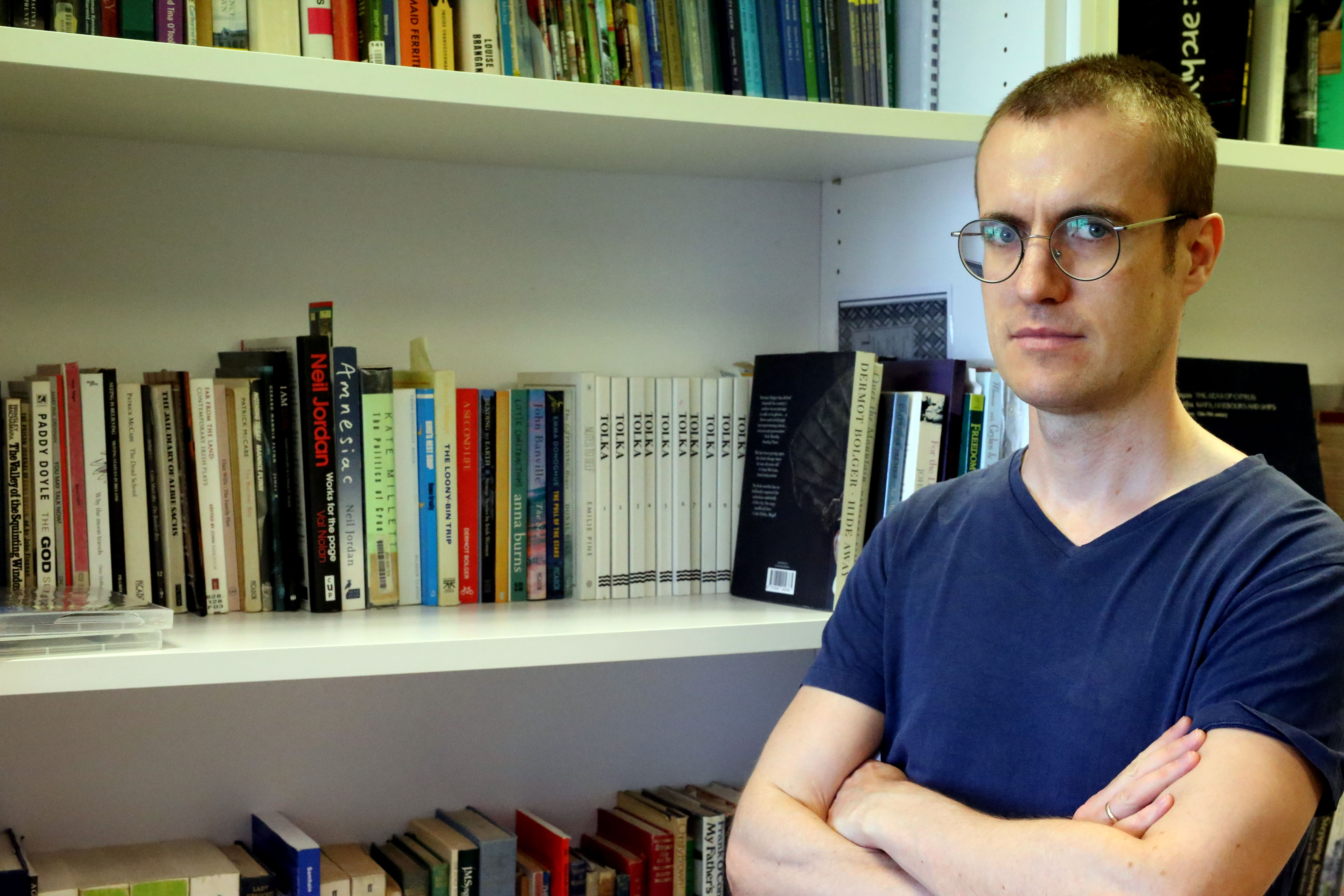
Assistant Professor in Drama, Theatre and Performance Dr James Little serves as the centre’s founding director. The 40-year-old Irish academic arrived in Cyprus with his partner in 2024, having previously worked at University College Dublin (UCD) on a research project about the cultural history of confinement in Ireland.
Confinement, conflict, migration, displacement – not words usually associated with such a venerable institution as the English Department where, at least in the opinion of some, students should rather focus on reading Jane Austen or Henry Fielding.
Even if I look at James Little through the prism of his expertise on Beckett, I would not expect so much of his work to be so highly contemporary and politicised.
Is this, I wonder aloud, what is happening nowadays throughtout the hallowed chambers of the world of academia?
James responds with a slight nod of his head.
“Well, a lot of the work that is happening in the department deals with issues that are really important in contemporary society,” he says, citing last month’s event organised by the Collective, the Seamus Heaney poetry reading, both in English and, as translated by department alumna Thea Paraskeva, in Cypriot Greek.
The translated poems by the celebrated Irish Nobel Prize laureate of 1995, were selected from Heaney’s first major published volume Death of a Naturalist, a collection drawing upon childhood experiences and the formulation of adult identities, family relationships, and the rhythms of rural life.
“This is a good example of what we are trying to do – drawing parallels between the two places,” Little says. “But it doesn’t happen in a programmatic way. We are not sitting and thinking what the major themes should be and how to put them together. It draws on what’s already happening…”
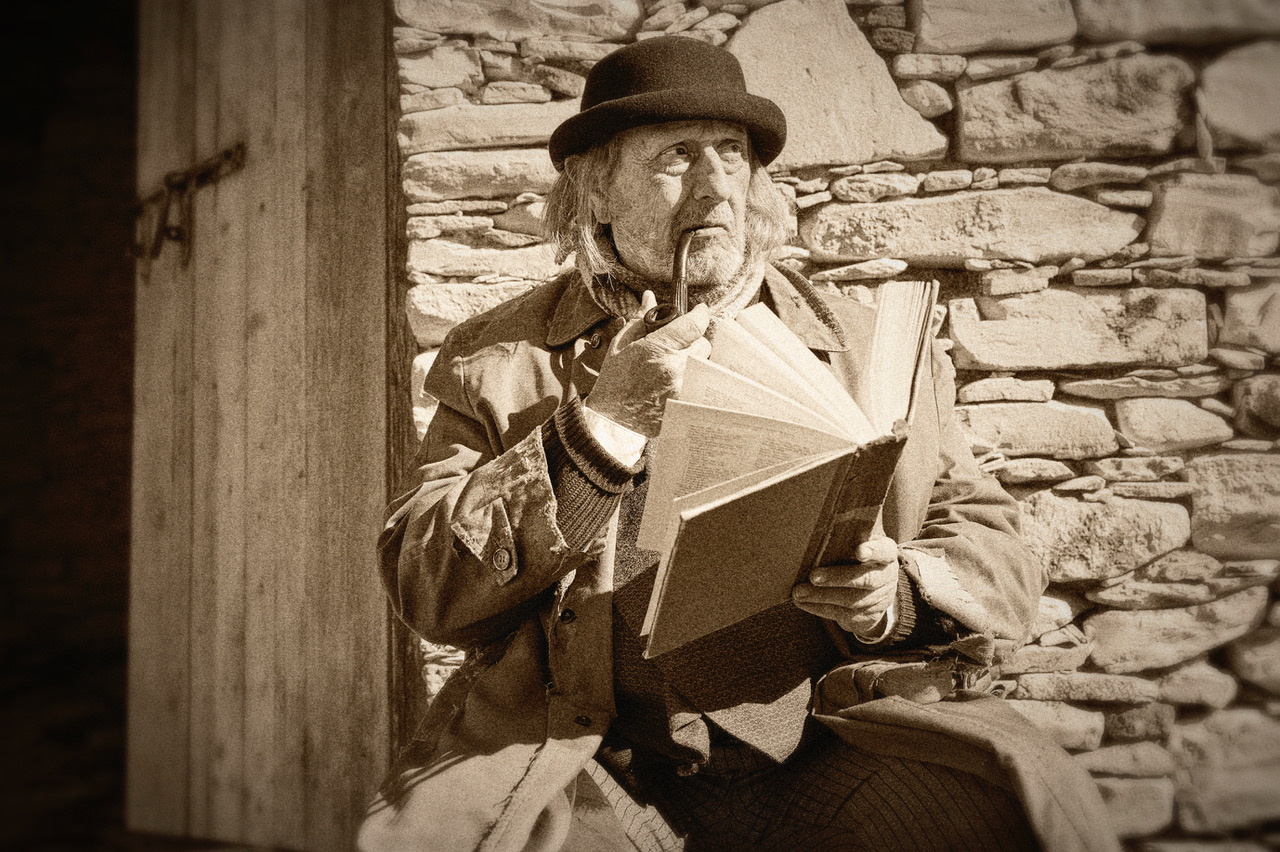
He explains how Paraskeva, having started working on Heaney’s poems in the translation class run by his colleague Vasso Giannakopoulou, after graduation and going on to do her MA in Edinburgh, opted to continue her own form of “digging”.
“And this was really very interesting because the poems from Death of a Naturalist use very specific farming words so as Thea was translating them into Cypriot Greek she had to interview her grandfather who was a farmer in order to get the right terms. And we are very lucky to also have Spyros Armostis, an expert in Cypriot Greek in the department so he could help with that process. And Cypriot Greek, as you know, is a linguistic phenomenon that’s really, really important not just in terms of Cyprus but more broadly in linguistics… so this event happened because Thea translated the poems and we talked to the Irish embassy and it was obvious that it should be a public event and that people would be interested in it and they were.”
From Seamus Heaney to Brian Friel
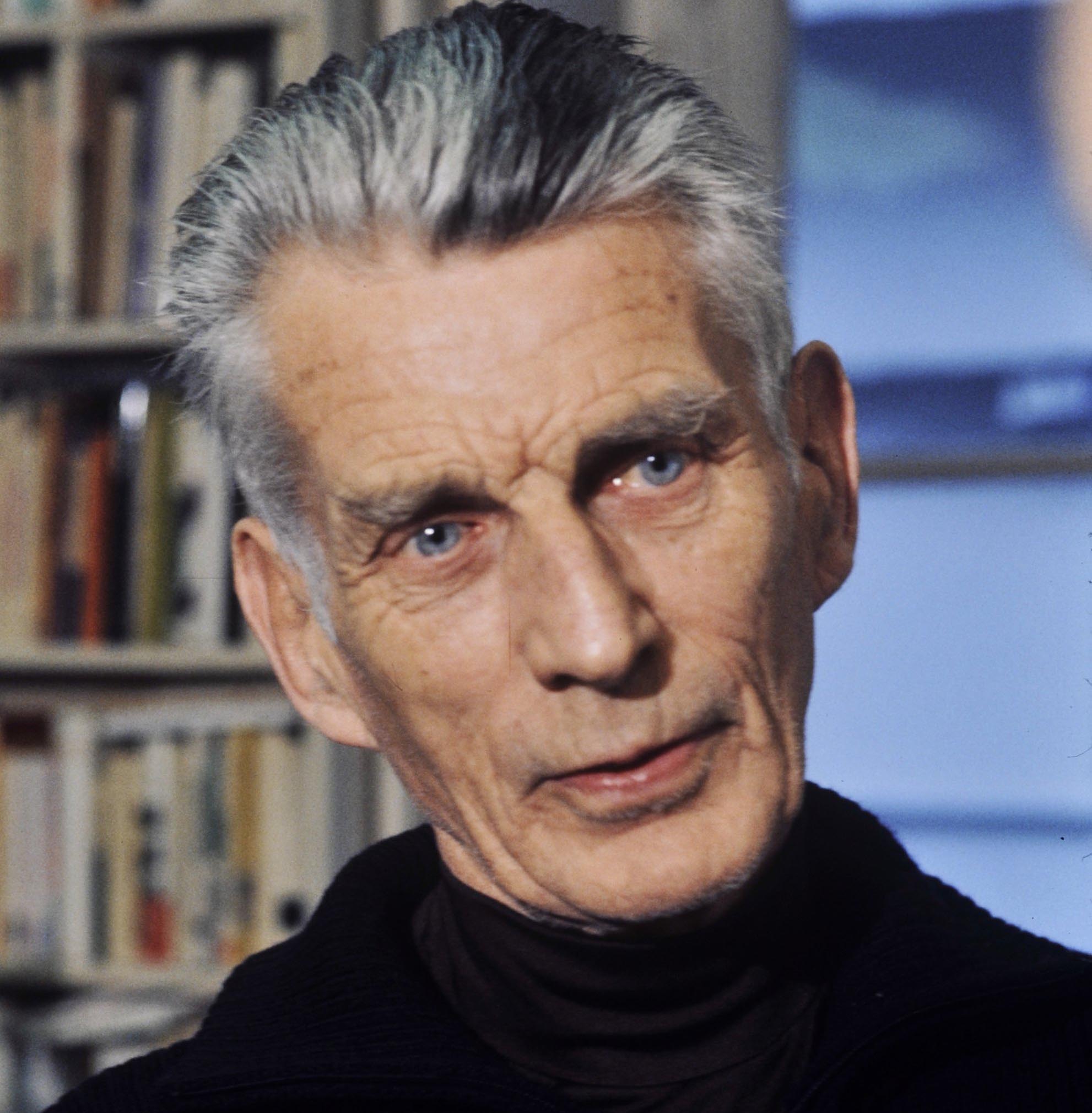
Little is also the author of two highly acclaimed monographs on the Irish writer, playwright, novelist, and poet Samuel Beckett (left) , who was awarded the Nobel Prize in Literature in 1969 – The Making of Samuel Beckett’s Not I / Pas moi, That Time / Cette fois and Footfalls and Samuel Beckett in Confinement: The Politics of Closed Space. In the complex world of academia, Little’s monographs earned him a deserved status as a recognised Beckett scholar.
The walls of his office at UCy in one of the nondescript buildings in Klimentios Street, close to Nicosia’s Venetian Walls, are covered in small posters that map the history of events co-organised by the Irish Studies Collective since its inception.
The most recent, entitled Digging into Languages: Seamus Heaney in Cypriot Greek, took place at the Centre of Visual Arts and Research in Ermou Street some weeks ago. The next, planned for late October and still without a poster, will involve one of Nicosia’s most beloved cultural landmarks, the Moufflon Bookshop, which, with the support of the Irish Embassy, is donating a collection of Irish-themed books to the UCy Library.
Other examples of the Collective’s intellectual engagement in the island’s creative world include lectures and workshops accompanying the Cyprus Theatre Organisation (Thoc’s) bi-lingual production last April of Brian Friel’s 1980 play Translations, in which parallels between 19th-century Ireland and colonised/partitioned Cyprus were explored within the thematic context of how a foreign military presence can impact language and identity; a double lecture and poetry reading entitled Small States and Partition on the similarities between Cyprus, Ireland and Palestine held at the Home of Cooperation; and a lecture on Beckett’s creative process entitled The Making of Murphy: How Samuel Beckett Read, Wrote, Doodled and Revised that took place at the UCy Amphitheatre.
The hub has also hosted events such as Reflecting Asylum: A Conversation between Vukašin Nedeljković and Efi Savvides, which brought together two artists working on displacement, migration, and the (mis)treatment of refugees on opposite edges of the European continent, as well as a Workshop on Performing Conflicted Histories — Performing Painful Pasts which featured multidisciplinary artist and researcher Helen Kirwan, actress and sociologist Marina Maleni and intercultural performance scholar Dr Pedzisai Maedza.
Beyond the ivory tower
It is clear that Little is a firm proponent of the spirit of academic freedom of inquiry, and the kind of research and teaching that reaches beyond the proverbial ivory tower and touches base with the practicalities, struggles and realities of everyday life.
“I think that the really important and great thing about a university and a department like this is that we are the ones who try to identify the questions that need to be asked and then try to find a way of answering them.
“I have colleagues working in the Department of Architecture who are experts on new forms of migration control and detention, and I have colleagues doing equally important work on historical topics, whether it’s literary theory, history or psychoanalysis.”
Reading Beckett through confinement
As an example of how such a diversity in approach can contribute to a more complete understanding not only of the past but also the present, Little cites one of his own favourite subjects – Samuel Beckett.
“For very many years people looked at Beckett as this existentialist writer who writes in the void. But he had a very specific approach to closed space. He had experienced the Second World War in France as a part of the Resistance. Friends had been killed in concentration camps by the Germans. He had a very particular way in which he represented prisons and prisoners in his writing. He used confinement not only to critique institutions that were holding people, but also in a way to kind of structure his whole theatrical world. Most of his characters are stuck in a bin or a mound or a box or they can’t leave the stage. That’s why I titled my first book Samuel Beckett in Confinement because he kind of took it in a very different direction to what other writers were doing and it required a whole PhD and a whole book to figure out what that thing was.”
From Ireland’s past to Europe’s present
Currently writing an all-inclusive cultural history of incarceration in Ireland, Little is fascinated by how people who themselves once suffered at the hands of others can be prone to treating disadvantaged victims of not dissimilar circumstances to similar fate.
The inspiration for the book in progress stems from his own formative years, when, growing up in 1990s Ireland, he witnessed the country’s “biggest cultural change” before the EU’s expansion in 2004 and an “inward migration of a kind Ireland hadn’t seen for the past century.”
That change involved the Catholic Church, which, together with the state, had been involved “in running the Magdalene laundries and mother-and-child institutions from 1922 to 1996”. Later, in studying Irish literature, Little realised that “writers from the 20th century and even beforehand”, had been writing about such attitudes and practices way before it became the notorious story that was to featuree later in the news.
Elaborating, he notes how many ministers in Ireland’s newly democratically elected government after independence was gained from the British in 1922 who had themselves been in prison, later contributed to building on and maintaining the network of carceral institutions where women and their children would be kept out of sight.
“So my book tracks that change in carceral memory from the veneration of particular heroes in the national story and then how that begins to be challenged by writers like Brendan Behan or Mairead Ní Grada and many many others. because they bring forward the stories of people who are locked up for reasons that people don’t want to talk about like having a child without being married or just being an attractive woman or being deemed to be outside the strict social boundaries,” he says before concluding “and then the last part of the book focuses on the new systems of detention and incarceration that are being developed not only in Ireland but across Europe for people who are seeking asylum and protection.”
As it was said before – good academic research is not about being an echo chamber…



Click here to change your cookie preferences