

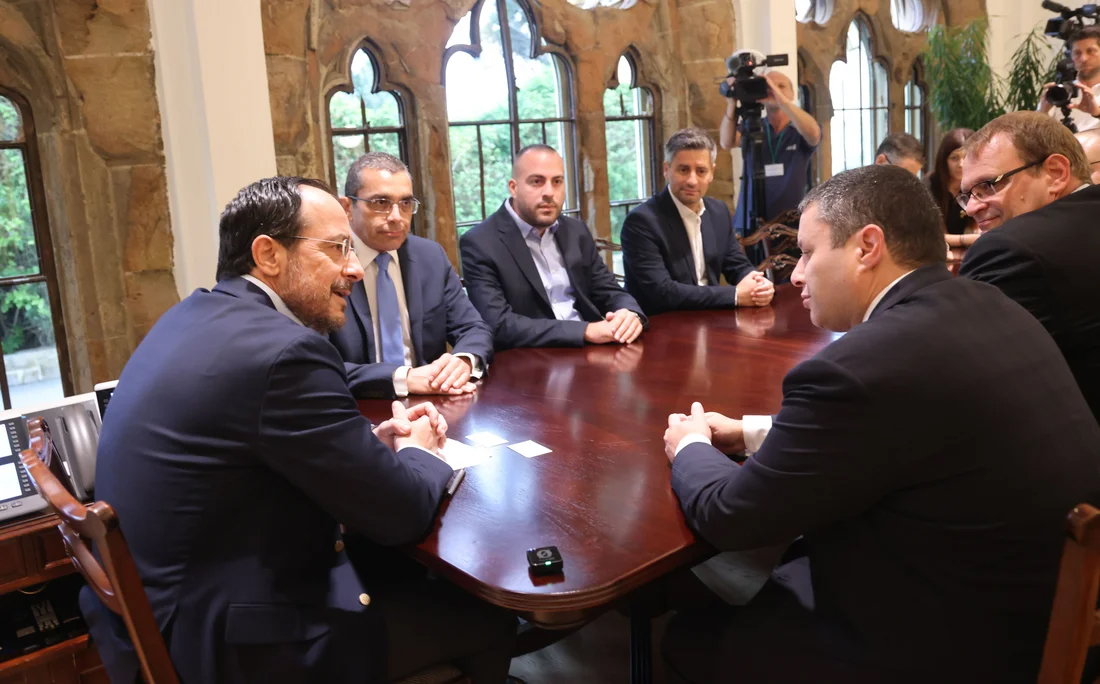
The overall picture regarding the provision of meals to conscripts serving in the National Guard is satisfactory, members of the House audit committee said on Thursday during a discussion of the Audit Office’s special report on the matter.
Presenting the report’s findings, Audit Office director Akis Kikas said that €10 million is allocated annually to feeding National Guard conscripts, describing the meals as satisfactory in terms of quantity and quality, as well as efforts to avoid waste.
“The Audit Office’s assessment is that the food is very satisfactory,” he said.
The audit included unannounced inspections and meal tastings at catering facilities and military kitchens, alongside a questionnaire distributed to 1,100 randomly selected conscripts across Cyprus.
Christina Stefanou, representing the treasury’s public procurement directorate, said catering was introduced on a pilot basis in Larnaca in 2018 and Nicosia in 2019, following a defence ministry tender.
Military kitchens purchase ingredients through a treasury framework agreement, with spending on raw materials amounting to €3.3 million.
Deputy defence ministry permanent secretary Stelios Kountouris described the overall findings as positive, saying several improvements had already been implemented or were underway.
He said an electronic ordering system had been introduced to reduce waste, with encouraging results, while individual dietary requirements were being taken into consideration.
Kountouris also confirmed that the recruitment of professional cooks was underway and had reached the evaluation stage.
A health ministry representative said menus had been prepared in cooperation with clinical dietitians.
National Guard inspector-general Andreas Charalambous welcomed the findings, describing the Audit Office’s observations as manageable and saying implementation of its recommendations had begun.
On food safety, Kountouris said laboratory inspections were conducted by the State General Laboratory and Veterinary Services, while ingredients were checked upon delivery and unsuitable products could be returned.
Concerns were also raised over catering contracts, which run for two years with an option to renew for another two, with suggestions that more frequent tenders could better reflect fluctuations in food prices.
The frequency of meat consumption was also questioned, with calls for dietitians to review whether serving meat up to nine times a week was nutritionally appropriate.
Committee chairman Zacharias Koulias said some minor difficulties had been identified but appeared likely to be resolved.
“I believe we are at a good level despite the findings of the report,” he said, adding that the National Guard was making a considerable effort to ensure soldiers were properly fed.
He also questioned the frequency of meat consumption.
Committee member Nikos Kettiros said considerable improvements had been made in recent years, but further examination was needed into the amount of food discarded daily and why soldiers were not eating it.
“If so much money is being spent, so many quality checks are being carried out, and some soldiers still continue to choose food from outside, this is something we need to address, not to punish the young people serving their country, but to find out why they are not eating the food,” he said.
He also called for the deployment of professional cooks to be reviewed, noting that some military kitchens operated without qualified staff while four professional cooks were assigned to officers’ clubs.


Click here to change your cookie preferences