
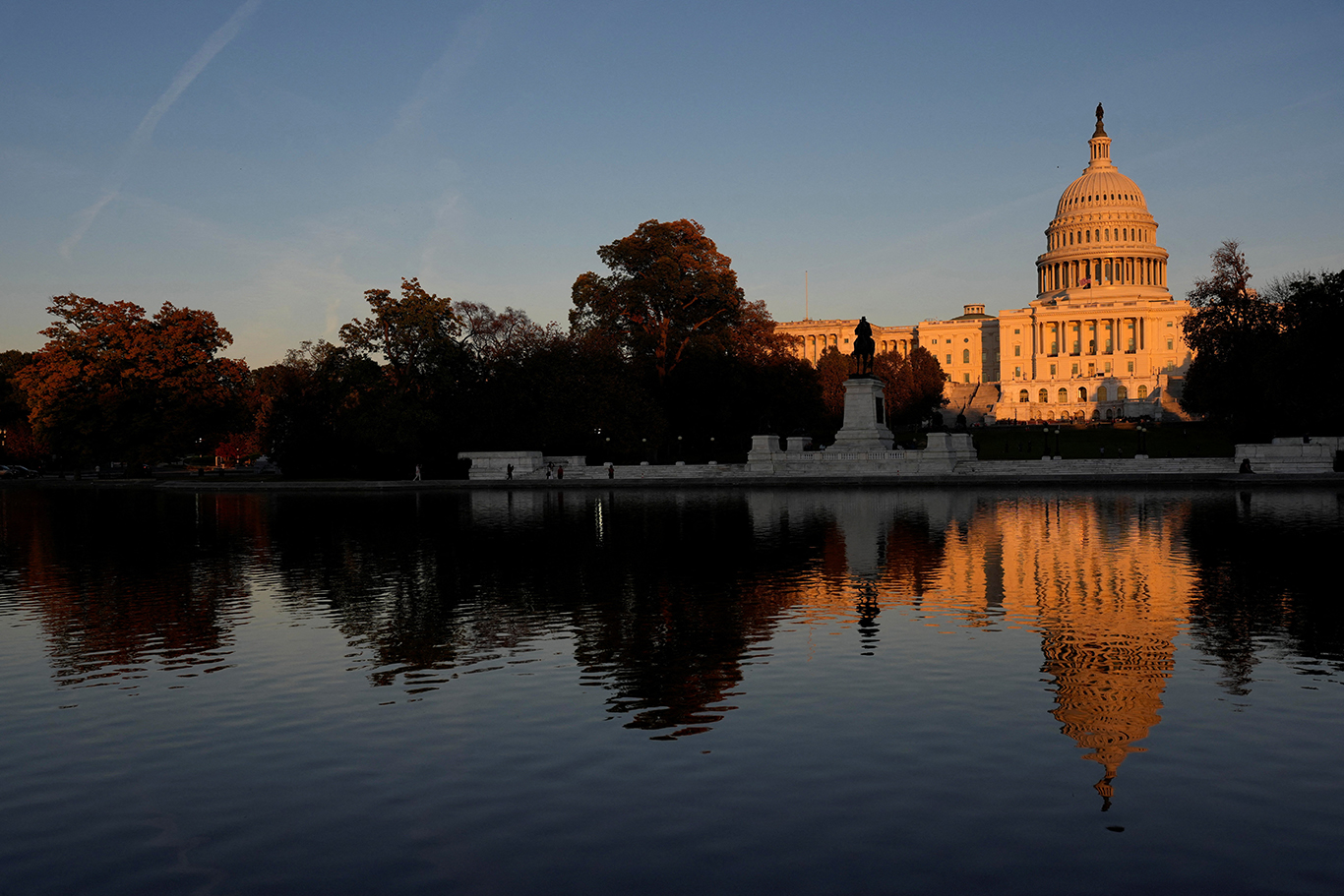
And so is the US electoral map
After the frenzy and speculation that engulfed so many people, including those well beyond America’s borders – if the coverage by Cypriot news agencies was anything to go by – Tuesday’s midterm elections delivered a resounding rebuke to Donald Trump.
On the eve of the election, the president spent much of a televised address discussing his renovation project at the Lincoln Memorial Reflecting Pool. After a lengthy and troubled process, the pool had finally been restored to pristine condition. Its colour was finally blue. It came, however, too late to save the president.
As if on cue, the following day a blue wave swept across the American electoral map, confounding pollsters once again, although this time they had underestimated the scale of the Democratic victory. The Democrats secured control of both the Senate and the House of Representatives, as well as winning most of the state governor contests.
The scale of the defeat was remarkable. It amounted to a comprehensive repudiation of Trump’s policies. As I wrote in my October 25 column in the Sunday Mail, the American public appeared finally to be awakening from its spell of loyalty to Trump. As a long-standing critic of the president, I found it refreshing to witness.
My fear that Trump might resort to unorthodox methods to undermine the result did not materialise.
“The Democrats did a good job,” he admitted in an interview with Fox News after the results became apparent. “I don’t like to consider it a defeat for me. I wasn’t on the ballot,” he claimed.
For someone who had campaigned vigorously over the previous month, urging voters to imagine that he was on the ballot when casting their votes, this was yet another example of his unwillingness to acknowledge that he might be fallible.
The electorate was not prepared to buy it this time. The Trump edifice appeared to be crumbling like a house of cards. Analysts everywhere are rushing to explain the reasons for the collapse, while Republicans are already searching for excuses.
Trump’s promised golden age failed to materialise. His overriding campaign pledge – to make Americans richer than ever before – had collided with the reality of persistently high prices and the erosion of purchasing power.
His own policies played a significant part in the affordability crisis: tariffs, restrictions on immigration, the war and the fiscal consequences of his much-vaunted “Big Beautiful Bill”.
The Democrats identified yet another reason for the public’s discontent: corruption and Trump’s apparent attempts to enrich himself. It seems that Cyprus is not alone in having corruption as a political problem.
That Trump was seen as failing to deliver on his promises was becoming increasingly apparent. Yet the president once again refused to acknowledge it. “I’ve actually kept far more promises than I made,” he suggested on the eve of the election, apparently oblivious to the absurdity of his own statement.
Republicans sought refuge in the familiar argument that difficult decisions take time to produce results. But Trump could hardly use that get-out-of-jail card. His promises had repeatedly centred on bringing inflation down on day one and ending the war in Ukraine within 24 hours. He made his bed, and now he must lie in it.
Refreshing as it was to witness democracy reasserting itself, however, I want to reiterate the point I made in October: a change in the balance of power in Washington will not suddenly put the world right.
At best, it may offer some respite from our daily political trauma. But there are severe limits to what Congress can achieve. The mess Trump has created will not be easily reversed. I am old enough to have experienced many false dawns following Democratic victories in the United States, from the Carter years to the Obama era. And those were periods when Democrats occupied the White House, not merely when they controlled Congress.
Trump has shown himself to be not only deficient in character but frequently lacking in judgement and competence. This is not anymore, the opinion of his numerous critics. It is the general public’s viewpoint as well.
The remaining two years of his presidency will come under increased scrutiny. Whether he will be a “lame duck” president – an expression used to describe a president with limited powers – or a wounded tiger at its most dangerous is an open question. Trump’s chief of staff, Susie Wiles or even Pete Hegseth the defence secretary, may well become the convenient scapegoats and find themselves shown the door. But the rest of his loyalist entourage is likely to remain in place, continuing to facilitate his excesses.
So, while many will understandably rejoice at Trump’s electoral humiliation, a word of caution is in order. Defeating Trump at the ballot box is one thing. Reversing the damage he has done, and preventing further damage during the final two years of his presidency, is quite another.





Click here to change your cookie preferences