
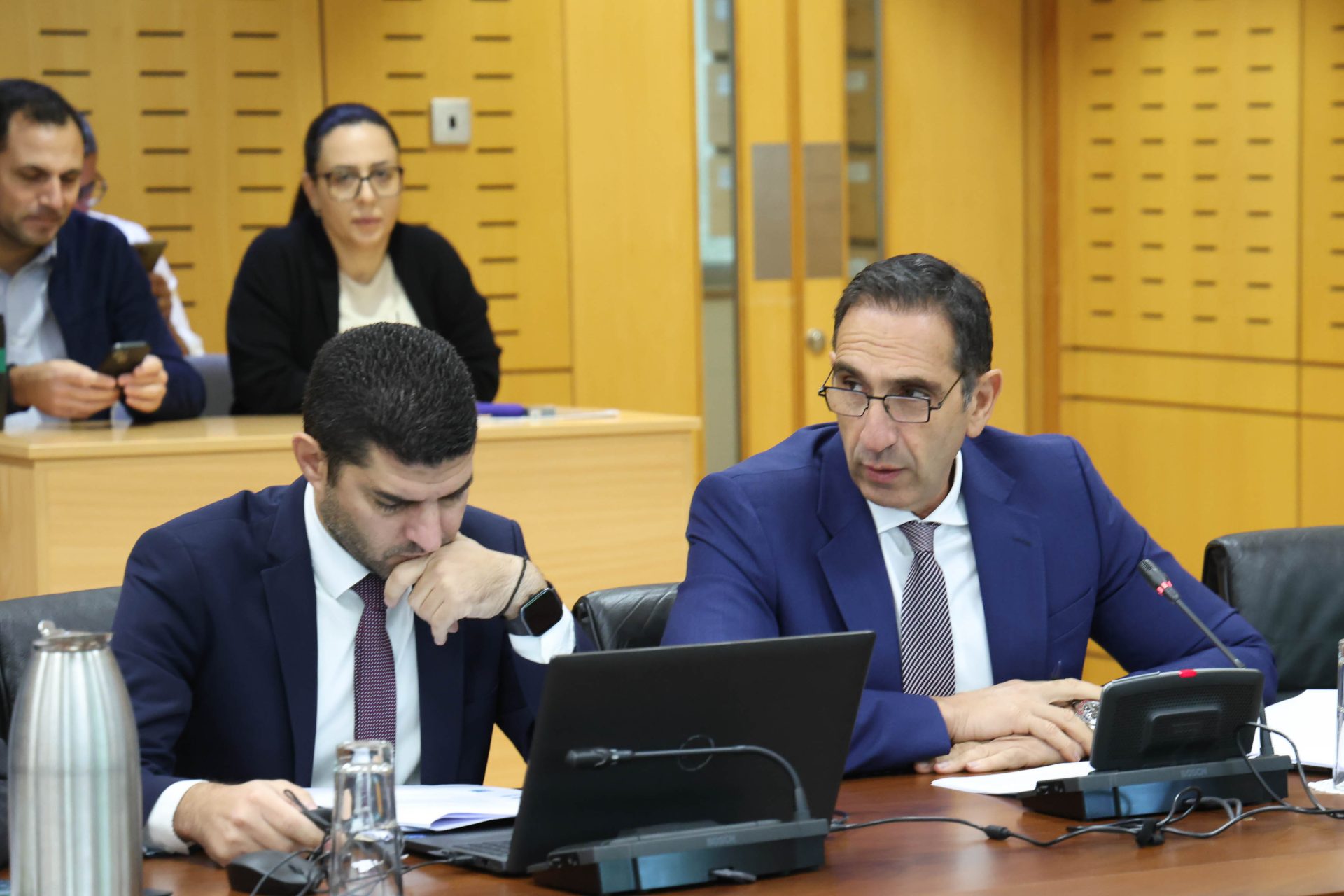
Affordable housing, rural development and upgraded services are the focus of government policy, the interior minister said on Monday presenting his ministry’s budget for 2027.
Speaking in parliament, Constantinos Ioannou called the budget a “roadmap” for a “modern, effective and people-centred state, a state that plans ahead and responds to society’s real needs”.
The 2027 balance sheet provides for €780 million in expenditure, and projected revenues of €246 million.
Spending on development projects comes to €263 million, or 33 per cent of the total budget.
The majority of the expenditures concern grants to local government authorities, subsidies and housing schemes, and funding projects.
Affordable housing units
One of the main projects pitched by Ioannou concerns the planned construction of 460 affordable residential units, located on state land in the Nicosia, Limassol, Larnaca and Paphos districts.
With €70 million allocated, works are expected to begin in December 2027, with April 2031 set as the completion date.
Other housing-related schemes include Rent-Renovate, accommodation for college students, and the Build to Rent scheme.
Meanwhile, Ioannou said, digitisation is being tapped to speed up the permits process. To date, he claimed, some 3,000 permits have been issued within 40 days for single dwellings and duplexes, and more than 1,400 permits issued within 80 days for buildings with up to 20 apartments.
At the same time, expenditures for the Ktizo scheme for refugees come to €16 million during 2027 – up from €11 million allocated for this year.
Projects planned for 2027 include roadworks in the Tseri area in Nicosia, the coastal road between Larnaca and Dhekelia, the Deryneia-Sotira connection, as well as works on the second Limassol bypass.
Civil defence mechanism to be implemented
For civil defence, the ministry is allocating €17.8 million. The government will institute a national civil defence mechanism, coordinating all relevant departments, and will upgrade the CY-Alert early warning system.
Commenting on the minister’s presentation, Akel MP Nikos Kettiros said the plans leave a great deal to be desired.
In particular, he drew attention to reduced allocations for rent subsidies for displaced persons.
Regarding the management of Turkish Cypriot properties in the south, Kettiros welcomed the government’s move to raise rents on certain properties.
However, distortions persist – for example, an Israeli company which rented a commercial property in Larnaca, and as a result helped drive the average rent in the area from €250 to €2,000.
“The state cannot simply follow the prices shaped by those who have the financial wherewithal to pay high rent,” commented Kettiros.
Disappointment over Ktizo scheme
On the Ktizo scheme, the Akel MP said that despite the hype surrounding its launch in 2023, to date only one building has been delivered – out of the 19 planned.
The scheme affords refugees the option to move into better and safer housing.
There were 358 refugee apartment buildings across the government-controlled areas. Living conditions in some of them were described as dangerous, with refugees fearing the apartments were on the brink of collapse.
Of the 358 buildings, 245 were deemed to be in satisfactory condition and 70 had problems requiring upkeep. The remaining 43 had severe structural issues and their renovation was deemed unsustainable and financially unviable.
Tenants of these 43 unsafe buildings, opting out of being relocated to new housing, would receive a one-off grant.
For those beneficiaries choosing to participate and move into new government-subsidised housing, they would contribute out of pocket €10,000 for a single-bedroom apartment, €20,000 for a two-bedroom apartment, or €25,000 for a three-bedroom apartment.




Click here to change your cookie preferences