
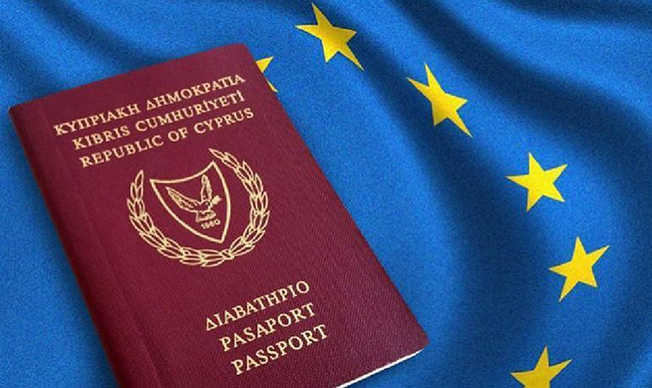
Nicosia criminal court on Monday instructed the defence to specify its objections to the material which prosecutors intend to present in court in the ongoing trial concerning the naturalisation of Asian investors.
In what is also known as the ‘golden passports’ trial, the defendants are former transport minister Marios Demetriades, Andreas Demetriades, Demetris Demetriades, Giorgos Demetriades, Eleni Simillidi, Jing Wang, Josef Friedrich Santin, Vasiliki Georgiou-Santin, Andreas Demetriades & Co LLC and Delsk Business Services Ltd.
They face charges of corruption, bribery, conspiracy to defraud and money laundering related to the naturalisation of 19 Asian investors in the context of the now-defunct citizenship-by-investment scheme. Other charges include the unjustified use of a reduced 5 per cent VAT rate and the use of fictitious invoices for money transfers.
All defendants deny the charges.
The defence is asking for a trial within a trial that would determine which evidence to be presented by prosecutors is admissible.
Defence attorney Elias Stefanou maintains that police irregularly seized material from the law firm of one of the defendants while executing three search warrants – taking place between July 29 and July 31 of 2021.
He contends that a great deal of the material violates attorney-client privilege as well as the privacy of communications.
Much of the evidence seized, he says, is irrelevant to the case. Police had exceeded the scope of the warrants.
The material comes from the law firm of defendant number 9 – Simillidi, an associate partner at Andreas Demetriades & Co LLC. She heads up the firm’s migration and residence permits department.
The evidence consists of mobile phones, computer towers, hard disks, memory storage devices as well as paper files.
Police forensics extracted the electronic data and stored it on a separate hard disk, which in the trial is labeled as exhibit number 231.
As an example of attorney-client privilege being violated, Stefanou cited one communication between himself and defendant number 3.
Countering, lead prosecutor Charis Karaolidou insisted that if the defendants want a trial within a trial, they must specify which evidentiary items they object to.
Generic objections were insufficient, she added.
The court went into brief recess, after which it asked the defence to spell out which communications it considers as privileged and/or protected.
Responding, Stefanou said listing the evidentiary items individually was an impossible ask, given that there are potentially millions of emails.
The court said that if listing the items individually is not feasible, the defence should at least draw up categories of the evidence it deems objectionable.
Stefanou agreed, asking for time to do so.
The court adjourned, setting November 23 as the date for the next hearing.




Click here to change your cookie preferences